

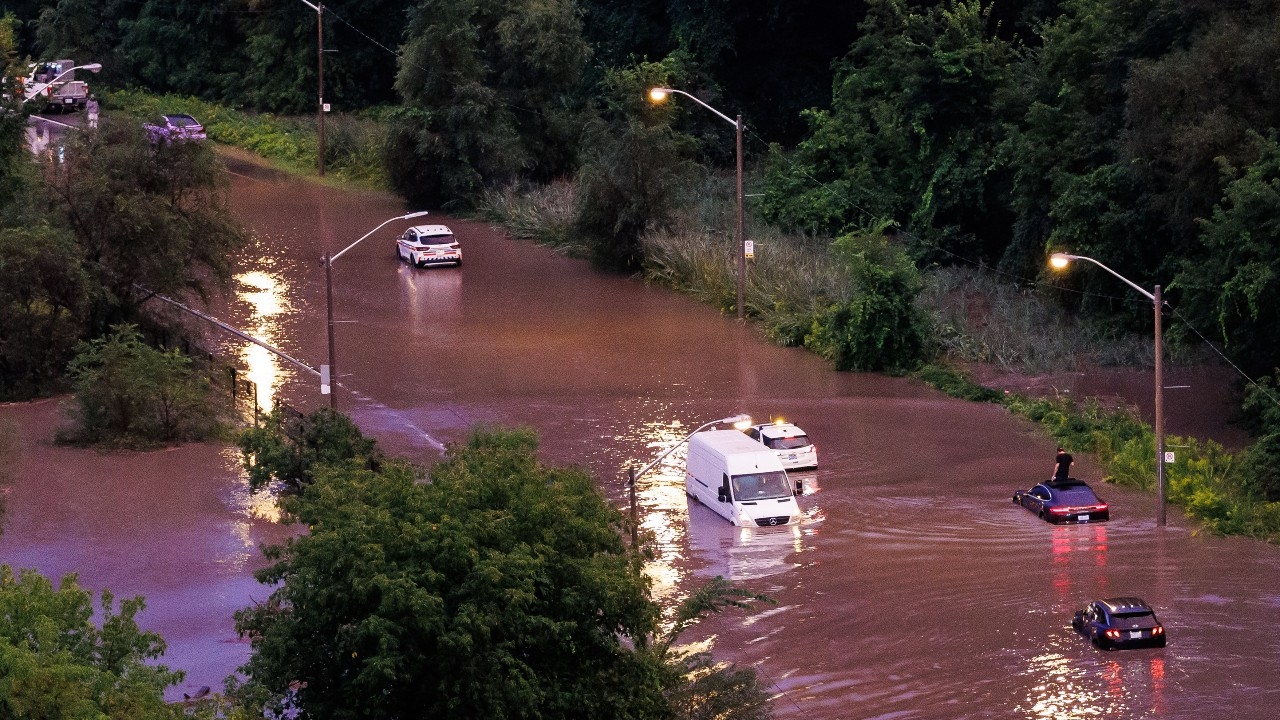
Toronto, Canada mobilized personnel to tackle the crisis and intensively clean the city after being hit hard by a severe thunderstorm, described as a "once-in-100-years" rain event. The storm caused flash flooding, widespread power outages, and traffic gridlock. The situation is now beginning to normalize.
Toronto is starting to return to normal following a severe thunderstorm that struck the city on the afternoon and evening of Wednesday, 2 Sep 2020 GMT+7. The storm brought heavy rain, large hail, and tornado risks across many areas of Ontario province.
The heavy rainfall within just a few hours led some parts of Toronto to record up to 150 millimeters of rain, while the average rainfall for the entire month of August is about 78 millimeters. Canadian climatologists stated that 2 September was the wettest day in Toronto's history, with downtown areas receiving around 60 millimeters and some measurement points recording over 100 millimeters, nearly equal to a full month's rainfall.
The storm caused the Don River to overflow its banks, flooding homes and roads, uprooting trees and utility poles. Subway and ferry services to Toronto Island were suspended. At the storm's peak, around 65,000 residents were without electricity.
Toronto firefighters received nearly 1,500 emergency calls within 24 hours, marking the second-highest volume in the department’s history, only behind the major ice storm of 2013. Rescue operations included freeing people trapped in elevators, workers stuck on scaffolding, fires, and partial building collapses. Police reported 5,030 emergency 911 calls in a single day.
Olivia Chow, Mayor of Toronto, said the storm had passed and confirmed that officials were fully prepared and coordinated. She emphasized ongoing efforts until all roads reopen and every resident has electrical power.
Currently, electricity has been restored to about 90 percent of affected households. The number of Toronto Hydro customers still without power dropped to approximately 5,700 from 65,000 at the storm’s peak. Hydro One reported around 15,000 customers remain without electricity.
Public transportation services have resumed as scheduled. The city's summer camps reopened on time, and the Canadian National Exhibition resumed on Thursday morning after an early closure Wednesday night.
The storm also affected Toronto Pearson International Airport, causing flight delays and cancellations, though services are gradually returning to normal. Rogers Stadium, a 50,000-capacity concert venue, sustained damage. Organizers reported no injuries and are assessing the extent of the damage.
Paul Johnson, Toronto’s city manager, stated that the rainfall volume qualifies as a "once-in-100-years" storm by the city’s standards. He acknowledged that the massive rainfall exceeded the capacity of existing drainage and flood control systems.
David Phillips, a climatologist from Canada’s Environment and Climate Change Ministry, said while thunderstorms have long occurred, climate change is intensifying them. Such heavy rain events may become more frequent in the future.
Meanwhile, Toronto has received about 1,000 requests for assistance from residents. Authorities advise those still facing flooding, fallen trees, or other storm-related damage to call 311 for direct help from the city.