

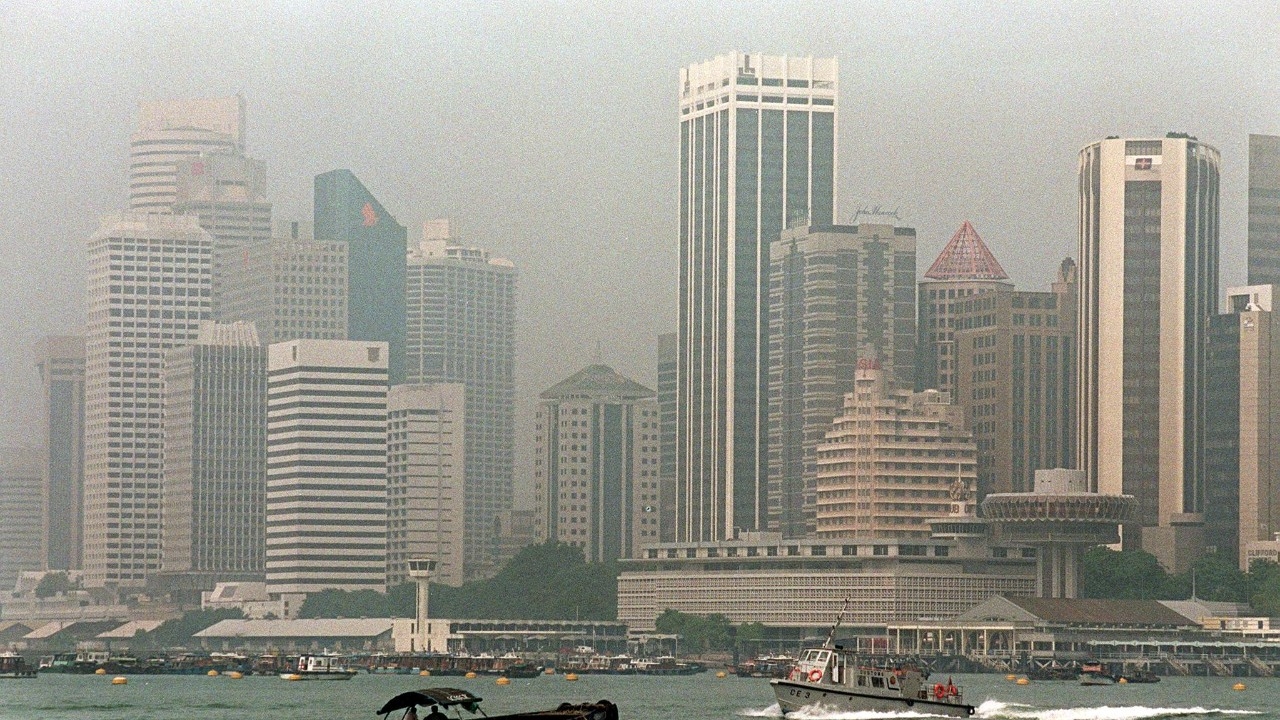
Singapore is facing air quality problems after its air pollution index exceeded 100, reaching the "unhealthy" level amid cross-border haze issues in the ASEAN region.
The Pollutant Standards Index (PSI) in central Singapore entered the "unhealthy" category, hitting 101 at 07:00 on Friday, 4 September, and rising to 105 by 10:00 amid the ASEAN cross-border haze situation.
The National Environment Agency (NEA) of Singapore reported that the 24-hour average PSI in central Singapore was 101 at 07:00, which is considered unhealthy, before rising to 105 at 10:00.
Other parts of Singapore remained at moderate levels, with the west at a PSI of 90, east 89, north 78, and south 75.
The 24-hour PSI is an index used to assess daily air quality and is used by NEA to issue health advice. It is calculated from six air pollutants: PM2.5, PM10, ozone, sulfur dioxide, nitrogen dioxide, and carbon monoxide.
PM2.5 refers to fine particulate matter no larger than 2.5 micrometers in diameter and is the main pollutant during haze events, capable of impacting health.
NEA noted that air quality monitoring stations in Kalimantan, as well as central and southern Sumatra, and the Malaysian states of Sabah and Sarawak, detected air quality ranging from unhealthy to hazardous.
At the same time, numerous hotspots were detected across Kalimantan and parts of central and southern Sumatra, with other areas in Southeast Asia also experiencing hotspots due to ongoing dry conditions.
Additionally, moderate to dense cross-border haze was observed over northern Borneo and southwestern Philippines, with large smoke plumes detected in Kalimantan, central and southern Sumatra, and central Sarawak.
NEA forecasts that in the coming days, much of southern ASEAN will continue to experience dry weather, while northern Malay Peninsula, Sumatra, and central Borneo are likely to see rainfall.
However, hotspot and haze levels are expected to remain high in fire-prone areas suffering prolonged dryness, posing risks of severe cross-border haze.
Public advised to reduce outdoor activities.
NEA stated it will issue daily health advisories when the 24-hour PSI reaches the unhealthy level or exceeds 100.
A PSI between 201 and 300 is classified as "very unhealthy," while values above 300 are considered "hazardous."
For the general public, when PSI reaches unhealthy levels, it is advised to reduce prolonged or strenuous outdoor exercise; elderly, pregnant women, and children should avoid extended or strenuous outdoor activities.
Those with chronic lung or heart conditions should avoid prolonged strenuous outdoor activities and take extra precautions if air quality worsens.
Earlier in August, the ASEAN Specialized Meteorological Center (ASMC) raised its haze alert for Southeast Asia to Level 2, the second highest, reflecting increased risk from hotspots and forest fires.
Source:channelnewsasia
Click to read more aboutInternational news