

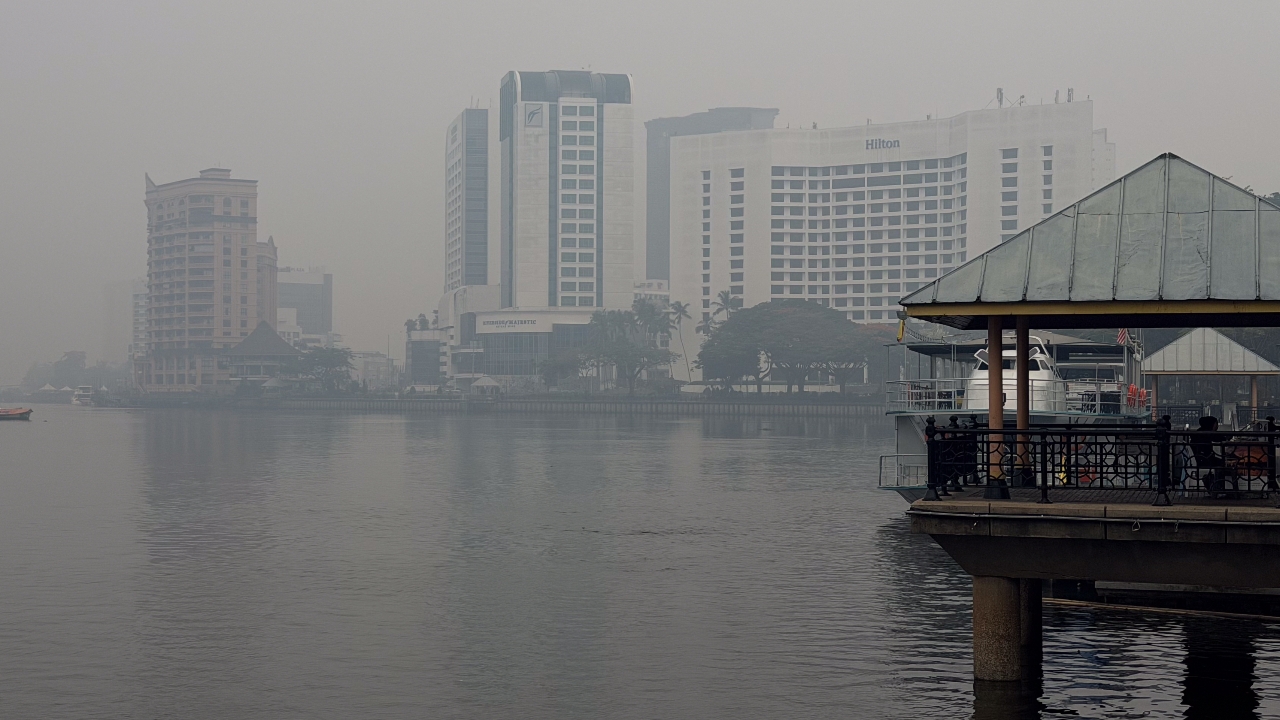
Malaysian authorities have declared a state of emergency across the Sibu Division in Sarawak state on Borneo island after the Air Pollution Index (API) surged above 500, indicating severe pollution amid worsening haze caused by forest fires in Indonesia. Many residents are suffering respiratory problems, and face masks have become scarce in the area.
The Malaysian government declared a state of emergency throughout the Sibu Division in Sarawak following the continuous worsening of the haze situation, which caused the Air Pollution Index (API) to rise above 500. This level signifies severe air pollution that is extremely hazardous to public health and safety.
The Malaysian Prime Minister's Office revealed that His Majesty Sultan Ibrahim Iskandar consented to the emergency declaration covering all of Sibu, following recommendations from the Malaysian Prime Minister, the Sarawak Chief Minister, and relevant agencies regarding the area's air quality levels.
The government stated it will implement more necessary and effective measures to protect the health and welfare of affected residents, closely monitor the situation, expedite impact mitigation efforts, and continuously disseminate information and health advisories to the public.
Data from the Malaysian Department of Environment’s Air Pollution Index monitoring system showed that on the afternoon of 4 September, the API in Sibu reached 521. Earlier in the morning it had peaked at 510, and at 5 p.m. it was 515, following a deterioration in haze conditions that began on the evening of 3 September.
Sibu is the hardest-hit area in Sarawak, with air quality at hazardous levels since the past weekend. The division lies about 60 kilometers southeast of Kuching, Sarawak's capital, and has nearly 106,000 residents spread over approximately 2,039 square kilometers—almost three times the size of Singapore.
Sibu was also the first area in the state to close schools on 13 August after the API briefly exceeded 200, and the current situation has since worsened significantly.
In other parts of Sarawak, Kuching recorded an API of 311, classified as hazardous, while Samarahan stood at 284 and Sri Aman at 235, both considered "very unhealthy." Several other areas reported unhealthy air quality levels, including Sarikei (182), Sibu (181), Mukah (177), Bintulu (157), Kota Kinabalu (152), Tawau (151), Samalaju (146), Sandakan (140), Pasir Gudang in Johor (128), Segamat in Johor (115), and Miri (112).
Douglas Uggah Embas, Chairman of the Sarawak Disaster Management Committee, said that under the National Haze Emergency Response Plan, any area where the API reaches 500 may declare a state of emergency. This declaration suspends all government and private sector activities except for essential services.
This haze crisis occurs as Sarawak, sharing a border with Indonesia, is affected by smoke from forest fires in Kalimantan and Sumatra. The ASEAN Specialized Meteorological Centre reported on Tuesday that many hotspots were detected in Indonesia.
On 3 September, Sarawak began a three-day cloud-seeding operation aimed at easing the haze covering the area and increasing water reserves ahead of an anticipated hot and dry period.
The latest pollution level is among the most severe in Sarawak's history. In 2019, the API peaked at 405, and the last time Sarawak declared an emergency due to haze was in September 1997, when the API soared to 860.
Residents of Sibu are directly impacted by the deteriorating air quality. Yasmina R.C. Holland, a local, said this haze crisis is the worst she has experienced in 20 years and that she has observed continuous air quality decline over the past two weeks.
She stated that some family members are unable to go to work, while others require medical treatment due to breathing difficulties. Yasmina reported experiencing intermittent breathing problems, eye irritation, and extreme heat, preventing her from performing normal daily tasks. She and several family members have asthma, making them particularly vulnerable to the haze.
Meanwhile, demand for face masks has rapidly increased. Farmasi Ting pharmacy in Sibu reported that all types of masks, including N95 masks, have sold out due to surging demand. The store manager said residents began hoarding masks about two weeks ago, creating a situation reminiscent of the COVID-19 pandemic.
In addition to masks, the pharmacy noted increased demand for cough syrups and medicines for sore throat and runny nose, reflecting the health impacts caused by this haze crisis.