

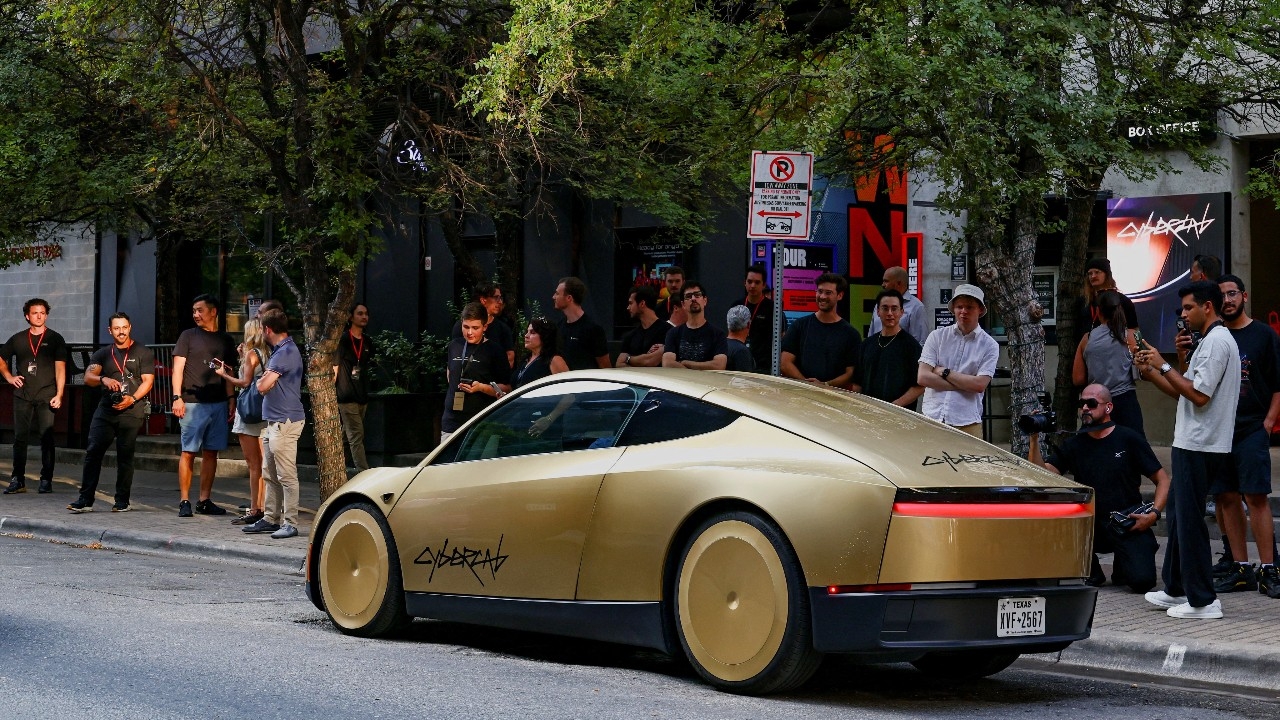
Elon Musk is making a major bet by launching the latest electric driverless vehicle, the gold-colored "Cybercab," which lacks both a steering wheel and pedals, to operate on limited roads in Austin, Texas, drawing attention from investors and US safety regulators.
Tesla is offering the driverless taxi "Cybercab" service in limited areas of Austin, Texas. This new gold electric two-seater has neither a steering wheel nor pedals, preventing passengers from controlling the car in an emergency.
Before the launch, Tesla posted on the X platform, "No steering wheel, no pedals," along with an image of the Cybercab hovering above Austin's skyline. Tesla CEO Elon Musk posted "Cybercab storm," but he did not appear at the launch event.
Tesla stated that currently, the Cybercab is available only in certain parts of Austin and has not announced when fares will begin. Executives said there are plans for a flexible pricing system in the future, with fares rising according to demand, promoting the concept of providing a "first-class experience at an economy price."
This launch marks an important step in Musk's plan to make Tesla a leader in driverless vehicles. Musk said the Cybercab was specifically built for full autonomous driving without a human operator and is expected to become a core vehicle model in Tesla's Robotaxi network.
However, Tesla still lags far behind "Waymo" in terms of vehicle numbers and service. Waymo operates over 4,000 driverless taxis in 14 cities, while Texas state data from 3 Sep 2025 shows Tesla has 420 registered autonomous vehicles, including 45 Cybercabs, compared to Waymo's 988 vehicles in Texas.
A major challenge for Tesla is that its autonomous driving system relies mainly on cameras, unlike Waymo and Amazon's Zoox, which use cameras, radar, and lidar (laser-based detection) technology to help vehicles perceive their surroundings.
The US National Highway Traffic Safety Administration (NHTSA) said it is in contact with Tesla and assessing the situation, as federal safety standards generally require vehicles to have human control devices. Additionally, federal rules limit how many vehicles manufacturers can sell if they lack steering wheels and pedals.
Tesla also faces safety investigations by US regulators in several cases, including collisions in fog, bright sunlight, and low visibility, pedestrian fatalities, and incidents where Tesla's driver-assist system ran red lights or drove in the wrong lane, causing crashes and injuries.
Although Tesla began testing driverless taxis in Austin in June 2025 and expanded to other cities in Texas and Florida, service remains limited. Previous Reuters testing found passengers sometimes waited a long time, and in Dallas, vehicles could not deliver passengers to certain destinations within service zones, requiring about a 15-minute walk.
Meanwhile, American consumer confidence remains a significant obstacle. A Pew Research Center survey in February found 7 in 10 American adults feel "somewhat uncomfortable" or "not at all comfortable" riding in driverless cars, with only 7% expressing they feel "very" or "extremely" comfortable.
Musk aims to eventually deploy full self-driving software to hundreds of thousands of Teslas via software updates, enabling owners to add their vehicles to Tesla's driverless taxi network when not in use.
However, the plan's success depends on proving the technology is sufficiently safe and meeting regulatory requirements in the US and abroad, especially in California, a key market where Tesla currently lacks licenses to operate driverless taxi services or test driverless cars without a safety driver onboard.
For Tesla, the Cybercab is more than a new model; it is a major bet on the company's future as the core electric vehicle business faces intense competition from global manufacturers, especially Chinese EV makers. The success or failure of the driverless taxi project could directly impact Tesla's valuation and strategic direction long-term.
.sourceReuters/The Independent