

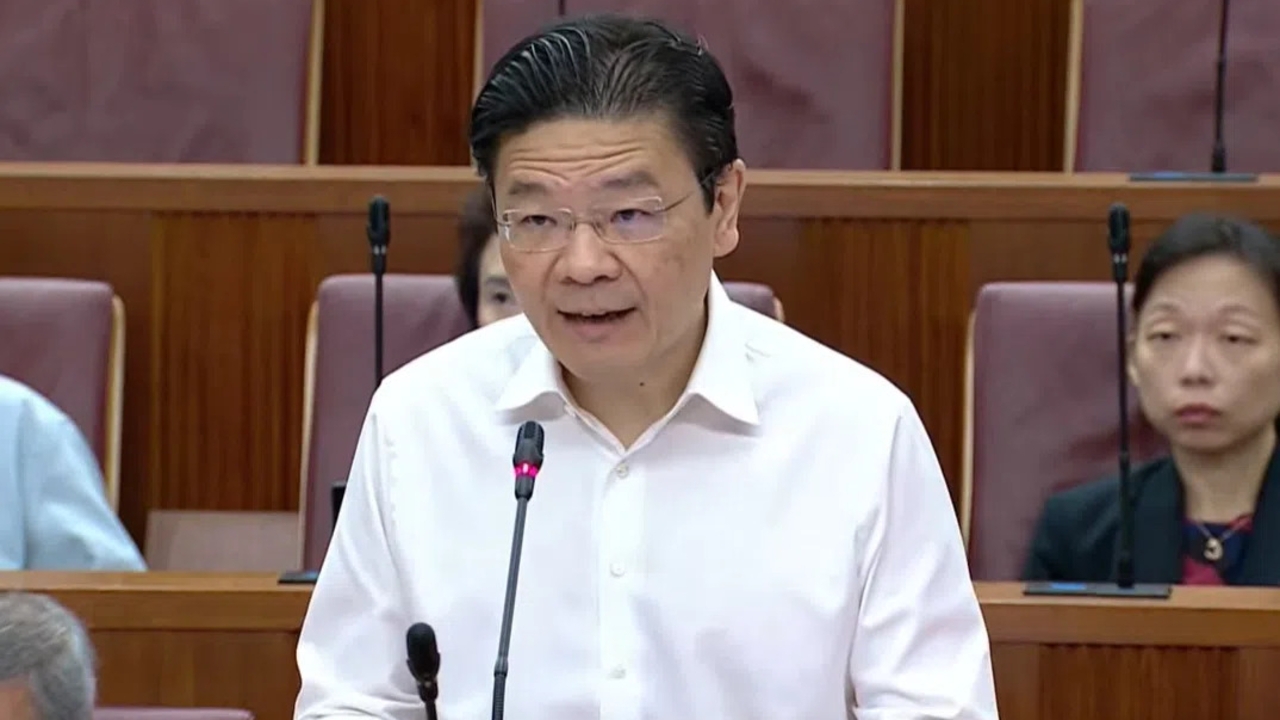
The Singapore government announced a salary increase of up to 9% for cabinet ministers and top political officeholders, raising the starting ministerial salary from SGD 1.1 million to SGD 1.2 million per year, equivalent to about 31.2 million baht. This marks the first restructuring since 2011. As a result, Prime Minister Lawrence Wong’s annual income will increase to SGD 3.6 million, or about 93.7 million baht, and he has pledged to donate all the additional income from this raise to charity for five years.
Singapore Prime Minister Lawrence Wong announced in Parliament today (8 Sep) that the government will raise the remuneration of top political officeholders by up to 9%, effective 15 October 2026. This follows government approval of recommendations from an independent committee appointed last December.
Currently, Singapore’s ministerial remuneration system is divided into four levels: MR4, MR3, MR2, and MR1. Each level has several salary bands. The Prime Minister decides the level and band placement for each minister, as well as their annual performance bonus.
Previously, the review committee proposed raising the reference salary for MR4 ministers—the lowest level—from SGD 1.1 million to SGD 1.8 million per year. They also recommended adjustments to other political officeholders’ pay and allowances for some parliamentary positions. However, Prime Minister Wong stated the government will not immediately raise salaries to the SGD 1.8 million benchmark but will implement a one-time increase of up to 9% first.
The 9% figure does not mean all officeholders will receive the same raise; individual increases depend on factors such as performance and the timing of their last salary adjustment.
For first-time MR4 ministers currently earning the reference salary of SGD 1.1 million, a full 9% raise would increase their pay to approximately SGD 1.2 million annually, or about 31.2 million baht.
Prime Minister Wong emphasized that after this one-time adjustment, there will be no additional special increases to reach the SGD 1.8 million benchmark. Future salary changes will be based on individual performance and responsibilities.
Currently, 10 out of 16 ministers are at the MR4 level, while the remaining six hold higher levels due to seniority and greater responsibilities, including government coordinating ministers.
The three coordinating ministers are Chan Chun Sing, Minister for Defence overseeing public services; Ong Ye Kung, Minister for Health overseeing social policies; and K Shanmugam, Minister for Home Affairs responsible for national security. There are also two senior ministers in the cabinet: K Shanmugam and former Prime Minister Lee Hsien Loong.
Prime Minister Wong explained that ministers can move up to higher salary bands within the same level if they perform well, and some may be promoted to higher levels when given more responsibilities.
Ministerial remuneration includes not only base salaries but also variable components that make up more than one-third of annual pay. One such component is the National Bonus, which all political officeholders may receive based on performance criteria in the remuneration framework. Additionally, there is an individual performance bonus assessed by the Prime Minister; last year, this bonus ranged from about three to six months’ salary.
Therefore, the MR4 reference salary of SGD 1.1 million represents an approximate total remuneration, including base salary and assumed performance bonuses. Actual pay for each minister may be higher or lower depending on salary band and bonuses received annually.
For the Prime Minister’s position, the salary is set at twice the MR4 benchmark. This adjustment raises Prime Minister Lawrence Wong’s annual income to SGD 3.6 million, or about 93.7 million baht. He has announced he will donate all additional income from this increase to social organizations or activities for five years if he remains in office.
He stated this decision is personal and does not expect other political officeholders to follow suit, noting that generally he does not support publicly announcing charitable donations.
Prime Minister Wong said that as the head of government, he bears "the highest responsibility" for the remuneration system and believes it is appropriate for Singaporeans to be informed of his decision. He will review his donation decision after five years, considering the circumstances at that time.
The independent committee also proposed combining the MR2 and MR3 salary levels, reducing ministerial salary grades from four to three. Each level’s salary bands will be widened to allow pay to range 25% above or below the reference benchmark. The government approved this restructuring while maintaining the principle of differentiating pay based on performance.
Prime Minister Wong expects that after the initial adjustment, most MR4 ministers will be near the lower end of the new salary band, around SGD 1.35 million per year, by the end of the current government term. Ministers with outstanding performance and greater responsibilities may earn higher pay within this band or be promoted to higher levels.
He emphasized that the MR4 reference salary of SGD 1.8 million is not a target all ministers must reach eventually; salaries may be higher or lower within the defined framework.
Regarding junior ministers, parliamentary secretaries, and mayors, Wong said he generally consults their supervising ministers on performance but retains final authority over salary level, band, and bonuses.
Political officeholders appointed in the next government term will enter the system at different salary levels and bands, based on experience and previous remuneration.
The government expects the new structure to increase pay differentiation based on performance and facilitate attracting highly experienced private-sector professionals into public service, especially those previously earning much higher salaries in business.
Wong stated that although those entering politics must accept some private-sector income sacrifice, the government should not allow excessive income disparities. The goal is to enhance opportunities to attract talented Singaporeans to serve the country and build the strongest leadership team.
Singapore’s Parliament will debate the government’s response to the remuneration review committee’s recommendations on Thursday (10 Sep).
Comparing with other world leaders, data from PoliticalSalaries.com shows that Singapore’s Prime Minister has a relatively high salary, about SGD 2.4 million annually under the previous framework. In contrast, the Chief Executive of Hong Kong earns around USD 719,000 annually, the President of Switzerland about USD 606,000, the UK Prime Minister about USD 230,000, and former US President Donald Trump about USD 400,000 per year.
. . .CNA/The Straits Times