

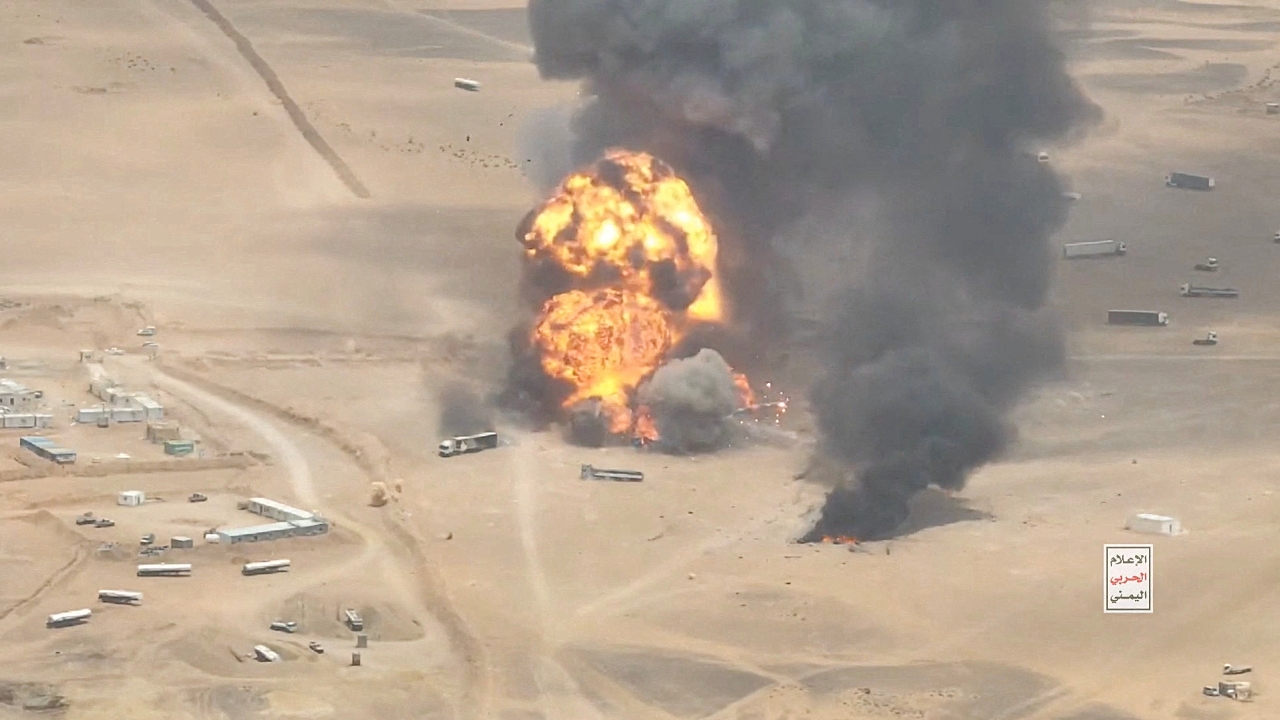
The Iran-backed Houthi rebel group in Yemen launched simultaneous missile and drone attacks on four southern Saudi Arabian cities, injuring at least 73 people and causing fires at multiple oil refineries and storage facilities. This major wave of attacks marks a significant escalation of the conflict following the collapse of a ceasefire agreement, further intensifying the already strained global energy crisis due to Middle East tensions.
The Iran-backed Houthi group in Yemen launched a large-scale attack on Saudi targets early on 8 September, employing missiles and unmanned aerial vehicles (drones) to strike at least four southern Saudi cities: Abha, Jazan, Najran, and Khamis Mushait.
Brigadier General Turki Al-Maliki, spokesperson for the Saudi-led coalition forces, reported that the attacks resulted in 73 injuries, including women and children. Meanwhile, the Saudi Ministry of Energy stated that the strikes caused fires at oil plants and several public utilities in the southern region.
Officials temporarily suspended operations at certain plants and utility systems to manage the situation, while firefighters worked swiftly to control the blazes.
The targeted area hosts critical Saudi energy infrastructure, including the Jazan oil refinery, which has a refining capacity of approximately 400,000 barrels per day and is among the country's largest refineries.
Al-Maliki condemned the attacks as a "serious escalation" and a clear violation of Saudi Arabia's sovereignty. He described them as a direct threat to the safety of the country's residents and affirmed that the Saudi-led coalition would take all necessary military measures to deter and decisively confront the Houthi group.
The Houthi group acknowledged responsibility for the attacks, claiming they were retaliatory actions against Saudi airstrikes targeting their bases in Yemen in recent weeks.
Yahya Sari, a spokesperson for the Houthi military, stated in a recorded press release that the group used dozens of guided missiles and drones to attack oil facilities, economic targets, and the southern Saudi airbases.
The Houthis said the attacked targets included industrial and logistics centers in Jazan city, facilities of Saudi Aramco in Najran and Abha, and King Khalid Air Base in Khamis Mushait. Sari blamed Saudi Arabia for escalating the conflict and warned that attacks on Yemen would be met with Houthi retaliation.
This escalation came only hours after the Houthis accused Saudi Arabia of bombing a prison in Al-Jawf province in northern Yemen, resulting in at least seven deaths—including one child—and seven injuries, according to Houthi sources.
The recent attacks follow a resurgence of intense fighting between the Houthis and Yemeni government forces backed by Saudi Arabia in recent weeks, leading to the collapse of a ceasefire that had lasted for several years.
The latest round of conflict was triggered after the Houthis attempted to fly aircraft from Tehran, Iran, into Sana'a, Yemen's capital, challenging the air and naval blockade imposed by the Saudi-led coalition for over a decade.
The coalition responded by striking the Sana'a airport runway, preventing aircraft from landing. Subsequently, the Houthis launched missile and drone attacks on Saudi Arabia and declared a blockade of Saudi shipping in the Red Sea.
Fighting has spread across several western Yemeni areas, with government forces claiming to have recaptured territory from the Houthis in Hodeidah and Taiz provinces, and continuing assaults on Houthi strongholds in Al-Jawf, Marib, and Al-Bayda provinces.
The International Organization for Migration (IOM) reported that the latest fighting has displaced approximately 18,500 people from their homes in Taiz and Hodeidah provinces, many of whom have already been displaced multiple times.
/sourceReuters/Associated Press