

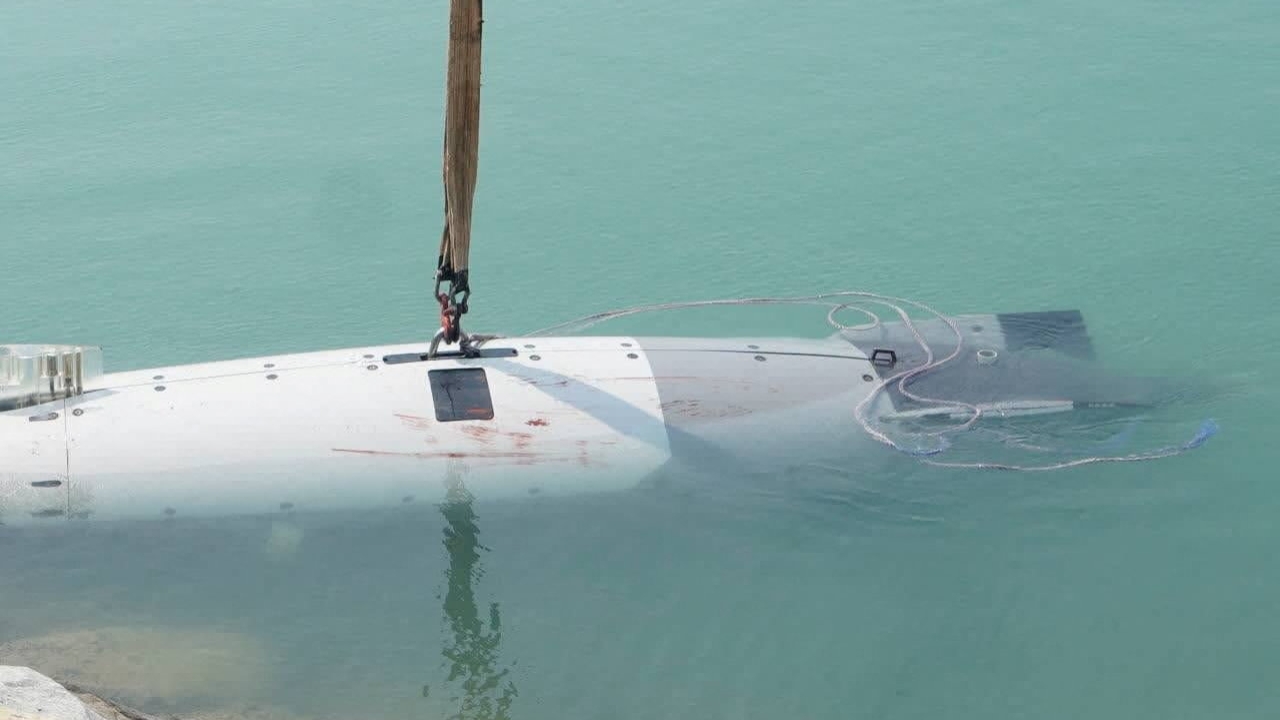
Iranian forces have seized a U.S. military Dive-LD underwater drone floating adrift at sea, providing an opportunity for Iran to study and replicate the technology through "reverse engineering." Analysts suggest this may not give Iran a military advantage but represents a propaganda win and damages the U.S.'s technological superiority image.
Iran’s capture of the U.S. military underwater drone opens the possibility for detailed analysis and likely reverse engineering—the process of dissecting, analyzing, and understanding the structure or function of existing equipment, devices, or software to develop or innovate new products. This marks a significant setback for the U.S. Department of Defense and the manufacturer Anduril.
The incident involved the Dive-LD autonomous underwater vehicle (AUV), designed for long-range patrol and advanced underwater operations capable of operating for days with minimal human intervention. Although the U.S. military and Anduril downplayed its importance, calling it an older drone that suffered technical issues and was floating before recovery, the event has become an embarrassment for Washington.
In the past, the U.S. faced similar issues, such as when Iran captured the RQ-170 Sentinel surveillance drone in 2011, which Iran later claimed to have reverse engineered and domestically produced copies of. Additionally, in 2022, the U.S. Navy had to deploy patrol vessels and helicopters to intercept Iranian forces attempting to tow a Saildrone surface drone in the Persian Gulf.
Iranian embassies worldwide have mocked the U.S. on the social media platform X. The Iranian embassy in Ghana posted that officials recovered the underwater vehicle in a controlled strait, likening it to retrieving plastic bottles from fishing nets, while the Iranian embassy in Hyderabad, India, humorously announced a reverse engineering "unboxing ceremony" by their engineers the following morning.
Farsin Nadimi, a senior scholar at the Near East Policy Institute, stated that Iran is seizing every opportunity to turn this incident into a propaganda victory, enabling the Islamic Revolutionary Guard Corps (IRGC) to further develop their own technology.
Brian Clark, director of the Defense Concepts and Technology Center at the Hudson Institute, noted that Iranian engineers will likely be able to dismantle and understand the drone’s physical mechanisms, given their track record. However, they may face limitations due to internal software security systems designed to protect data.
The incident also reveals communication conflicts between Anduril and the U.S. Navy. While the Navy claims the drone is an old model without classified information, Anduril markets the Dive-LD as one of the most flexible and reliable autonomous underwater vehicles available, serving as a prototype for larger submarines like Australia’s Ghost Shark.
Mona Yacoubian, director of the Middle East Program at the Center for Strategic and International Studies (CSIS), concluded that the event showcases Iran’s expertise in exploiting opportunities to damage the U.S.’s image of effectiveness and clearly reinforces Iran’s control over the Strait of Hormuz.