

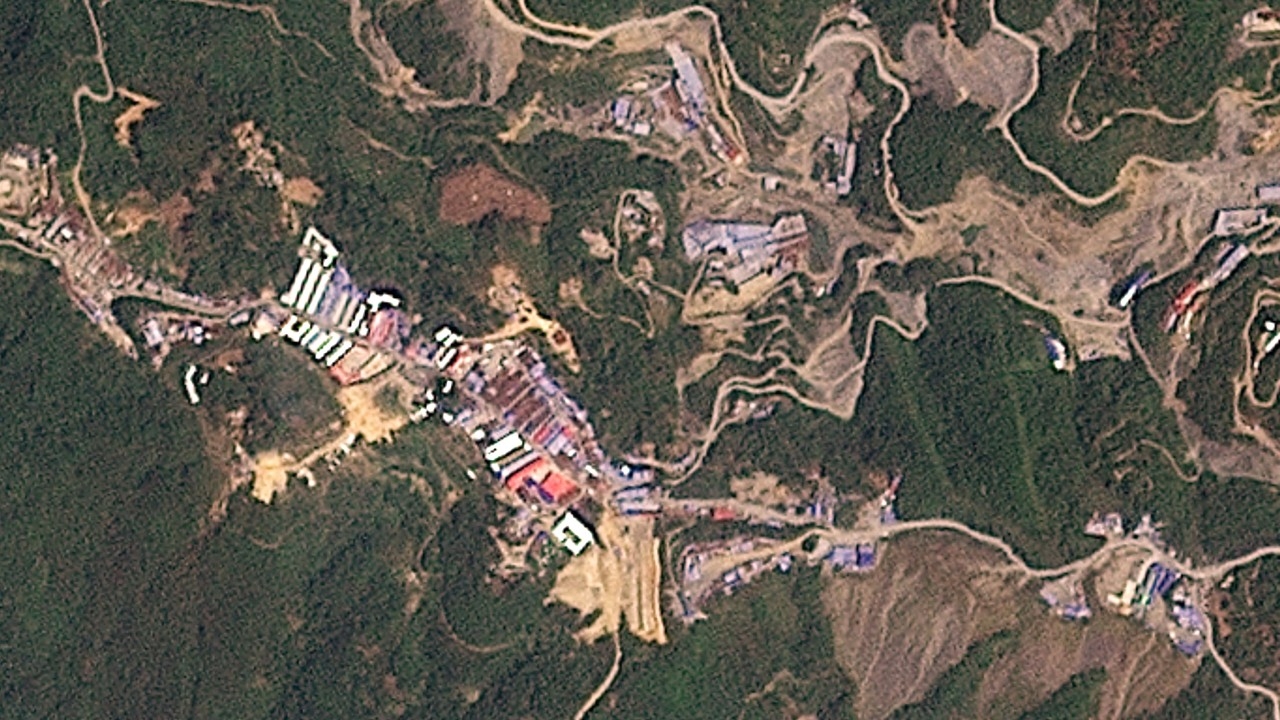
The Man Maw tin mine, one of the world's largest tin producers located in Wa State, Myanmar, has resumed operations after suspending production since 2023. It is simultaneously increasing tin ore exports to China. Experts warn that the mine's revival could have a significant impact on the supply chain of metals essential to the artificial intelligence (AI) industry.
The International Crisis Group think tank revealed that Man Maw mine, one of the largest tin mines in the world located in the Wa Self-Administered Division in eastern Myanmar, is restarting operations after halting production since 2023 and is boosting tin ore exports to China.
Tin is a crucial metal for the AI industry because it is used as soldering material to connect microchips to circuit boards and to link various electronic components used in data centers.
During the 2010s, Man Maw mine quickly became a major global tin source, propelling Myanmar to become the world's third-largest tin producer and the largest tin supplier to China.
The mine's sudden closure by armed forces controlling the area in 2023 coincided with the rapid growth of the AI industry, causing tin prices to soar and triggering global competition for this metal.
However, the International Crisis Group stated that the mine is currently in a phase of "slow reopening," with tin ore being transported again, although production remains far below pre-closure levels.
Chinese customs data indicate that in the first half of 2026, China imported nearly 40,000 metric tons of tin ore and concentrate from Myanmar, surpassing total imports for the entire year of 2025.
The International Crisis Group's report also noted that satellite images show new large buildings being constructed near the Man Maw mine, and nighttime lighting around the mine has increased after previously dropping sharply during the shutdown, signaling increased activity in the area.
Despite this recovery, production levels remain far below the mine's peak output. Chinese customs data show that in 2016, Myanmar exported nearly 500,000 metric tons of tin ore and concentrate to China, accounting for over 99 percent of China's imports of that tin type.
Richard Horsey, Senior Asia Advisor for the International Crisis Group, said there is evidence the mine is steadily increasing production levels, although the recovery is uneven across different areas.
Regardless of how slowly the mine resumes operations, its reopening is likely to have broad implications amid international competition to secure resources vital to the AI industry.
Previously, fragile tin supply combined with rising demand from expanding microchip manufacturing for data processing caused tin prices to hit record highs in January.
Access to the Man Maw mine and operational information is tightly controlled by the United Wa State Army (UWSA), also known as the "Red Wa," an armed ethnic group controlling Wa State in eastern Myanmar bordering China.
The UWSA is one of the world's largest non-state armed groups and has long faced international sanctions due to allegations of involvement in drug trafficking.
Analysts say Chinese support and the Wa group's business ties with China have helped Wa State avoid the impacts of the civil war destabilizing most of Myanmar since the military coup in 2021.
The International Crisis Group assesses that the 2023 mine closure likely resulted from power struggles among influential Wa families rather than direct armed conflict.
However, the group warns that the mine still faces economic viability challenges, including flooded tunnels and declining high-grade tin ore deposits, which could make future production capacity increases difficult.
/sourceAFP