

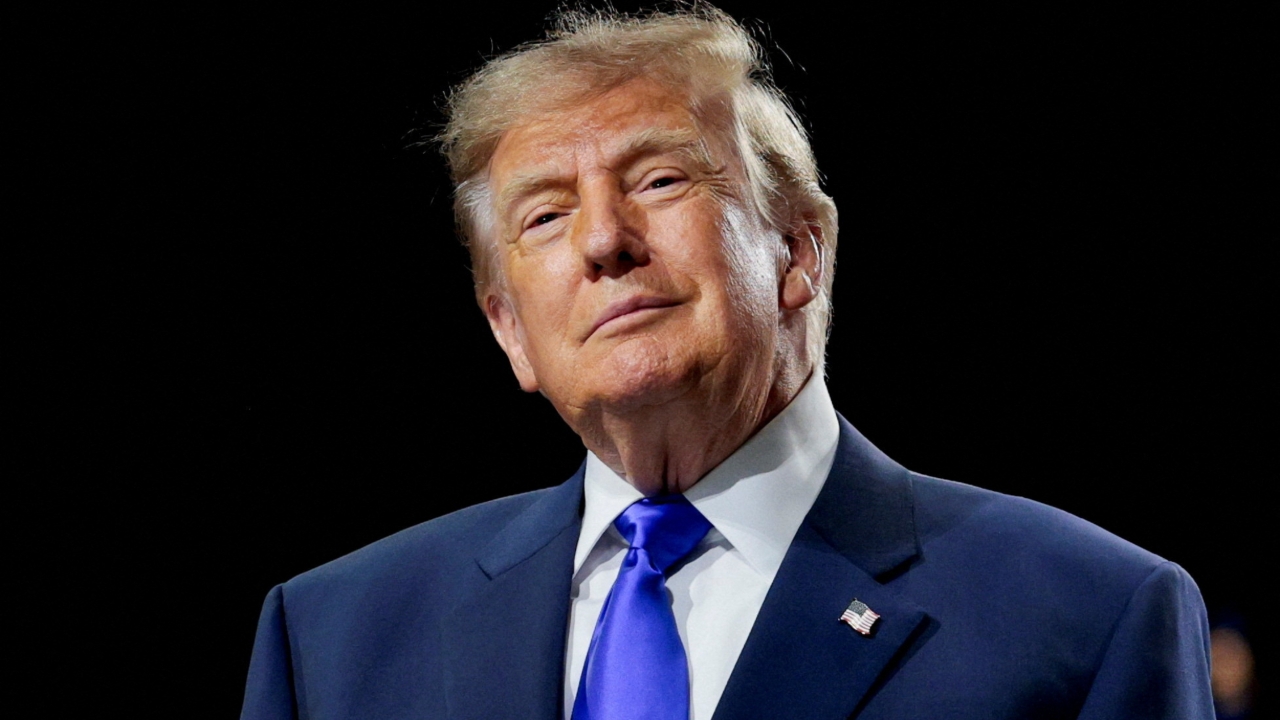
Donald Trump proposed giving every adult American $5,000 if the Republican Party wins the midterm elections, but questions remain whether this plan constitutes vote-buying under U.S. law, and if feasible, where Trump would obtain the funds to distribute.
On Wednesday, U.S. President Donald Trump proposed giving $5,000 (about 165,000 baht) to every adult American if the Republican Party wins the November midterm elections. However, it remains unclear whether the plan is legal or where he intends to source the budget.
His statement drew loud applause from supporters at the party meeting on Wednesday night, although Democrats condemned it as an "empty promise."
Trump further stated at the Republican Party meeting that the money must be spent within the United States only, though details on how this condition would be enforced remain unclear.
Meanwhile, U.S. Vice President JD Vance hinted that the funds might come from customs tax revenues, and that these cash checks would not be sent to wealthy Americans.

Under U.S. federal law, giving money with the intent to influence an individual's vote is "illegal." However, some experts argue that Trump’s proposal in Texas on Wednesday, if viewed similarly to a tax cut promise, could be legally permissible.
Dr. Joan Mahoney, a law professor at the University of Southampton, told the BBC she believes the proposal is likely legal, although she noted politicians "rarely make such direct offers."
"On one hand, it sounds like bribery: 'Vote Republican and you’ll get money,' which is certainly illegal," Dr. Mahoney said. "But on the other hand, the money is given to everyone regardless of their vote, so in that sense, it isn’t bribery."
"I think it’s probably legal. It’s the same kind of campaign promise as saying 'If my party wins, we will cut taxes,' which all parties do regularly... and that’s completely legal."
But Laurel Rapp, Director for U.S. and North America at the Chatham House institute, told the BBC that Trump’s proposal seems like a "very specific and distinct quid pro quo" unlike general campaign promises typically made by candidates during elections.

Beyond legal uncertainties, many question the financial feasibility of such a payout amid rising U.S. public debt, partly due to the ongoing war in Iran.
Currently, the U.S. has nearly 270 million adults, meaning paying $5,000 each would cost the government approximately $1.3 trillion.
Congress holds the power to approve U.S. budget spending, but the president did not specify how he plans to seek legislative approval, and legal experts say it is unlikely he could authorize such a massive payout through executive orders alone.
Erica York, senior economist at the Tax Foundation in Washington, D.C., told the BBC she would be "extremely surprised" if Congress approved such a proposal.
"This would be one of the worst ways to spend $1.3 trillion," she said, adding, "We are on a highly unsustainable path with budget deficits expected to continue growing."

Vice President JD Vance told Fox News after Trump’s speech that the payments might be funded from customs tax revenues the president has secured.
However, current revenues remain far below what would be required for Trump’s $5,000 check proposal.
Data from the Bipartisan Policy Center indicate that since early 2025, the U.S. has collected about $475 billion from customs and excise taxes, but more than $100 billion has been refunded following a Supreme Court ruling that struck down tariffs imposed under a special law on imports from trade partners.
When asked how the payments would be implemented, the White House said in a statement to the BBC, "Skeptics and opponents have always doubted President Trump... With continued support from the American people, President Trump will continue delivering real results."
Robert Moran, a former Republican strategist and pollster, said Trump’s cash giveaway is clearly an election campaign tactic with less than two months remaining. "It’s a very unusual promise, and I’m not sure where the money would come from — but this is campaign season."
Laurel Rapp said Trump is pursuing a short-term plan to try to maintain control of Congress as he enters the final two years of his term.
"Money is what he’s using now because polling isn’t looking good for either the Republican Party or himself," Laurel Rapp said.
Trump’s approval ratings have fallen below 30% due to public dissatisfaction with rising prices and inflation, as well as the prolonged war with Iran, while Republicans are trailing Democrats in overall popularity.

Donald Trump previously proposed giving $2,000, claiming the funds would come from customs tax revenues, but the payments never materialized.
Former President Joe Biden was also accused of vote-buying when he promised $2,000 stimulus checks during the COVID-19 pandemic if Democrats won the Georgia Senate elections in January 2021.
Similar controversies arose before the 2024 presidential election when Elon Musk, a billionaire Trump supporter, ran a campaign giving away $1 million daily to registered voters in seven swing states who signed a petition from America PAC, an organization supporting Donald Trump established by Musk.
Musk’s campaign was also accused of vote-buying, prompting prosecutors to seek an injunction to stop the program, but a Pennsylvania court allowed it to continue until Election Day.
Follow international news:https://www.thairath.co.th/news/foreign
Source:bbc