

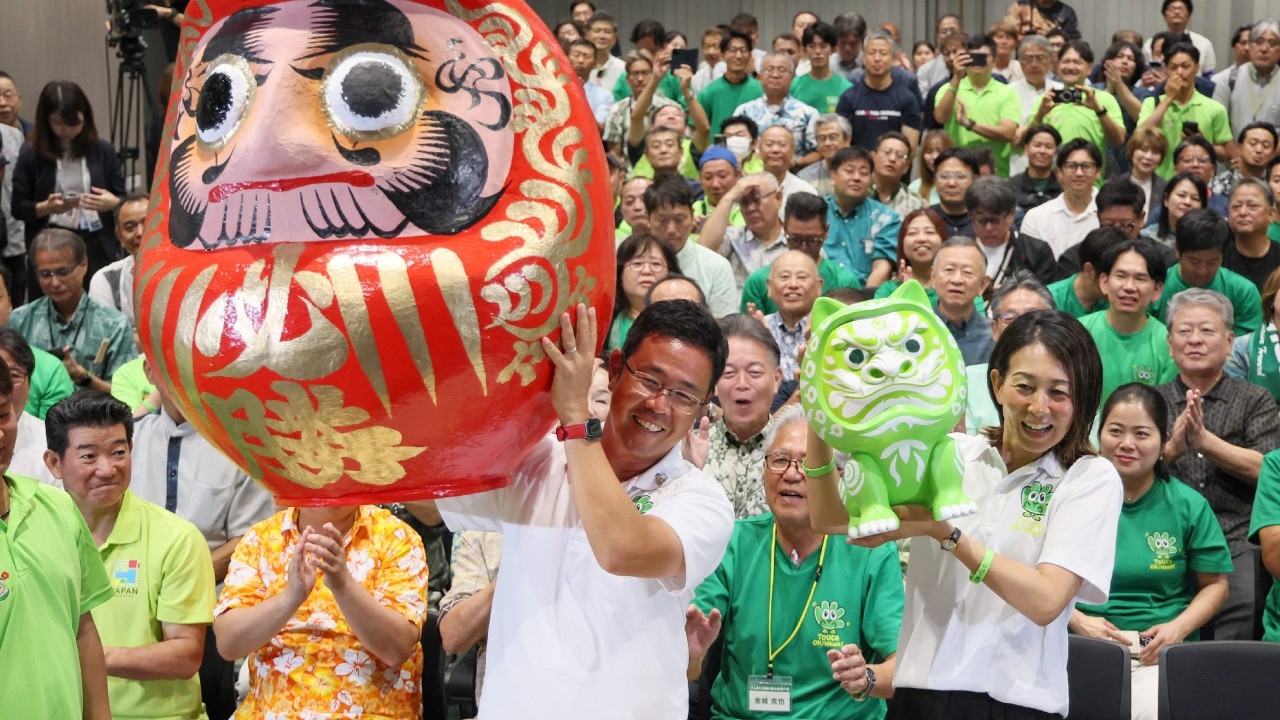
"Genta Koja," a candidate supported by Prime Minister Sanae Takaichi's ruling party, won Okinawa's gubernatorial election in a landslide, defeating incumbent Governor Denny Tamaki, who opposed relocating the U.S. military base. This results in Okinawa having a leader who supports the Futenma base relocation plan for the first time in 12 years.
The Okinawa gubernatorial election in Japan on 13 Sep saw a significant shift as Genta Koja, backed by Prime Minister Sanae Takaichi's ruling party, won decisively over incumbent Governor Denny Tamaki, who had served two terms and consistently opposed relocating the U.S. military base from Okinawa.
Data from the Okinawa Prefectural Government shows 42-year-old Koja received 423,124 votes, while 66-year-old Tamaki got 276,060 votes. This is the first time in 12 years Okinawa elected a governor supporting the plan to move the U.S. Marine Corps Air Station Futenma from Ginowan City to Henoko in Nago City, still within Okinawa Prefecture.
Koja accepted the central Japanese government's plan to keep the Futenma base on Okinawa's main island but relocate it to a less populated area, reasoning that this move would reduce the impact on residents of Ginowan City.
The Okinawa Election Commission reported Koja garnered over 400,000 votes, setting a new record for Okinawa gubernatorial elections. This is the first time a candidate has surpassed this figure; the previous record was 396,632 votes by Tamaki in 2018.
Koja also achieved the highest vote counts in almost every municipality within the prefecture, except for one village. Voter turnout was 61.57%, up 3.65 percentage points from the 2022 election.
Prime Minister Sanae Takaichi said the ruling party-backed candidate's victory reflects Okinawan people's desire for the government to prioritize economic issues more.
Speaking to reporters at the Prime Minister's Office in Tokyo, Takaichi said the government will work with Koja to stimulate Okinawa's economy, which is among the lowest in per capita income in Japan.
The Prime Minister noted the election results reflect Okinawa residents' will to see economic growth and affirmed the government's commitment to fully support the prefecture's economy alongside the new governor. Other issues will be carefully considered in consultation with Koja.
Koja revealed plans to meet Prime Minister Takaichi soon to request a timeline from the central government for returning the Futenma base land to Japan after relocation, which could be as early as 2036. He also intends to discuss measures to promote Okinawa's economic and social development.
The United States has about 54,000 troops stationed in Japan, mostly in Okinawa, where residents have long faced issues related to the bases, including noise, pollution, helicopter accidents, sexual assault cases, and other incidents causing local discontent.
Japan and the U.S. agreed in 1996 to move the Futenma base out of Ginowan City following a 1995 incident where three U.S. servicemen raped a 12-year-old girl, sparking widespread protests against the U.S. military presence in Okinawa. The relocation plan was approved by then-Governor Hirokazu Nakaima in 2003, but he was defeated in the next election by a candidate opposing the move.
Okinawa was under U.S. control from 1945 after Japan's defeat in World War II until the U.S. returned governance to Japan in 1972. Nonetheless, Okinawa remains home to most of the U.S. military bases and infrastructure in Japan.
Due to this history, alongside concerns about safety, noise, and environmental impact, many Okinawans continue to oppose relocating the base to Henoko, even as the prefecture's strategic importance grows amid regional tensions, especially involving China.
This election differed from previous gubernatorial contests as the long-standing contentious issue of base relocation was downplayed, with economic problems becoming the primary campaign focus.
Construction of the new base replacing Futenma continues after legal battles between the central and Okinawa local governments ended last year, leaving the prefectural government with minimal legal options to block the relocation.
Takaichi stated the government aims to collaborate with the new governor to promote economic growth and improve residents' living standards, while Koja emphasizes developing Okinawa's economy alongside managing base-related issues.