

Several Chinese officials have responded to the U.S. for promoting a narrative of competition in AI development with China, pointing out that malicious rivalry will only damage global AI governance.
On Monday, 14 Sep 2026 GMT+7, Geng Shuang, spokesperson for China's Ministry of Foreign Affairs, stated that creating a narrative of threat and hostile competition will only undermine global AI governance. He called on all parties to collaborate in developing AI openly and for the common good.
Meanwhile, Chen Yixin, China's State Security Minister, and President Xi Jinping emphasized that China must maintain a balance between AI development and national security. They warned against adversaries misusing AI and called for international cooperation.
At the same time, China continues to champion open-source policies, having established a Global AI Cooperation Organization in July, and proposed forming an open-source AI community during the BRICS summit to jointly guide international AI governance.
China’s recent moves follow warnings from leading executives and researchers, such as Dario Amodei, CEO of Anthropic, and Sam Altman, CEO of OpenAI, about AI's existential risks that could threaten human survival without proper safety measures and coordinated development slowdowns.
U.S. President Donald Trump rejected experts’ calls to slow AI development, stressing that the top priority is for the U.S. to outpace China technologically, stating, "The winner in the AI battle is the winner in the global game."
However, analysts see a joint U.S.-China agreement on AI development as very difficult because both view the technology as central to national security.
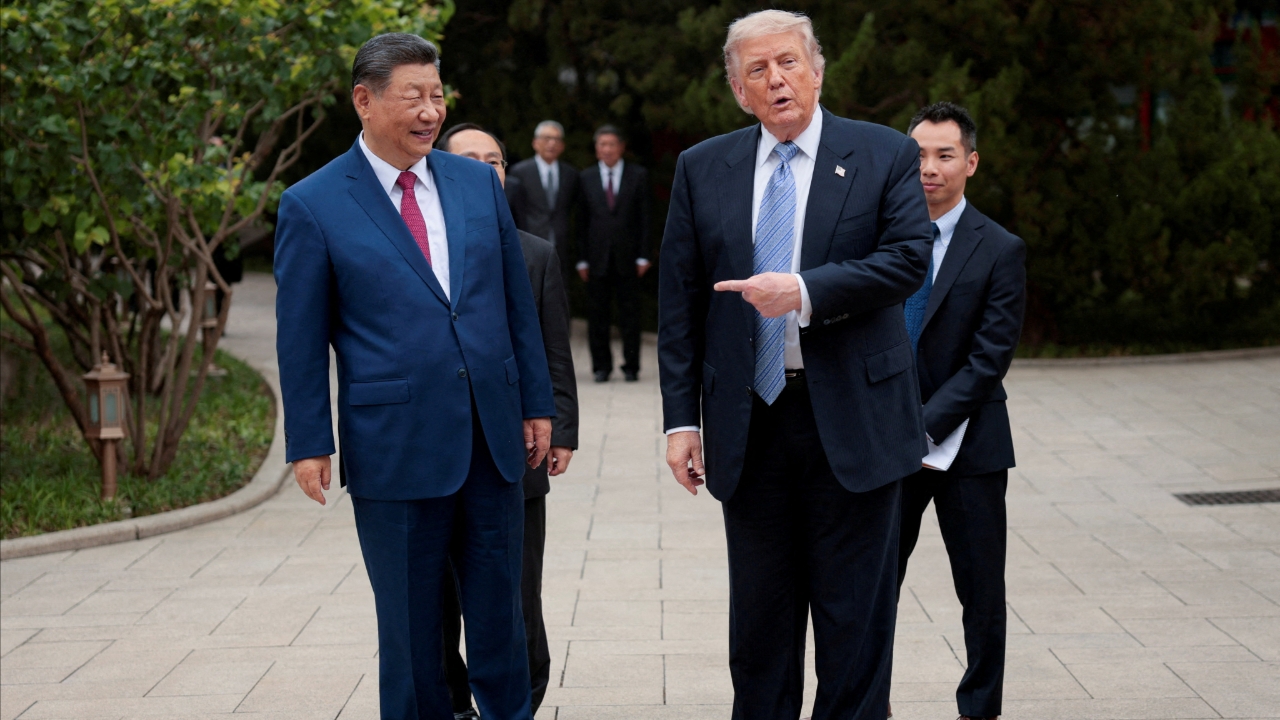
Both sides are attempting to include AI issues on the agenda for talks between Xi Jinping and Donald Trump at the White House next week, as losing the AI race is seen as losing a strategic industrial-era infrastructure.
Follow international news:https://www.thairath.co.th/news/foreign
Source:bbc