

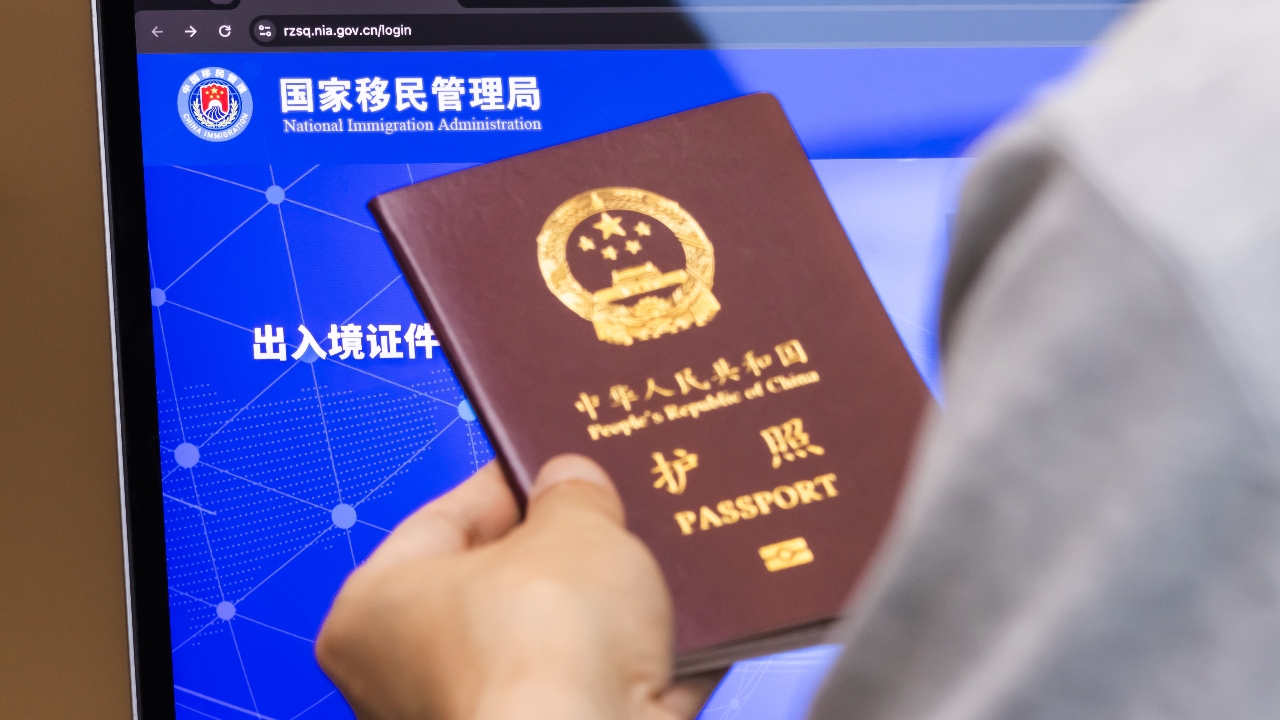
China's newly enforced travel regulations stipulate that citizens perceived to have "caused harm" to national security or interests while abroad may face travel bans outside the country for up to three years upon returning. Additionally, those violating technology import-export rules that could threaten industrial or technological security will also be barred from traveling abroad.
The new Chinese travel regulations took effect today (15 Sep). Authorities state the rules aim to protect national sovereignty and security, asserting they do not restrict travel for the "general public." However, critics argue these rules increase the government's ability to monitor and control citizens and their activities overseas.
Under the new rules, Chinese citizens considered to have damaged the country's security or interests while abroad may be banned from leaving China for up to three years after returning. Those violating technology import-export regulations that could threaten China's industrial or technological security may also face travel bans.
The Chinese government's "Ghost Yao" platform, used to clarify and counter rumors, stated the rules do not target the general population's travel but are measures to prevent high-risk individuals and travel to risky areas. It cited issues of citizens being tricked into traveling abroad and becoming involved in illegal gambling and scam gangs overseas.
However, Professor Tom Kellogg, Executive Director of the Asian Law Center at Georgetown University, said the rules serve as another tool to control what Chinese citizens do or say abroad. He added that in some cases, state security officials may directly deny passport issuance to prevent criticism of the Chinese government overseas or to punish rights activists.
Some Chinese individuals have reported facing travel restrictions for years. A 26-year-old man told the BBC that his passport application was denied in 2023, which he believes is connected to his participation in the large pro-democracy protests in Hong Kong in 2019.
He said that during the protests he gave interviews to Hong Kong media and, upon returning to mainland China, was questioned by security police. An immigration officer verbally told him he could not be issued a passport "because of Hong Kong issues," though no official written document was provided.
He stated that if he had official documentation, he could request an administrative review, but all he received was a verbal "You cannot go." He did not dare to pursue the matter further fearing imprisonment and questioned whether, as an ordinary person who had done nothing wrong, he would ever be able to travel abroad again.
Publicly available information indicates that Chinese citizens currently cannot independently verify whether they are subject to travel control measures. Generally, individuals only become aware when applying for documents or attempting to travel abroad, without formal notification either written or verbal.
Though China's Administrative Licensing Law mandates that government agencies must provide written reasons when denying licenses, some BBC interviewees said this rule is not strictly enforced. Meanwhile, the Chinese Ministry of Foreign Affairs and immigration authorities did not respond to BBC Chinese inquiries on this matter.
Data from the human rights group Safeguard Defenders shows that China has significantly increased the use of travel bans in recent years. The Supreme People's Court database recorded only 89 judgments mentioning travel bans in 2016, but this number rose to 188,760 last year.
The proportion of civil case judgments involving travel bans increased more than 30-fold from 2019 to 2025, rising from about 0.23% to 7.3%. The actual number of cases is believed to be higher, as many judgments remain undisclosed.
Under the new rules, border officials are also tasked with advising citizens to avoid traveling to countries and regions deemed "high-risk areas." Previously, government officials, state enterprise employees, and some general public groups already faced restrictions on travel to certain countries.
A man using the pseudonym "Xiao Wang," working at a state financial institution in Beijing, revealed that employees must hand over their passports to the organization and obtain approval before traveling abroad. Managers often verbally warn that sensitive countries, such as Japan, are strictly off-limits for staff travel.
Xiao Wang also said some friends who are government officials or work in museums have faced great difficulty traveling abroad and have been told they cannot directly apply for passports due to the nature of their jobs.
Kellogg views the expansion of travel restrictions as deeply concerning, reflecting increased ideological control under President Xi Jinping's leadership, reminiscent of Mao Zedong's era.
During Mao's rule, China was almost cut off from the outside world, while international travel only became part of Chinese life in the 1990s after reforms and opening policies. Kellogg said current travel restrictions evoke memories of that "painful era."
/sourceBBC