

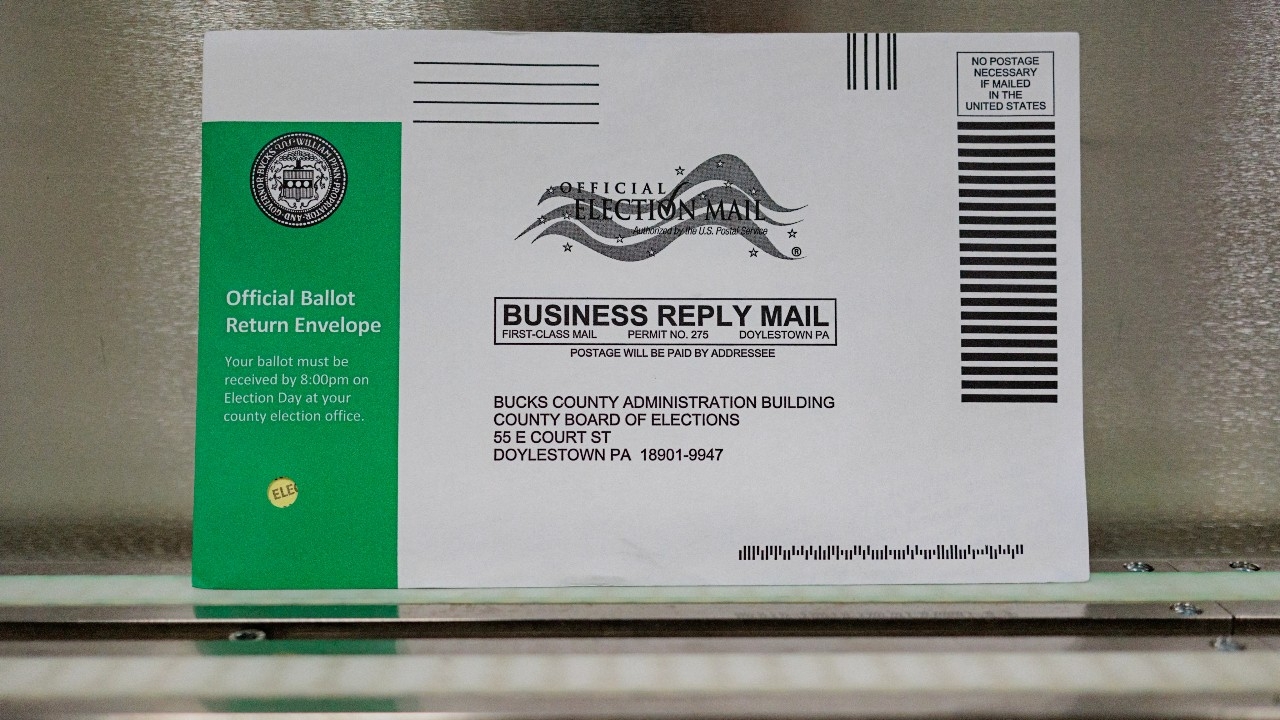
The US Supreme Court has denied the Justice Department's request to overturn a lower court's injunction that suspended the enforcement of new United States Postal Service (USPS) rules imposing conditions on mail-in ballots. This represents a major defeat for President Donald Trump's effort to limit mail-in voting ahead of the midterm elections.
The Supreme Court noted that the government is unlikely to win on the merits. Conservative Justice Brett Kavanaugh, who agreed with the majority, stated that while the measures might be legally sound in the long run, state and local election officials do not have sufficient time to properly implement the new rules before this year's election.
Justices Samuel Alito and Clarence Thomas, also conservatives, dissented against the order. The Supreme Court currently has six conservative justices out of nine in total.
The measures stem from an executive order issued by Trump in March requiring states to compile lists of voters eligible to receive mail-in ballots, with the USPS only delivering ballots to those listed. It also mandated the use of standardized envelopes with specific barcodes; ballots not meeting USPS requirements could be rejected.
The US government argued that these measures aim to prevent election fraud. Opponents, however, pointed out that evidence of fraud in mail-in voting is rare and warned that the new rules could delay or prevent the delivery of thousands of valid ballots.
Previously, on 4 September, Federal Judge Indira Talwani in Boston issued an order suspending the enforcement of these rules, citing potential violations of the US Constitution, which grants states the authority to manage elections. Additionally, another judge in Washington, D.C. ruled against the measures on Sunday.
The American Civil Liberties Union (ACLU) called the Supreme Court's order a major victory for voting rights, emphasizing that the Constitution grants authority to states and Congress to set federal election rules—not the president or the USPS.
Several states have already begun preparing to send mail-in ballots to eligible voters. Meanwhile, a USPS whistleblower warned that millions of Americans might not receive ballots due to hastily designed and inadequately efficient ballot management systems.
Trump has long opposed mail-in voting and has claimed without evidence that the system is highly susceptible to fraud, despite having used mail-in voting himself in the Republican primary in Florida earlier this year.
The midterm elections on 3 November will contest seats in Congress. Polls indicate that Republicans face a risk of losing their slim majority, especially in the House of Representatives. If Democrats regain control, they have signaled intentions to block Trump's policies and possibly pursue impeachment proceedings against the president for a third time.