

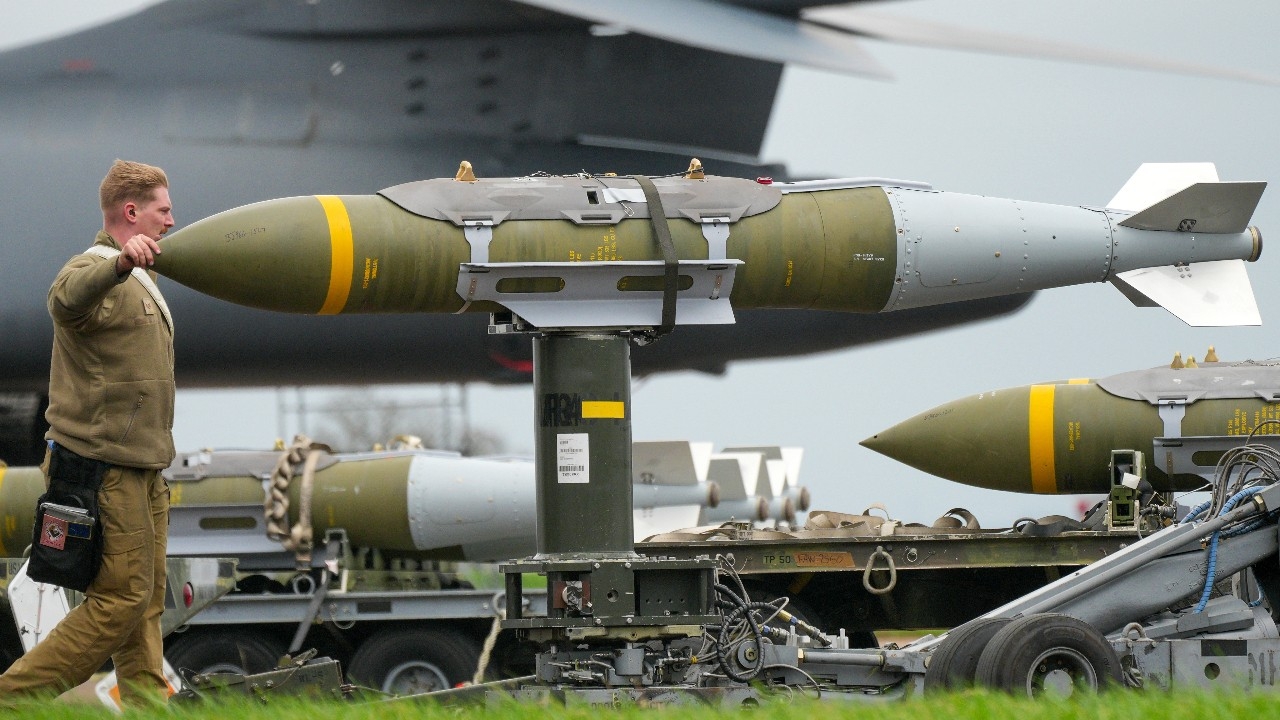
The US Department of Defense Inspector General's Office revealed a report to Congress confirming for the first time that the war with Iran has caused strategic shortages of US military equipment. The operation from 28 February to 30 June cost approximately $33.4 billion, about 1.11 trillion baht, with over $22.3 billion, or roughly 742 billion baht, spent specifically on equipment.
The US Department of Defense Inspector General's Office disclosed that the US is facing equipment shortages due to the war with Iran. It stated that "Epic Fury," the US name for the joint operation with Israel to diminish Iran's military capabilities, incurred costs of around $33.4 billion, or about 1.11 trillion baht, from 28 February to 30 June.
This report was prepared under Congressional requirements and is the first of its kind. It states that of the total, about $22.3 billion, or roughly 742 billion baht, was spent on equipment. The report warns that heavy equipment usage has depleted strategic reserve stockpiles and revealed limits in defense industry production capacity, causing delays in replenishing equipment reserves.
The US Department of Defense indicated it is working to improve procurement processes, reduce production times, and stockpile raw materials, components, and certain critical equipment types. However, increasing production capacity will take considerable time.
This situation may raise concerns for countries reliant on US weapons, such as Ukraine and Taiwan. Ukraine requires additional interceptor missiles for its Patriot air defense system against Russia, while Taiwan depends on US arms agreements to deter threats from China.
The report contradicts statements by President Donald Trump, who dismissed concerns over dwindling weapons stockpiles and claimed the US has "virtually unlimited" military equipment. On 14 September, Trump posted on Truth Social that the US is producing top-tier weapons in greater quantities than at any other time in history.
The report also notes that in the first 24 hours of the war, the US attacked over 1,000 targets in Iran but did not conduct attacks on that scale in the following months.
US military losses detailed in the report include 4 destroyed F-15 fighter jets, 1 damaged F-35 fighter jet, 7 damaged KC-135 refueling aircraft, and as many as 30 destroyed MQ-9 Reaper drones. Additionally, the US Navy’s main logistics base in Bahrain was attacked by Iranian drones and guided missiles.
Iranian attacks also damaged or destroyed hundreds of buildings and structures at US bases in Kuwait, Bahrain, Qatar, the United Arab Emirates, Saudi Arabia, Iraq, Oman, and Jordan. However, repair costs are not included in the $33.4 billion estimate, as it remains unclear whether all bases will be restored or who will bear the expenses.
As of 30 June, 7 US soldiers died in combat operations, with another 7 non-combat-related deaths, and 417 soldiers were wounded in combat.
Meanwhile, the US Department of Defense denies allegations of equipment shortages. However, Defense Secretary Pete Hegseth has urged the defense industry to accelerate weapons production. Lockheed Martin executives described the ramp-up as an urgent and chaotic situation requiring careful management.
Experts from the Center for Strategic and International Studies (CSIS) warn that while the US may have enough equipment for war with Iran, maintaining sufficient equipment levels into the second, third, and subsequent months of a large-scale conflict with China would be a significant challenge.