

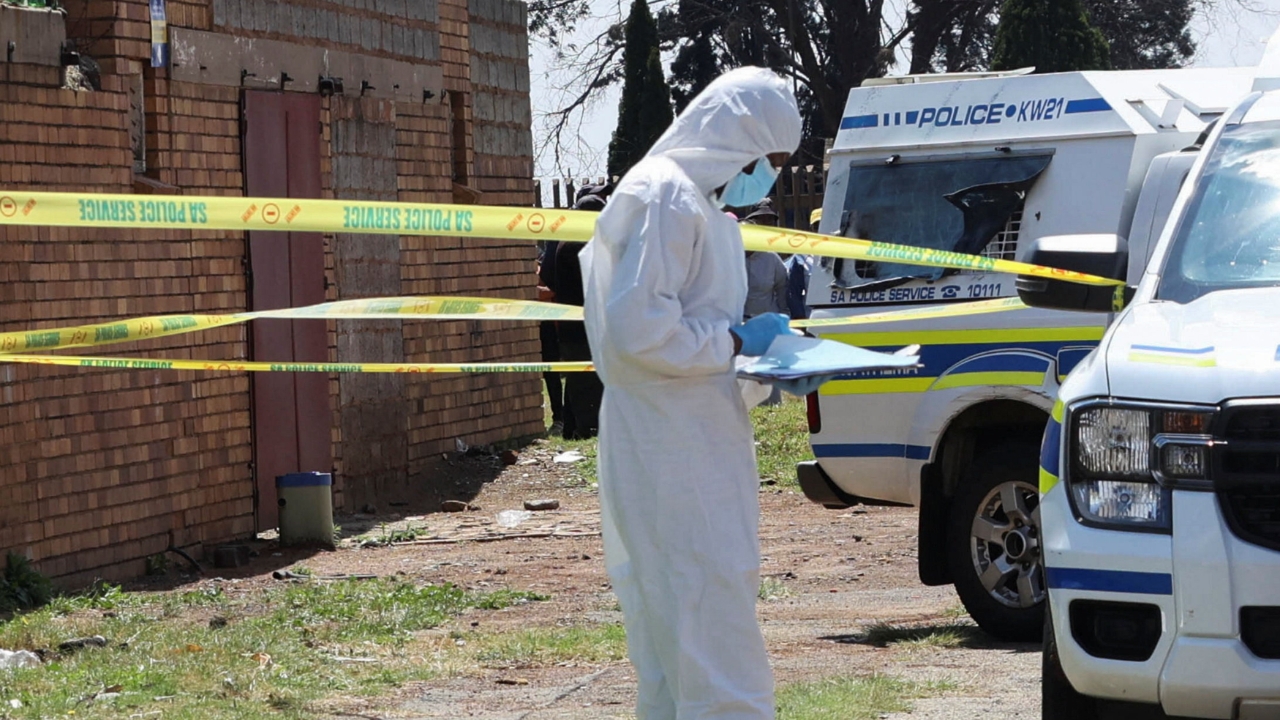
South African officials found the seventh female body near the location where a missing female runner's body was discovered, prompting President Ramaphosa to order an expedited investigation and caution women to be more vigilant at this time.
Foreign news agencies reported on 15 Sep 2026 that South African authorities found the seventh female body in Gauteng Province, east of Johannesburg, sparking widespread fear in the community of a possible serial killer at large. Police have warned the public to exercise heightened caution.
The discovery followed the disappearance of Elizabeth “Sonzo” Moselakgomo, a 38-year-old female runner who went out for exercise last week. The search for her led authorities to clues that uncovered six other victims over the past two months, all found semi-nude with signs of bruising.
At least five victims, including Moselakgomo's body, were found in the same vicinity, especially in the Rhodesfield area of Kempton Park city within Gauteng Province. The latest body was discovered on Tuesday (15 Sep) in the Kwa-Thema urban community, just 34 kilometers away.
South African President Cyril Ramaphosa urgently instructed police to prioritize this case and apprehend the perpetrator for prosecution.
"I have ordered that these cases receive the highest priority and that every effort be made to bring those responsible to justice. Our law enforcement agencies are working together with the public, and we rely on any information from them that could help stop these attacks," Ramaphosa said.
Meanwhile, the South African Police Service (SAPS) has warned women to be cautious during outdoor activities and formed a multidisciplinary investigation team to link the cases, although it has not officially confirmed if a serial killer is responsible.
This incident underscores South Africa's critical issue with sexual violence and femicide. Statistics indicate an average of 45 murders per day from April to July, and research shows over 35% of South African women have experienced physical or sexual violence.
Amnesty International and the Commission on Gender Equality stated that this case is a reminder that women in South Africa remain unsafe. They called on nations to enhance preventive measures such as improved lighting, increased police patrols, and CCTV installation in high-risk areas, emphasizing that "safety improvements should not wait until women are killed first."
Follow international news:https://www.thairath.co.th/news/foreign
Source:cbsnews