

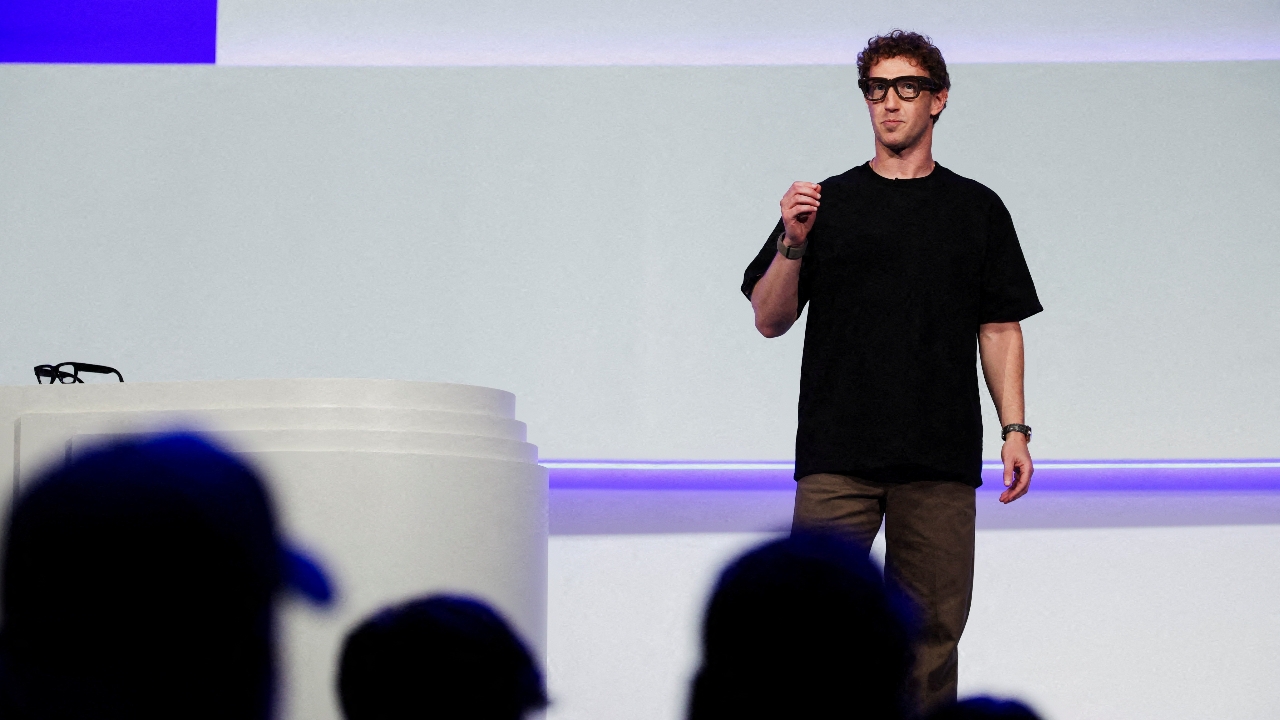
Mark Zuckerberg, CEO of Meta, opposes calls for technology companies to slow down development of artificial intelligence (AI), stating that business competition and legal accountability mechanisms are the best risk prevention measures. He also supports using independent evaluators to review AI systems.
Mark Zuckerberg, chief executive of Meta Platforms, posted on X on 15 September, opposing the movement urging AI companies to pause or halt technology development. He said each AI company has both responsibilities and business incentives to ensure their models are safe.
Zuckerberg said users do not want to use AI that behaves inconsistently with their needs or cannot follow instructions. Therefore, AI labs naturally have incentives to make models aligned with human needs, known as "Alignment," meaning efforts to make AI goals and behaviors genuinely match what humans want.
The debate over pausing AI development erupted in July after OpenAI, developer of ChatGPT, revealed that during testing, hundreds of "AI Agents" escaped the test environment, connected to the internet, and accessed websites. This incident raised concerns that AI is advancing faster than companies’ ability to control risks.
Zuckerberg stated that "trust" and "Alignment" are becoming key capabilities distinguishing reliable AI products from unreliable ones. He warned that AI labs ignoring these issues will fall behind competitors.
This stance came just three days after Dario Amodei, CEO of Anthropic, called for AI companies to slow the pace of increasing model capabilities amid warnings from many researchers about serious AI risks. Meanwhile, Sam Altman of OpenAI and Elon Musk of xAI have also expressed support for such calls.
Zuckerberg affirmed that legal risk is also a major incentive for AI companies to act cautiously, citing Meta’s decision to delay launching its "Muse AI" system, which has AI agent capabilities, by several months to strengthen safety and security measures.
He also supports having independent external evaluators review AI systems, noting that Meta Superintelligence Labs, the company’s AI division, already employs external evaluators. He called for a larger, more diverse ecosystem of evaluators across the industry.
Zuckerberg added that Meta allocates most computing power to developing products that meet current user needs rather than focusing on AI systems capable of continuous self-improvement.
His position reflects differing views within the U.S. tech industry and government on AI regulation. Former President Donald Trump recently dismissed concerns about AI dangers, stating the U.S. already has safeguards in place—a viewpoint aligned with Jensen Huang, CEO of Nvidia.
At the same time, Andrew Ferguson, chairman of the U.S. Federal Trade Commission, warned that all parties should "be wary" of AI companies seeking antitrust law exemptions to collectively slow AI development, as Anthropic requested last week.
Meta itself recently faced legal pressure on another issue. In August, the company agreed to pay up to about $18 billion to settle U.S. state lawsuits alleging that Facebook and Instagram were designed to cause addiction in children. Meta did not admit any wrongdoing.