

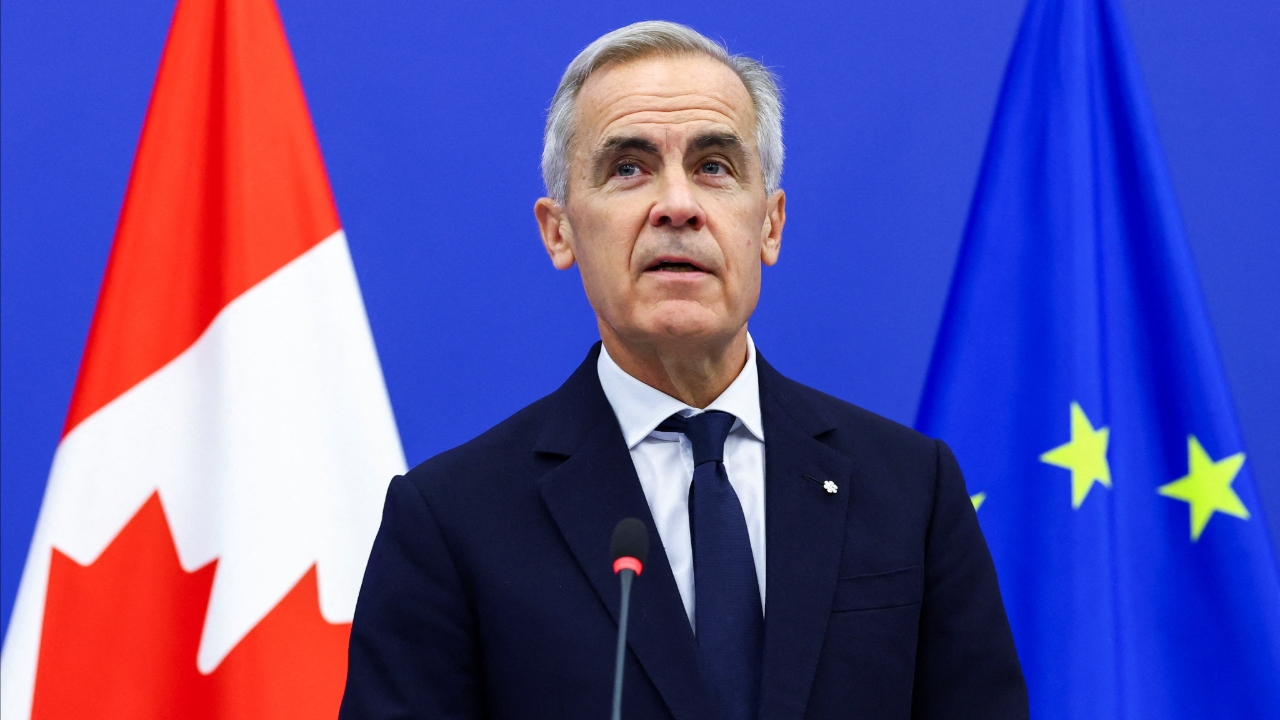
The Canadian leader affirmed that there is no intention to create a third power bloc in response to the EU's invitation to become an associate member, while actual membership could face several obstacles, both legal and oppositional.
Foreign news agencies reported on 17 Sep 2026 that Mr. Mark Carney, the Prime Minister of Canada, accepted a proposal from Ursula von der Leyen, President of the European Commission, to make Canada the EU's first "associate member."
This cooperation focuses on strengthening energy and economic security, advanced raw materials, AI technology, innovation, and defense to address challenges posed by global powers such as the US, China, and major tech corporations.
The Canadian leader emphasized that the cooperation does not aim to create a third superpower or oppose anyone, but to establish a new multilateral system among like-minded countries, stressing, "We are not seeking a zero-sum agreement (where there are winners and losers)."
This move comes as both Canada and the EU face trade wars and tariff barriers imposed by the US government under Donald Trump, along with concerns about security credibility and defense.
Canada aims to strengthen and protect its sovereignty amid the rising tide of nationalist politics in the US and several European countries.
US President Donald Trump strongly opposed Canada and the EU's plan, threatening to impose very high import tariffs and possibly viewing the cooperation as an "adversarial act."
Moreover, Canada may face legal limitations since associate membership lacks a clear legal framework and requires approval from all 27 EU member states. Negotiations are expected to be lengthy and may involve conflicts of interest, such as steel tariffs.
Some countries, like France, worry that granting excessive privileges to non-member countries could encourage anti-EU groups domestically to use this as justification to demand withdrawal from the EU.
Follow international news:https://www.thairath.co.th/news/foreign
Source:bbc