

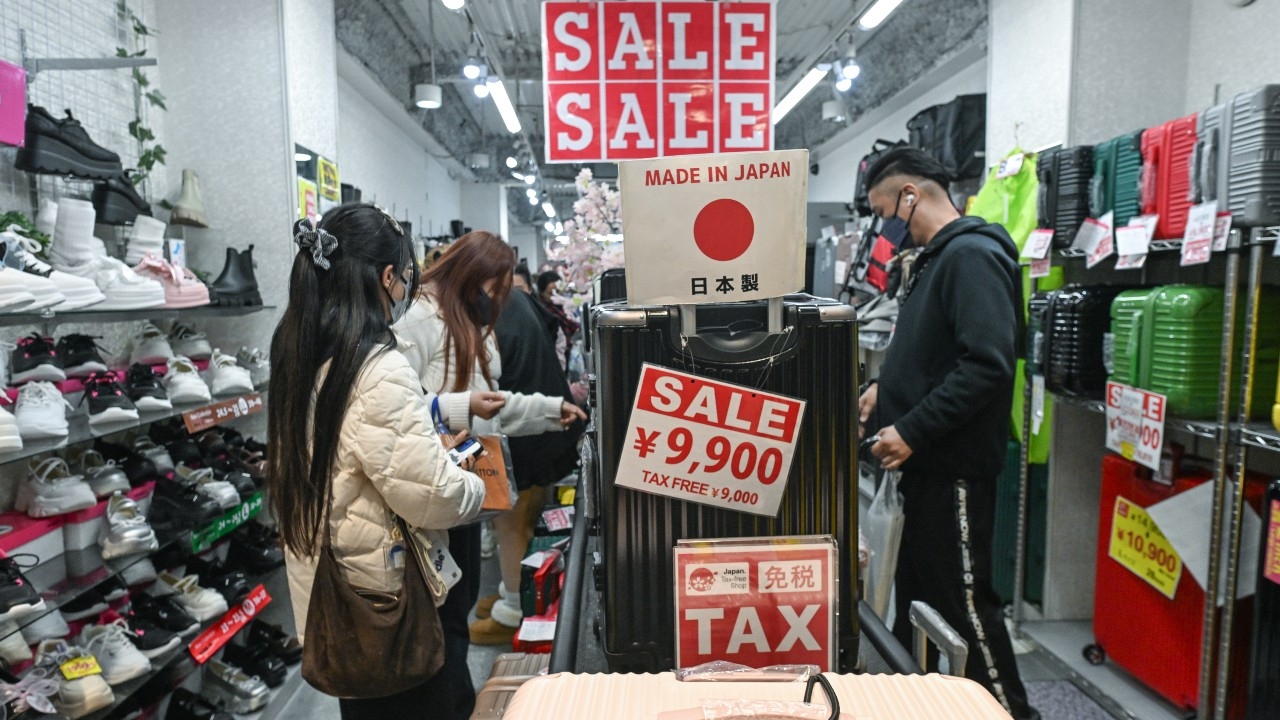
The Bank of Japan (BOJ) decided to raise its policy interest rate from 1% to 1.25% during a two-day monetary policy meeting. This increase was in line with market expectations and brings Japan's interest rate to its highest point in 31 years, since 1995, amid pressures from rising energy prices, a weakening yen, and concerns that inflation may exceed targets.
The Bank of Japan (BOJ) decided to raise its policy interest rate from 1% to 1.25% during a two-day monetary policy meeting. This increase was as expected by the market and marks the highest interest rate level in Japan in 31 years, since 1995.
This rate hike comes as Japan faces multiple economic pressures, including a weakening yen, rising commodity prices, and a shrinking workforce, while the BOJ tries to gradually end its decades-long ultra-low interest rate policy.
This interest rate increase is the shortest interval between hikes since Japan began raising rates in March 2024, occurring just three months after the previous hike in June. Previously, the BOJ had raised rates roughly every six months after ending negative interest rates in March 2024, with six hikes over the past two and a half years from a negative 0.1% level.
The BOJ stated that although Japan's financial conditions remain accommodative, it will closely monitor movements in foreign exchange markets and demand related to artificial intelligence (AI) technology to guide future monetary policy decisions.
Official data released before the BOJ's decision showed that Japan's core inflation slightly slowed to 1.7% in August from 1.8% the previous month but remained near the BOJ's 2% inflation target.
Although Japan's inflation is low by international standards, the rise in prices is a rare development for Japan's economy, which previously experienced very low inflation or deflation—meaning falling prices—continuously for about three decades.
Global crude oil and natural gas prices rose this year due to the Iran conflict severely disrupting shipments through the Strait of Hormuz, a critical global shipping route. Japan is particularly vulnerable to such disruptions because it heavily depends on energy imports from the Middle East.
Rising import costs caused by the yen weakening to its lowest level against the US dollar in decades, combined with soaring crude oil prices due to Middle East conflicts, have raised concerns that inflation may surpass BOJ's projections.
The yen has faced persistent downward pressure in recent months. Recently, the US dollar strengthened above 160 yen despite Japan's government efforts to support the yen through foreign exchange market interventions. Expectations of a September interest rate hike helped the yen recover somewhat.
In August, Japan and the US confirmed a joint intervention to slow the yen's depreciation after the yen hit a 40-year low. This was the first coordinated intervention since 2011, when both countries acted together to weaken the yen after the massive earthquake and tsunami in eastern Japan.
At that time, Japan's Ministry of Finance and US Treasury Secretary Scott Bessent stated that both sides would not hesitate to intervene jointly again if necessary. Bessent also pressured the BOJ to raise interest rates to support the yen, urging BOJ Governor Kazuo Ueda to "do the right thing."
Secretary Bessent met with Japan's Finance Minister Satsuki Katayama and BOJ Governor Kazuo Ueda late last month, expressing concerns that the yen's weakness could fuel higher inflation in Japan and push Japanese government bond yields higher, which would in turn raise US bond yields and borrowing costs.
In September, Governor Ueda said the BOJ would discuss interest rate hikes at every meeting, including September's, but emphasized the need to carefully assess economic developments and price levels before making final decisions.
Japan's interest rate increase occurs as major central banks worldwide tighten monetary policies to address inflation driven by higher energy prices from the Iran conflict.
On Wednesday, 16 Sep 2024 GMT+7, the US Federal Reserve raised its policy interest rate for the first time in over three years, while the European Central Bank also increased borrowing costs earlier in the same month.
The BOJ must conduct monetary policy amid sensitive political conditions, with Japanese government bond yields under upward pressure reflecting market concerns over Japan's fiscal status amid Prime Minister Sanae Takaichi's expansionary fiscal policies.
Rising borrowing costs may hamper economic growth by reducing business investment, posing a challenge for the BOJ to control inflation without hindering economic expansion.
The BOJ is scheduled to hold two more monetary policy meetings this year—in October and December—with markets watching for signals on whether the central bank will continue raising interest rates and how quickly it will proceed.