

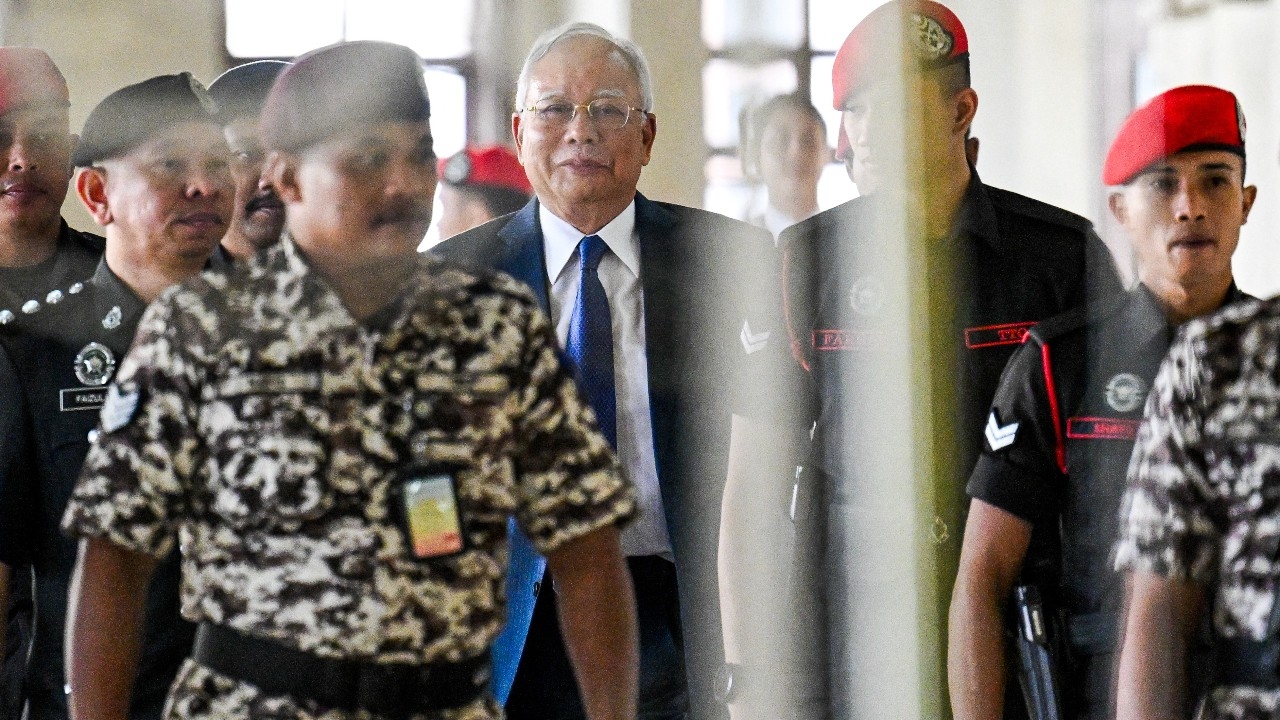
The King of Malaysia has granted a conditional pardon to Najib Razak, the former prime minister imprisoned for corruption involving the 1MDB fund, allowing him to serve the remainder of his sentence under house arrest until 23 August 2028, provided he pays a fine of 50 million ringgit, approximately 408 million baht.
His Majesty Sultan Ibrahim Iskandar, the King of Malaysia, has granted a conditional pardon to Najib Razak, the former Malaysian prime minister imprisoned for corruption related to the 1MDB fund, permitting him to serve the remainder of his sentence under house arrest until 23 August 2028, on condition that he pays a fine of 50 million ringgit, about 408 million baht.
A statement from the Legal Affairs Division under the Malaysian Prime Minister’s Office said this decision was made during the 64th meeting of the Federal Territories Pardons Board, which covers Kuala Lumpur, Labuan, and Putrajaya, held today (18 Sep), after Najib's pardon petition was postponed from last week’s meeting.
The statement said that His Majesty Sultan Ibrahim has decreed a "conditional pardon" for Najib, allowing him to serve the remainder of his sentence under house arrest until 23 August 2028, on the condition that he pays a fine of 50 million ringgit and strictly complies with other stipulated terms.
If Najib violates any of the conditions, the conditional pardon will be revoked, and he must return immediately to prison. However, authorities have not yet disclosed details of the other conditions related to the house arrest.
Najib, aged 73, began serving his prison sentence at Kajang Prison in August 2022 after the Malaysian Supreme Court upheld a conviction that he misappropriated 42 million ringgit (about 10.3 million U.S. dollars) from SRC International, a former unit of the 1Malaysia Development Berhad (1MDB) fund, into his bank accounts.
Originally, in 2020, the court sentenced Najib to 12 years in prison and fined him 210 million ringgit for abuse of power, criminal breach of trust, and money laundering.
In January 2024, the Pardons Board, then chaired by His Majesty Sultan Abdullah Ahmad Shah, voted to reduce Najib's prison term by half, from 12 years to 6 years, and lowered the fine from 210 million ringgit to 50 million ringgit, setting his release date as 23 August 2028.
Previously, Najib claimed that former King Sultan Abdullah had issued an additional order allowing him to serve the remainder of his sentence at home, but the Malaysian High Court ruled that the order was unenforceable because house arrest was not considered during the Pardons Board meeting in January 2024.
Although the latest pardon allows Najib to serve his first sentence under house arrest, he still faces another prison sentence. In December 2025, he was convicted of abuse of power and money laundering involving more than 700 million U.S. dollars transferred into his accounts from the 1MDB fund, a major separate corruption case.
The court sentenced him to an additional 15 years in prison and fined 11.4 billion ringgit (approximately 2.8 billion U.S. dollars). This new prison term will begin after Najib completes his first sentence, and he is currently appealing the verdict.
Najib established the 1MDB fund shortly after becoming prime minister in 2009. Investigators allege that at least 4.5 billion U.S. dollars were embezzled from the fund and laundered through multiple bank accounts in the United States and other countries. The stolen funds are said to have financed Hollywood films, as well as purchases of real estate, luxury yachts, artwork, and expensive jewelry.
The 1MDB scandal became a major issue in Malaysia’s 2018 general election, leading to the historic defeat of the National Front (Barisan Nasional) coalition, which had ruled since Malaysia’s independence from Britain in 1957.
Despite his conviction and imprisonment, Najib remains influential within the United Malays National Organisation (UMNO), which is currently part of the coalition government led by Prime Minister Anwar Ibrahim.
The latest royal pardon came just one week after the Pardons Board postponed consideration of Najib’s petition to their next meeting on 11 September, before convening again on 18 September and deciding to place Najib under house arrest with the specified conditions.
The use of house arrest as part of this pardon is unprecedented in Malaysia and is likely to provoke further debate about the scope of royal prerogative, the justice process, and law enforcement regarding one of the country’s most high-profile corruption convicts.