

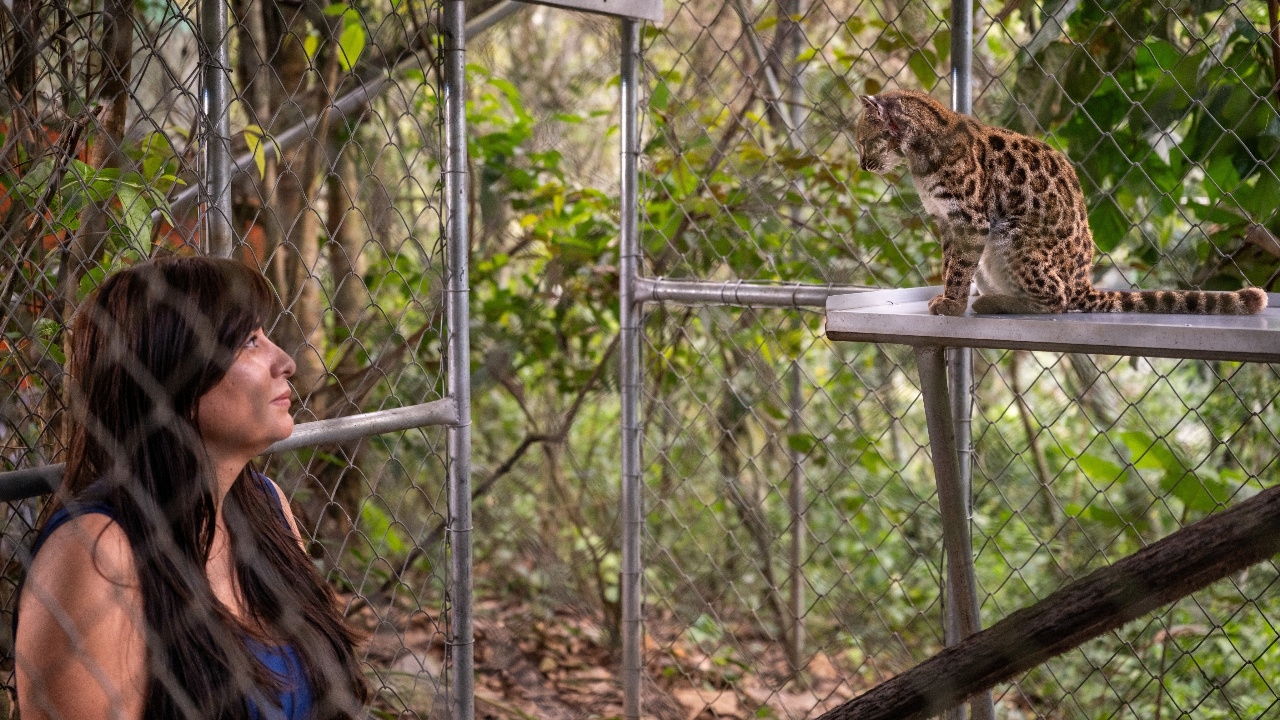
Scientists have confirmed the discovery of a new wild cat species in the world after more than 103 years, found in Bolivia. Genetic analysis showed it clearly differs from other wild cat species. It has been named Leopardus tilcayo, or "Tilcayo cat," with currently only one living specimen confirmed.
Scientists confirmed the discovery of a new wild cat species in the Yungas forest region, east of the Andes Mountains in Bolivia. The species was scientifically named Leopardus tilcayo, marking the first new wild cat species described scientifically in over 103 years.
This wild cat, the first new species discovered since the pampa cat of Uruguay in 1923, is similar in size to a domestic cat, with leopard-like spots and an overall appearance resembling other small wild cats of Central and South America. This resemblance had previously made it difficult for scientists to distinguish it from already known species.
The discovery began in 2016 when Bolivian biologist Paula Nogales-Ascararunz was notified by the Senda Verde wildlife rescue center about a wild cat exhibiting unusual characteristics not commonly seen.
The cat, nicknamed "Tigrino," is now about 10 years old. Locals found it as a kitten on a road near the forest and took it home, assuming it was a domestic cat. After about a year, the owner noticed wild behavior and transferred it to the wildlife rescue center.
Nogales-Ascararunz, founder of the Bolivian Wild Cat Research Project, was particularly interested in the cat’s small face, short rounded ears, long whiskers, and leopard-like spotted pattern. She took many photos but initially believed it to be a member of Leopardus tigrinus, known as the "tigrina" or "little spotted cat."
In 2019, while compiling a guide on Bolivian wild cats, Nogales-Ascararunz noticed that this cat’s markings differed from reference images of L. tigrinus from Brazil, especially larger rings or spots on its body, raising suspicion it might be a distinct species.
Researchers collaborated with geneticists from several countries to study DNA from both living animals and museum specimens to analyze the evolutionary relationships within this group of wild cats.
Published in the journal Current Biology, the study found that Leopardus tilcayo is genetically distinct from other tigrina cats, diverging from that group about 1.4 million years ago. Researchers also proposed that what was thought to be three tigrina species might actually include five, including the newly discovered tilcayo in Bolivia.
The name "tilcayo" derives from the local term for this cat. When Nogales-Ascararunz inquired about the name’s origin, locals said it was passed down through generations, though no specific meaning has been found in Spanish or Quechua, the languages used in Bolivia.
However, very little is known about L. tilcayo. Currently, only "Tigrino," living in the wildlife rescue center, is a confirmed living member of the species. Scientists believe more may exist in the wild, but the true population size is unknown, as is detailed information about its diet, reproduction, or natural behavior.
Researchers noted that the tigrina wild cat group is difficult to study due to their similar appearance and patterns, and the limited number of museum specimens has led to misidentifications, even by scientists.
Eduardo Izirik, a conservation geneticist at the Catholic University of Rio Grande do Sul in Brazil, said this cat group posed significant taxonomic challenges because of their very similar external traits, while genetic testing is now revealing differences invisible to the naked eye.
This new study analyzed the full genomes of 38 cats in the Leopardus genus and found that not only is L. tilcayo distinct from other tigrina cats, but its evolutionary differences are sufficient to recognize it as a new species.
Scientists also found evidence suggesting that tigrina cats in Peru may represent a new subspecies, Leopardus tigrinus antisuyo. Some researchers have proposed that the margay, previously considered a single species ranging from Mexico to Argentina, may actually consist of multiple species. However, further genetic studies are needed to confirm these hypotheses.
This discovery could directly impact conservation efforts, as assessing the status of animal species requires knowing where and how many individuals exist. If a species once considered singular actually comprises several species, each may have smaller populations than previously estimated and require separate conservation assessments.
The tigrina wild cats are considered at risk of extinction due to deforestation, habitat loss, and poaching. L. tilcayo has not yet been included in conservation status assessments because it has only recently been confirmed as a new species.
Caroline Sartor from the Wildlife Conservation Research Unit at the University of Oxford said this discovery is important for conservation because it is difficult to protect a species effectively if its identity and habitat are not clearly known.
Currently, there are 41 officially recognized species in the Felidae family, but the discovery of L. tilcayo and evidence suggesting multiple tigrina species could raise this number to at least 44 if the new classifications are fully accepted.
Scientists believe that more precise genome analysis techniques may lead to discoveries of other small wild cat species in Africa and Asia, as well as improve population assessments and conservation planning.
Nogales-Ascararunz said this discovery reflects that much of the natural world remains unknown to humans, even among mammals similar in size to domestic cats, which are generally thought to be well-studied. New species can still hide from scientific observation.
She added that the discovery of Leopardus tilcayo not only adds another wild cat species to the world but also serves as a reminder that much biodiversity remains to be explored and that these new findings must be protected alongside ongoing research.