

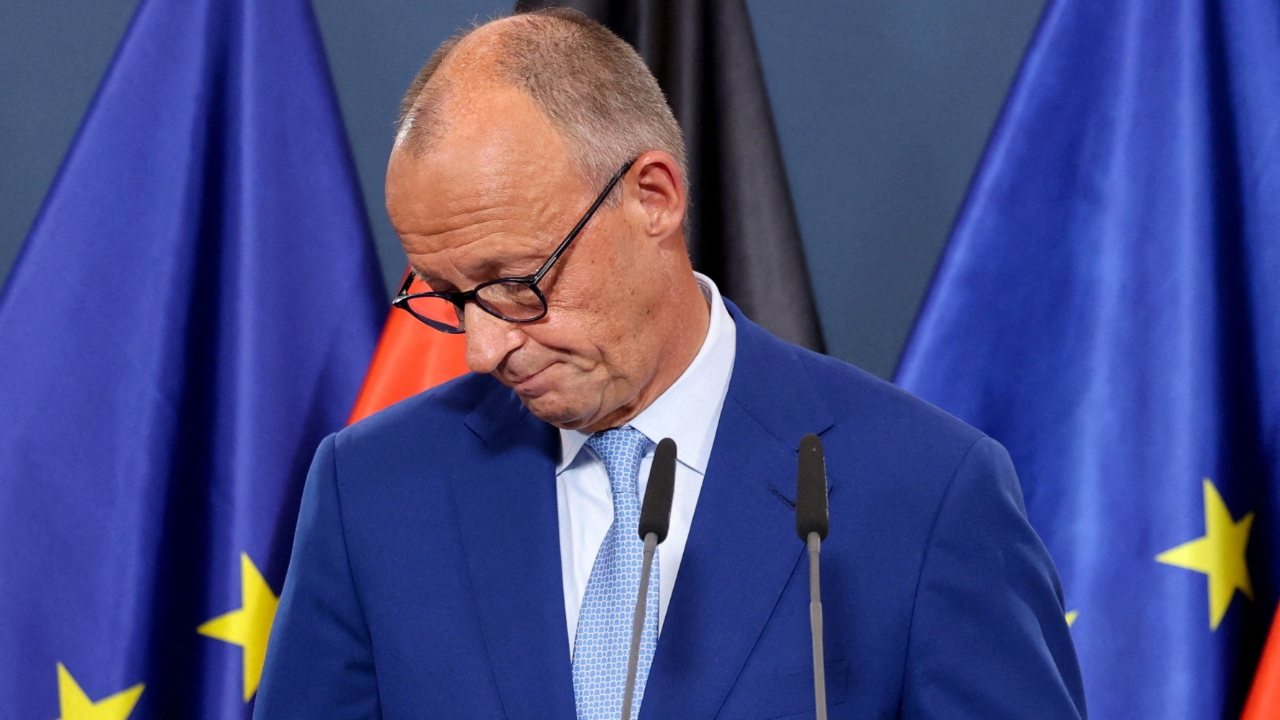
Germany's ruling party was defeated by the far-right party in local elections in two more states. The Chancellor openly admitted the outcome was a disaster but insisted he would not resign.
On Sunday, 20 Sep 2026 GMT+7, exit polls from elections in two states showed that Chancellor Friedrich Merz's center-right Christian Democratic Union (CDU) suffered heavy losses. In Mecklenburg-Vorpommern, the CDU nearly lost all its seats in the parliament, while the far-right Alternative for Germany (AfD) won about 38% of the vote.
In Berlin's elections, the left-wing party (Die Linke) surged ahead with roughly 24%–26% of the vote, overtaking the incumbent CDU, which dropped to about 20%.
Previously, AfD made history by winning in Saxony-Anhalt with a high score of 43.8%, while Chancellor Merz's CDU suffered a severe defeat, falling to just 17.2%.
Merz candidly acknowledged the election results as a "disaster" for the CDU. Despite intense pressure amid midterm leadership challenges and declining popularity after only 16 months in office, Merz affirmed he would not resign.
He pledged to continue pushing reforms in the economy, taxes, and social welfare, describing these reforms as an "antidote to authoritarianism" spreading in society.
Recently, Merz has tried to steer the party more to the right on immigration issues, but analysts say this move failed to win over AfD supporters and alienated the CDU's own left-leaning base.
Although AfD has won the highest votes in multiple areas, mainstream parties continue to refuse coalition talks due to major ideological differences and AfD's links to neo-Nazi groups, making state-level coalition formation very complex and unstable.
Follow international news:https://www.thairath.co.th/news/foreign
Source:bbc