

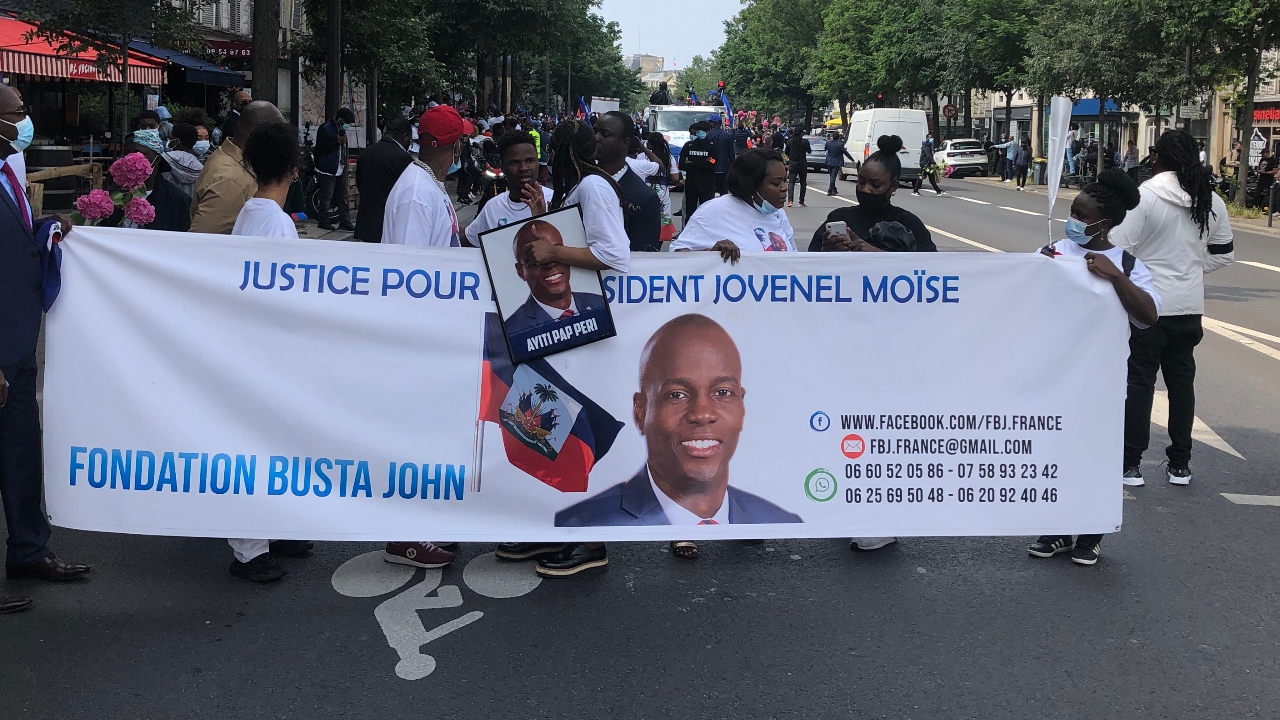
Haitian authorities have extradited 18 suspects involved in the 2021 assassination of President Jovenel Moïse to the state of Florida in the United States to face trial. Meanwhile, U.S. prosecutors state that 30 individuals have been charged so far and that the legal process is ongoing.
U.S. officials have revealed that 18 suspects in the assassination of former Haitian President Jovenel Moïse were transferred from Haiti to Florida to enter the U.S. judicial system, following the killing of the Haitian leader five years ago.
Jovenel Moïse, who was 53 years old at the time, was fatally shot inside his private residence in Port-au-Prince, Haiti's capital, on 7 July 2021. The attack was carried out by approximately 20 armed mercenaries, mostly former Colombian soldiers with military training. Notably, the president's security personnel did not intervene to protect him.
Brett Skgiles, a special agent with the U.S. Federal Bureau of Investigation (FBI), stated on the platform X that the arrests of suspects across multiple locations and countries demonstrate the FBI's ongoing commitment to bringing all those involved in the plot to justice.
Jason Reddin Guiones, a federal prosecutor for the Southern District of Florida, said that the 18 suspects were flown from Haiti on a military aircraft to face the U.S. justice system in the Southern District of Florida. He added that despite the passage of five years, the U.S. authorities continue to bring defendants to court and the case remains unresolved. To date, 30 suspects have been charged in connection with the assassination.
Sources from the Haitian government and police told AFP news agency that among those extradited is Joseph Felix Badio, a key suspect in the case and a former official of Haiti's Ministry of Justice anti-corruption agency.
Colombia's Ministry of Foreign Affairs issued a statement saying it is closely monitoring the extradition of 17 Colombian nationals from Haiti to the United States. The statement emphasized that the Colombian government was not involved in the decision or process leading to the extradition and that the matter falls under the jurisdiction of the relevant authorities of the countries involved.
In May, a U.S. federal court in Miami, Florida, convicted four defendants on charges related to the conspiracy to assassinate or kidnap President Moïse. Charges included conspiracy to provide material support to the plot and violations of U.S. neutrality laws due to participation in unlawful military operations abroad.
The four defendants face possible life imprisonment. U.S. federal prosecutors said all were connected to CTU, a Florida-based security company, and were recruited into the plot with the expectation of securing lucrative contracts if Moïse were removed from office.
U.S. prosecutors allege that the planning and funding of Moïse's assassination took place in Florida, as well as in the Dominican Republic and Haiti. The U.S. courts claim jurisdiction over the plot planned on U.S. soil. So far, 11 individuals have been charged in U.S. courts for involvement in the assassination, while some suspects accused of participating in the killing were shot dead by Haitian police during the incident.
The former Colombian soldiers accused in the case have stated that they were mercenaries misled to believe they were participating in a coup, unaware that there was a plan to assassinate President Moïse.
The situation in Haiti has deteriorated steadily since Moïse's assassination. Currently, the country lacks a president elected through popular vote. Armed groups control about 80% of Port-au-Prince, leading to rampant violent crime including kidnappings for ransom, armed robberies, and carjackings. The justice system faces severe challenges due to violence and gang control over territories.
Data from the United Nations Integrated Office in Haiti indicates that at least 1,408 people were killed and 656 injured between April and June this year amid the country's ongoing violence.
Meanwhile, Haiti is preparing to hold presidential and legislative elections for the first time since 2016, along with a constitutional referendum scheduled for 13 December, provided the security situation permits.
United Nations-supported armed forces, tasked with assisting Haitian police in combating gangs, are expected to fall short of their deployment targets by October, according to a spokesperson for the forces earlier this month.
/sourceBBC/ AFP