

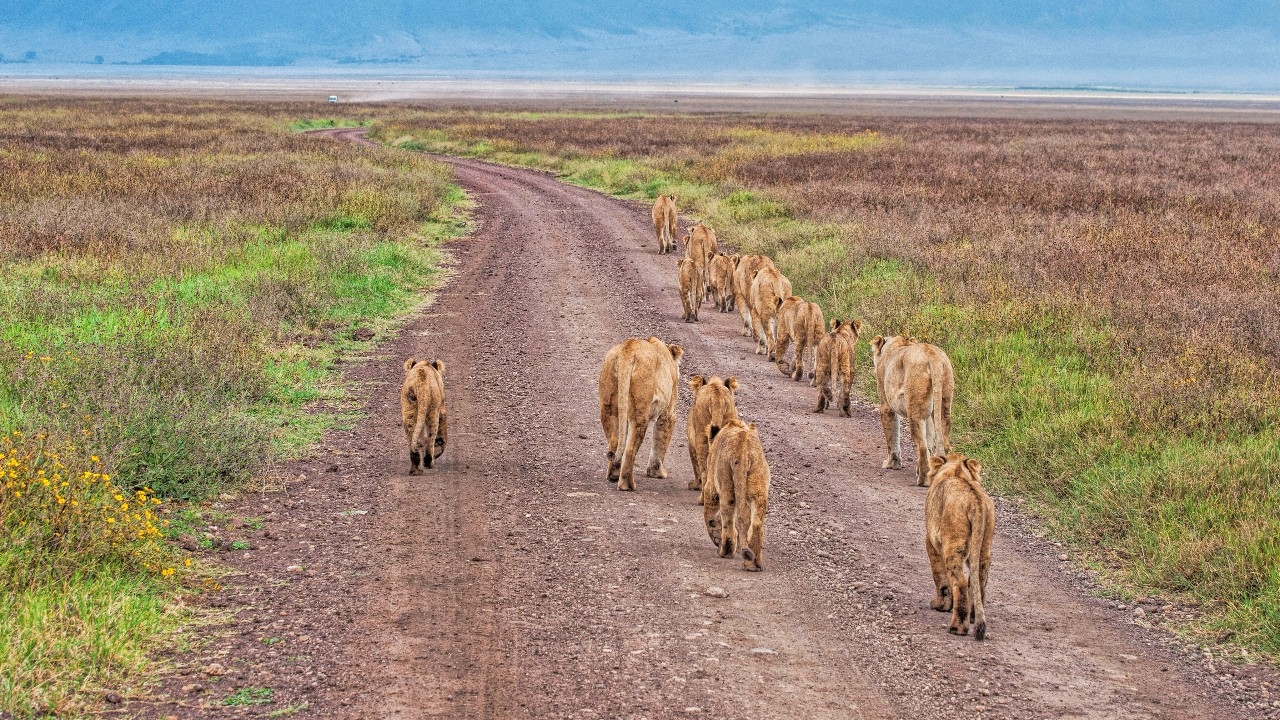
The Ngorongoro Conservation Area Authority in Tanzania reported finding the carcasses of 10 lions scattered across the reserve. Preliminary investigations indicate poisoning as the likely cause, a chronic problem arising from conflicts between livestock herders and predators, raising concerns about biodiversity impacts in this World Heritage site.
Tanzanian authorities have launched an investigation after officials discovered 10 lion carcasses found dead simultaneously within the Ngorongoro Conservation Area in the country's north. A statement from the Ngorongoro Conservation Area Authority said all the lion carcasses were found around the Ndutu area in the Endulen ward of Arusha Region.
Officials stated, "Preliminary examinations indicate these animals may have died from ingesting poison," adding that they have ordered an urgent investigation to determine the true cause and to bring those responsible to justice.
Poisoning is a dangerous and recurring threat to large carnivores throughout East Africa, largely caused by conflicts between livestock farmers and predators that often prey on farm animals.
This incident has heightened concerns over efforts to conserve the lion population in the Ngorongoro Conservation Area, which was designated a UNESCO World Heritage Site due to its globally significant and renowned wildlife ecosystem. The reserve encompasses highlands, savanna grasslands, and forests. Since 1959, it has also allowed the Maasai people to coexist with wildlife. It is home to rare and endangered species such as elephants, buffaloes, and black rhinos, and serves as the annual migration route for wildebeests, zebras, and gazelles.
The recent lion deaths come shortly after Kenyan police arrested four suspects last month in connection with the deaths of 18 elephants in Kenya’s Amboseli National Park in the south. Kenya’s Ministry of Tourism and Wildlife said authorities seized various items, including chemicals potentially linked to the incident, though the suspects were later released on bail.
Preliminary laboratory results suggest the elephant deaths may be connected to poisoning. Earlier hypotheses pointed to cyanide linked to the consumption of tomatoes from agricultural land contaminated with pesticides adjacent to Amboseli National Park.
However, some wildlife experts have questioned this hypothesis, arguing that if pesticides from farmland were the cause, deaths among other wildlife species in the same area would likely have been reported, which has not occurred.
Regarding the 10 lions in Ngorongoro, authorities are still investigating to confirm the type of poison and cause of death, as well as whether the incident is linked to human-wildlife conflicts.