

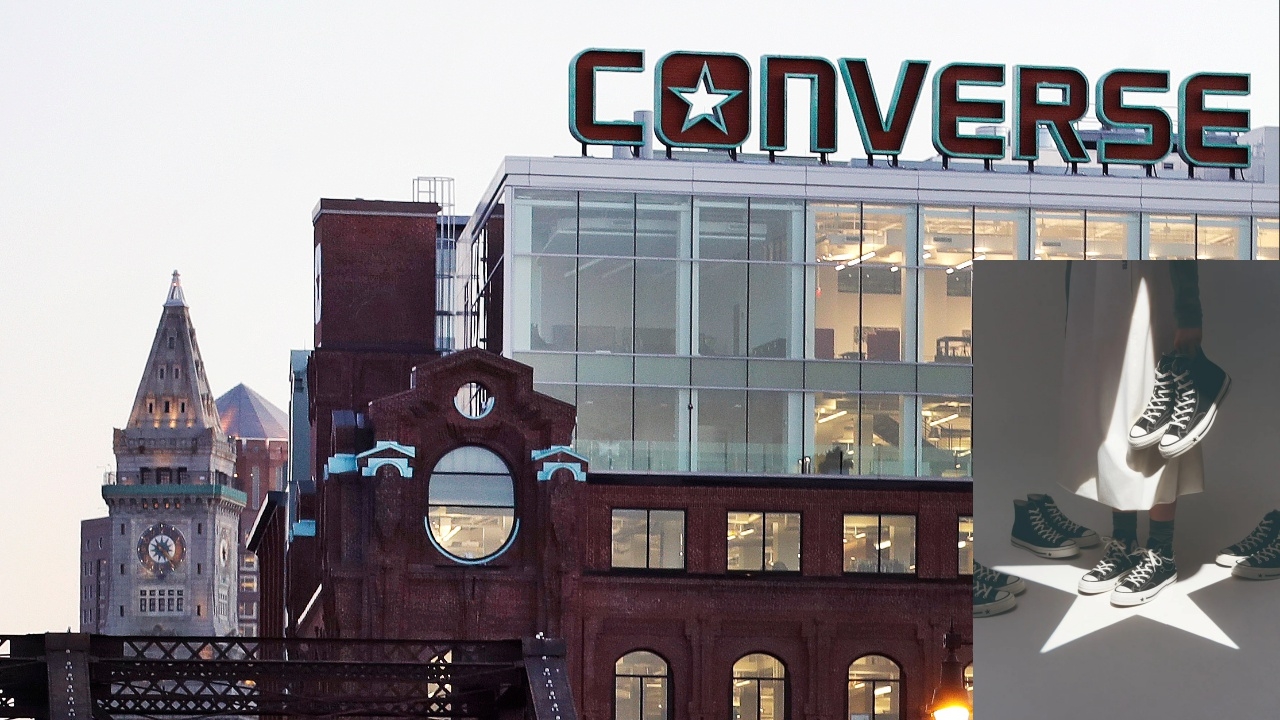
Converse, the American shoe brand under Nike, withdrew its advertisement from company channels and issued an apology after facing intense public criticism over an ad accused of depicting Ku Klux Klan (KKK) symbols, a U.S. white supremacist group, including imagery of a lynching.
The image was part of a promotional campaign for the Chuck 70 X sneaker, a collaboration between Converse and Karina, a K-pop artist and member of aespa. The Instagram ad showed Karina wearing a white skirt resembling a robe down to her calves, holding a black sneaker in one hand, with her arm resting straight by her side.
Critics said the lighting in the image made the sneaker appear to be hanging in midair beside the person, evoking the feet of someone being lynched. Meanwhile, the shadow and light on the white garment formed a triangular shape resembling the pointed hood of the KKK.
The criticism spread rapidly on social media, with calls to fire employees involved in producing the ad and boycotts of Converse. People also questioned how the company’s ad review process allowed the image to be released. However, some users defended Converse, saying they did not believe the company intended such a message.
Converse, a Nike subsidiary, told ABC News, "We apologize. We understand why this image caused severe offense and acknowledge our mistake. We have removed the image from all company channels and are working to remove it wherever it was published. This should never have happened, and we will do better."
The company first issued an apology on Friday, 18 Sep 2020 GMT+7, without providing further details about the incident. On the following Sunday, Converse, headquartered in Boston, Massachusetts, declined to answer questions about its ad review and approval procedures for this campaign.
Lee Merritt, a civil rights attorney from Texas who previously represented the family of Ahmaud Arbery—a Black man chased and fatally shot by three white men while jogging in Georgia in February 2020—commented on the Converse ad controversy.
Merritt posted on social media, "We keep having to repeat this because companies keep failing the same test. Doing better means identifying problems before ads are released, not after people have been offended."
He also wrote on Instagram that Converse's apology cannot erase the fact that the image passed through legal, marketing, and executive approvals at every stage.
Meanwhile, U.S. Representative Troy Carter, a Democrat from Louisiana, stated in a press release that the ad was neither creative nor artistic, adding, "The pain of Black people is not a marketing prop. Lynching is not creative, and the Ku Klux Klan is not aesthetics."
In recent years, many leading retailers and fashion brands have apologized for products criticized for lacking racial sensitivity.
Last month, retailer Target pulled Halloween costumes for children following widespread social media backlash. The company apologized for selling outfits critics said mocked historical racist caricatures of Black people.
Converse was founded in Malden, Massachusetts, in 1908 and is the maker of the iconic Chuck Taylor All Star sneaker. The shoe was first introduced in 1923 as a non-slip basketball shoe and later featured the signature of basketball player Chuck Taylor, who helped promote the brand, starting in 1934, according to the company website.