

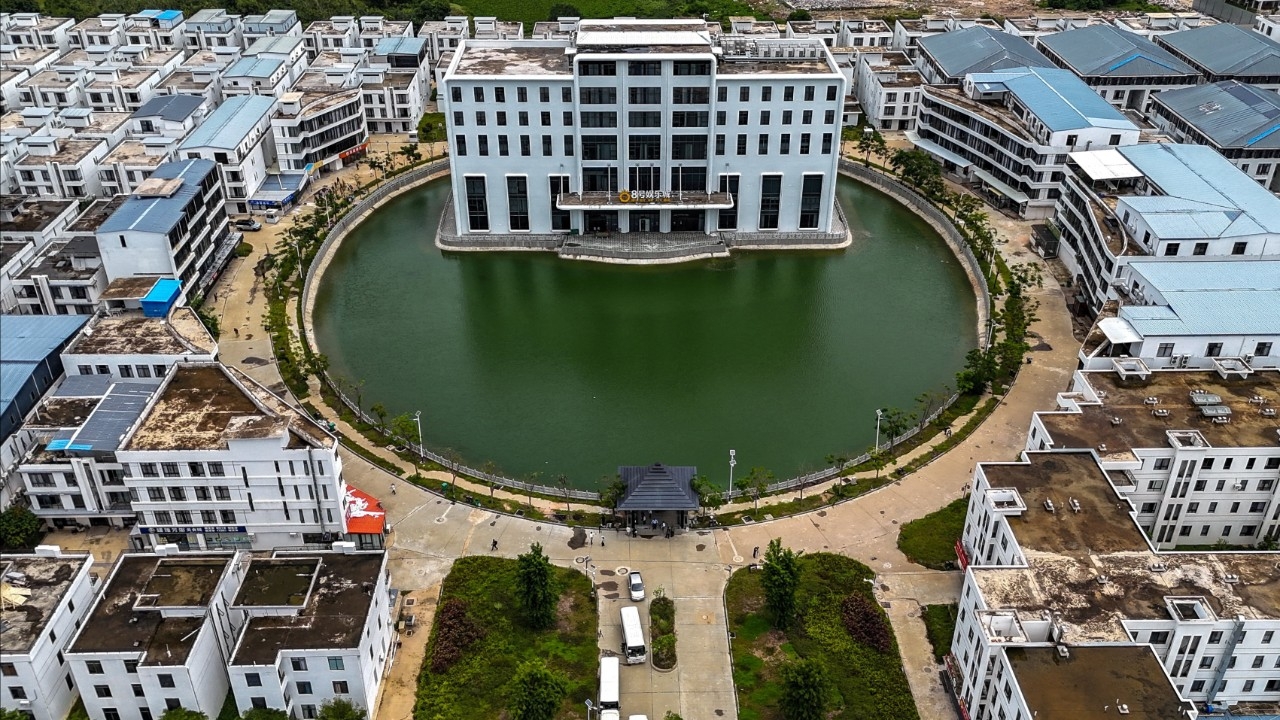
Cambodia took the media to tour a shut-down scam center to reinforce its image of combating online crime ahead of the international anti-fraud meeting scheduled for this week.
Foreign news agencies reported on 22 Sep 2026 that Cambodia showed journalists the building of Legend Innovation Co., Ltd., a large scam center that was ordered closed. Inside, fake US dollar bills and a simulated police station were found, creating an image and confirming commitment to crack down on cybercrime.
This move comes ahead of an international meeting on combating online fraud, with representatives from 20 countries, including the US and China, attending on Wednesday and Thursday.
Cambodian authorities showed the scam center covering over 120 hectares (about 750 rai) in Prey Veng Province near the Vietnam border, which once employed around 20,000 people. Inside were soundproof phone booths, fake 100-dollar bills, Chinese slogans like "get rich overnight," and a room simulating a Singapore police station used to deceive victims in video calls.

The center was once run by Chen Zi, chairman of Prince Group, and Li Song, former chairman of Huione Group, a major Cambodian financial company. Both have been sent to China for prosecution.
Cambodian officials said they have closed 663 scam centers, including 86 large ones, seized over 300 million US dollars, and arrested nearly 30,000 suspects, including 15 senior officials.
Officials confirmed that no large scam centers remain in the country but acknowledged that criminals have adapted by moving operations to rented houses, hotels, or even cars.
The US estimates that in 2025 alone, Americans were defrauded of at least 18.2 billion US dollars by scam gangs in Southeast Asia.
Recently, the US announced visa restrictions on 32 individuals linked to criminal groups, mostly affiliated with Prince Group. Meanwhile, US lawmakers proposed sanctions against Cambodia's Deputy Prime Minister, Police General Neth Savoeun, over alleged connections to the scam network.

However, transnational crime analysts view Cambodia's crackdown as largely a symbolic gesture to ease pressure.
Meanwhile, major networks, nominees, financial institutions, and infrastructure for online scams remain intact. These gangs can reopen at any time or simply disperse to smaller areas or relocate to neighboring countries like Myanmar and Laos.
Follow international news:https://www.thairath.co.th/news/foreign
Source:cna