

Meta launched new AI-powered wearable devices, including smart glasses without cameras to focus on audio use and reduce privacy criticisms. The company is advancing its AI assistant "Muse" as the core of device interaction amid global concerns about unauthorized recording of people’s images and voices.
Meta, the technology company behind Facebook and Instagram, unveiled multiple new wearable devices at its annual Meta Connect conference held at its headquarters in Menlo Park, California. A key product is the "Ray-Ban Meta Audio" smart glasses, which lack a camera system and emphasize audio functionality.
These glasses are scheduled for release on 13 October, priced from $349 (approximately 11,655 baht). Users can listen to music, answer calls, and interact with the AI assistant but cannot take photos or record videos like Meta’s camera-equipped glasses.
The launch comes amid growing global concerns about privacy issues, especially after small-camera smart glasses were found to record people without their knowledge or consent, notably incidents involving images of women and girls.
Vishal Shah, Meta’s Vice President of AI Product, said the company prioritizes privacy protections. Camera-equipped glasses feature an indicator light that activates during recording to alert nearby individuals.
However, analysts note that removing the camera does not fully resolve privacy issues, as the new glasses can still record audio and may lack clear signals to inform people nearby about ongoing sound recording.
In addition to the camera-free glasses, Meta also introduced new "Meta Ray-Ban" glasses that retain cameras for photo and video capture, including models with displays starting at $799 (around 26,680 baht), with planned availability in the UK, France, Italy, Germany, and Canada.
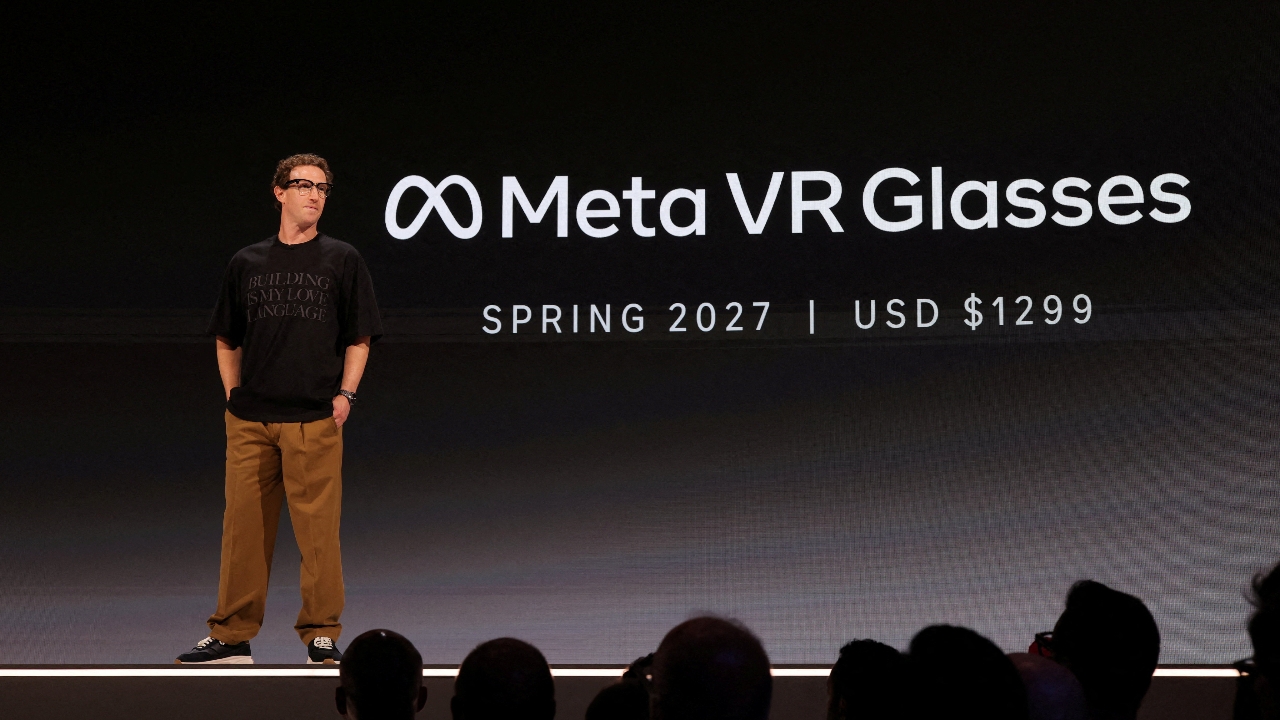
Meta CEO Mark Zuckerberg unveiled the "Meta VR Glasses," a new lightweight Mixed Reality model that relocates the battery and memory to an external wired device, making the glasses themselves as light as a deck of cards.
Meta VR Glasses will be available in spring 2027 at $1,299 (approximately 43,380 baht) and will support eye, voice, and hand gesture controls.
Meta also announced an expansion of "Muse," its AI assistant agent for consumers, capable of performing tasks such as booking appointments, making calls, and ordering products or services after linking various personal accounts.
The company said Muse will become integral to smart glasses systems, working with providers and retailers like Walmart, Best Buy, and Gap, while Instacart, Shopify, and Expedia have partnered with Meta to integrate their services with Muse.
Meta introduced a small device named "Meta Charm" for using Muse without relying on a smartphone. The device is about the size of AirPods cases, features a roughly 2-inch touchscreen, supports 5G connectivity, and is expected to launch in December, though pricing has not yet been disclosed.
These product launches come as Meta and other technology companies heavily invest in AI-driven devices to create new avenues for technology access beyond smartphones.
Meta first introduced smart glasses in 2021 and has expanded its partnership with EssilorLuxottica, a leading eyewear manufacturer producing Ray-Ban Meta and Oakley Meta glasses, while facing pressure over child safety and privacy issues in multiple countries.
Meta stated that the camera-free glasses are not solely designed for privacy reasons. Audio is among the most popular functions of smart glasses, and removing the camera enables the production of thinner, lighter glasses with increased battery life of about 12 hours per charge, compared to approximately 9 hours for the latest Meta Ray-Ban model.