

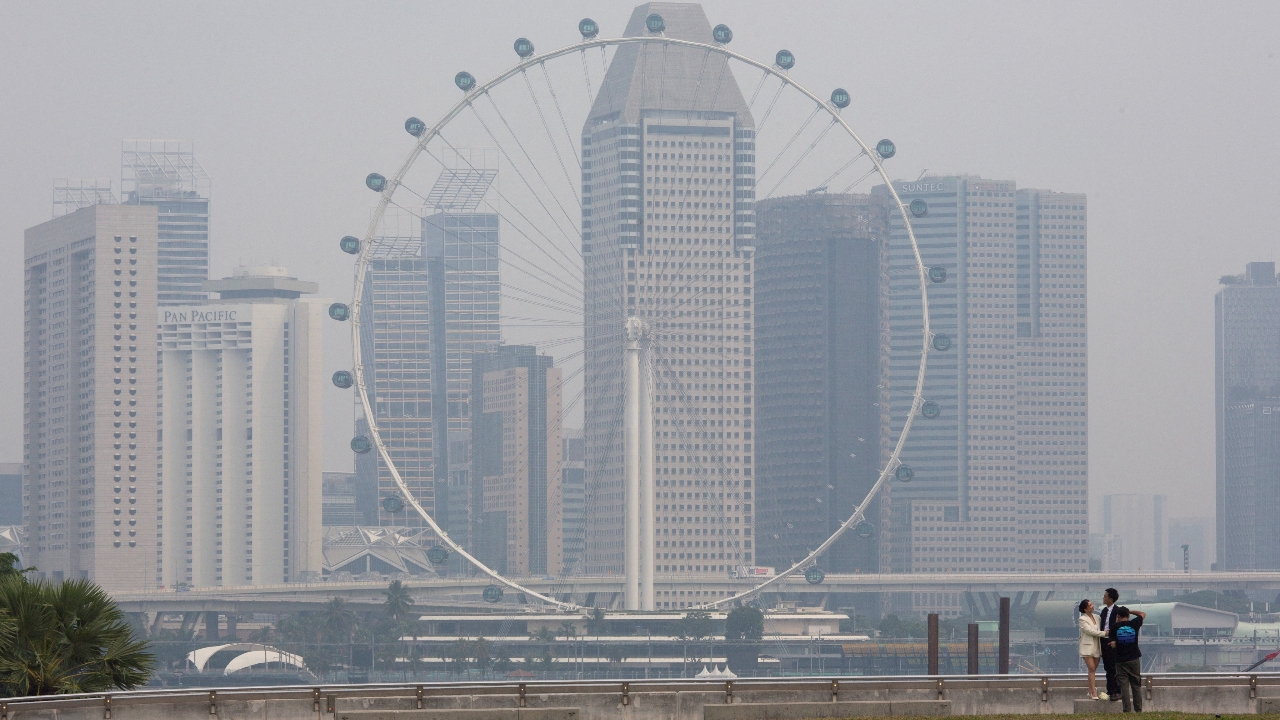
Singapore's air quality has worsened due to the haze situation, with the PSI exceeding unhealthy levels in three areas. Meanwhile, authorities continue to warn of transboundary haze from forest fires in Sumatra and Kalimantan.
Air quality in several areas of Singapore has been "unhealthy" continuously since Sunday, 27 September. In the morning, the central and eastern areas recorded PSI levels as high as 127 and 114 respectively, while the western area reached similar levels overnight before dropping to moderate levels by the afternoon.
The National Environment Agency (NEA) stated that the PSI in the central area entered the unhealthy range from Saturday evening, followed by the eastern area around midnight. The western area showed a PSI of 105 at 6:00 a.m., which then decreased to 100 by 4:00 p.m.
The northern and southern areas remained at moderate levels, with morning PSI values of 89 and 94 respectively. Overall, the situation remains volatile, with PSI levels in Singapore fluctuating into the unhealthy range intermittently over the past several weeks.
Monitoring haze from Indonesia
NEA noted that dry weather continues to cover the southern ASEAN region, including southern parts of Sumatra and southern and eastern Kalimantan—areas prone to forest fires—maintaining the risk of severe transboundary haze.
Data from NEA shows hotspots scattered across Kalimantan and southern Sumatra. Several air quality monitoring stations in these areas report pollution levels ranging from unhealthy to hazardous. However, assessments of affected areas from fires and smoke remain incomplete due to cloud cover in some locations.
Singapore authorities also warn that although some rain has fallen in parts of Singapore and nearby areas, dry conditions persist in southern Sumatra and southern Kalimantan. Winds from the southeast are expected to carry haze into Singapore.
NEA reported that after heavy rain on the morning and afternoon of 27 September, Singapore's haze situation improved somewhat. By 7:00 p.m., national PSI levels ranged from 83 to 119, indicating moderate to unhealthy air quality. However, the 24-hour average PSI is expected to remain at moderate to low unhealthy levels the following day due to ongoing regional haze risks.
At what PSI level does health begin to be affected?
NEA defines a 24-hour average PSI of 101–200 as unhealthy, 201–300 as very unhealthy, and above 300 as hazardous.
When air quality is unhealthy, the general public should reduce prolonged outdoor exertion. Elderly people, pregnant women, children, and those with chronic lung or heart diseases should avoid prolonged outdoor physical activities.
Source:channelnewsasia
Click to read related news aboutInternational news