

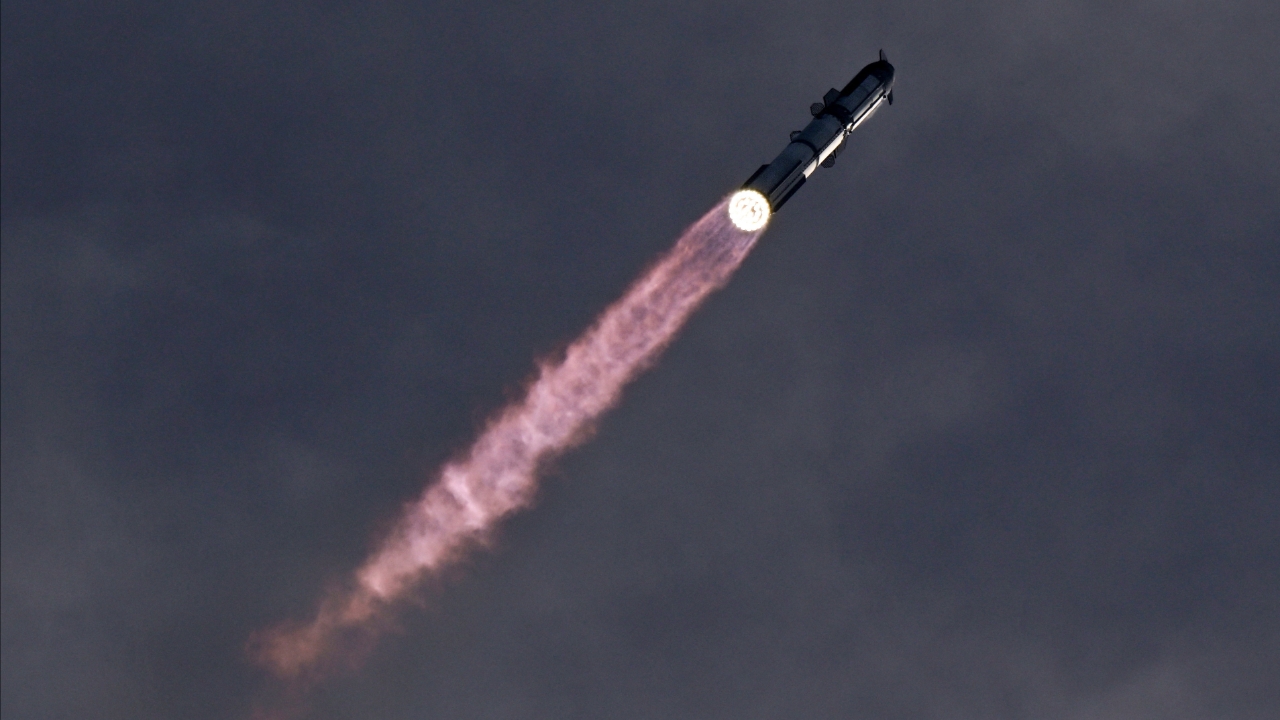
SpaceX has successfully launched its Starship spacecraft into Earth orbit for the first time, despite technical difficulties during the mission that led to an early termination of the orbital flight several hours ahead of schedule.
On Monday, 28 Sep 2026 GMT+7, SpaceX's massive Starship rocket soared from its Texas launch site in what was the company's most ambitious test flight to date. The mission aimed to orbit the Earth six times over about 10 hours, although SpaceX ultimately chose to end the test flight earlier than planned.
The spacecraft consists of two main parts: the booster rocket called Super Heavy v3 and the upper stage known as the Ship. Minutes after liftoff, the booster successfully landed in the Gulf of Mexico as planned. The main goal of this test was to have the Ship reach Earth orbit for the first time.

Minutes after the uncrewed spacecraft ascended, one engine failed, raising questions about whether the mission should be aborted. After a tense few minutes, the flight engineers decided to proceed, allowing the spacecraft to continue into orbit and carry on with the mission.
Ultimately, Starship successfully ignited a single Raptor engine to propel itself into Earth orbit approximately 26 minutes after launch.
"Starship is in orbit," the mission control center announced amid cheers celebrating this major milestone.
However, SpaceX later decided to end the mission early after the spacecraft completed only 2 of the planned 6 Earth orbits. The spacecraft then performed a deorbit burn to return to Earth, landing in northern Pacific Ocean waters.
Although the mission experienced some issues and the Starship landing was rough due to a post-landing fire at sea, our climate and science correspondent said SpaceX remains "pleased with today's outcome" because they achieved the primary goal of reaching orbit.

This was SpaceX's 14th Starship test flight and the first attempt to reach Earth orbit, marking a critical advancement beyond previous suborbital missions that typically ended with splashdowns about an hour after launch.
Additionally, the spacecraft deployed 26 Starlink satellites while in orbit. SpaceX CEO Elon Musk posted on X that these Starlink V3 satellites are all activated and functioning normally.
NASA is considering using a future version of this spacecraft as a lunar lander for astronauts, while SpaceX's long-term ambition is to build a large fleet of Starships capable of carrying humans to Mars.
Follow international news:https://www.thairath.co.th/news/foreign
Source:foxbusiness,bbc