

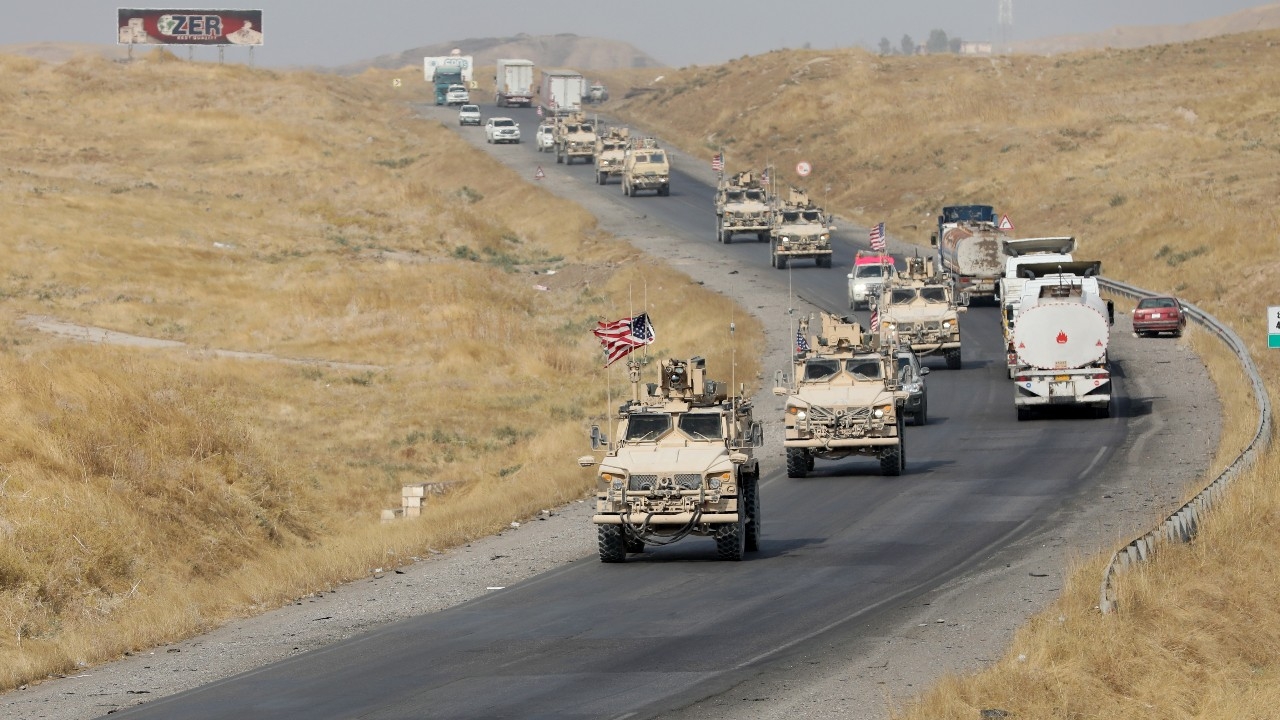
The US military is preparing to withdraw from its last base in Iraq by 30 September, after over 20 years of war and military operations in the country. Iran and its allied groups see this withdrawal as a victory, while Iraqi analysts and officials are concerned it could create security gaps and allow Iran-backed armed factions, as well as the Islamic State (ISIS), to regain influence.
The US forces plan to pull out from their final base in Iraq by 30 September, marking the end of a US military presence in Iraq lasting more than two decades, during which approximately 4,500 American lives were lost throughout the wars and operations in the country.
This withdrawal agreement was made in 2024 during President Joe Biden's administration and continued under President Donald Trump’s government, despite the fact that the US was concurrently engaged in conflict with Iran.
Iraqi security analysts suggest that the US withdrawal may create space for Iran and its already influential allied groups in Iraq to expand their roles in security and politics. There is also concern it might enable US adversaries, including ISIS, to make a comeback.
Jasim Al-Bahadli, an Iraqi security analyst studying Iran-linked Shiite militias, stated that Iran would gain strategic benefits from the withdrawal of coalition forces, as the pullout removes troops that have long served as a counterbalance to Iranian influence in Iraq.
He expects Iran-backed armed groups to declare the US withdrawal as their victory and attempt to leverage this momentum to increase their influence over Iraq’s security and political decisions.
Abu Mujtaba Al-Yasiri, commander of the Islamic Resistance in Iraq—a network of Iran-backed militias—called the US withdrawal a “historic victory” for Iraq’s anti-Islamic State groups and the Iraqi people, describing it as a major defeat for US projects.
He said 30 September would be a day for Iraqis to celebrate closing a chapter in their country's history and a failure of occupation forces trying to impose their will on Iraq, emphasizing that Iraq’s sovereignty depends not on foreign troops but on resistance groups and the will of its people.
Although many Iraqis support the US withdrawal, those concerned about the influence of Iran-backed militias believe the pullout might be happening prematurely.
Abdulrahman Al-Zobaie, a Sunni tribal leader in Fallujah, once a major stronghold of resistance against the US, said Iraq is not yet fully ready to take on security responsibilities.
He stated that all Iraqis desire full sovereignty without dispute, but their concern lies with the US-led coalition’s withdrawal possibly creating a security vacuum.
The US invaded Iraq in 2003 to overthrow Sunni Muslim dictator Saddam Hussein, then occupied the country, supporting the establishment of a Shiite-led government and fighting insurgent groups for years before withdrawing in late 2011. However, US forces returned less than three years later to assist Iraqi forces in combating ISIS, leading to a major war from 2014 to 2017.
During "Operation Iraqi Freedom," about twice as many American soldiers died compared to the concurrent Afghanistan war, which ended with a rapid US withdrawal in 2021.
In recent years, Iraq has been the only country maintaining close political and military ties with both the US and Iran, with Iraqi territory serving as an indirect battleground between the two countries.
In 2020, the US carried out an airstrike at Baghdad airport killing Major General Qasem Soleimani, a top Iranian commander, while Iran-backed militias retaliated with several attacks on US bases, sometimes prompting US counterstrikes.
In this year's conflict with Iran, 18 US soldiers have been reported killed, including seven in Iraq. The most recent was a US Army sergeant who died in July while controlling a drone strike near Erbil base.
Iran, which aims to push US forces entirely out of the Middle East, views the US withdrawal from Iraq as a victory for the "Resistance Axis," consisting of Iran-backed militias across the region.
Amir Hayat Moghaddam, deputy chairman of Iran’s National Security Commission, said sustainable security would emerge in Iraq after the US military withdraws from Iraq and the region.
He told Iranian parliamentary news that Iran welcomes the US troop withdrawal from Iraq and will strongly support it, noting that resistance groups continue operations, including occasional attacks and confrontations with US forces.
Iraqi security officials in both the federal government and the Kurdistan Regional Government in the north warn that the US withdrawal could enable ISIS to regain strength. Although ISIS lost almost all the territory it once declared as its "Islamic State" nearly a decade ago, underground militant networks remain in the country.
At its height, ISIS controlled about one-third of Iraq, killing thousands, including hundreds whose executions were videotaped inside former US bases.
Sirwan Barzani, commander of Kurdish forces, said the loss of US intelligence, logistics support, and drones could allow ISIS to regroup and recover. He noted that over the past two weeks, officials have observed ISIS network activity after media reports announced the official withdrawal of international coalition forces from Iraq by the end of September, boosting the militants’ morale.
Iraqi security forces also reported discovering suspected ISIS cells preparing suicide bombing attacks timed with the US troop withdrawal. Four Iraqi security and military officials said these plans reflect concerns that despite military defeats over years, ISIS can still exploit security gaps.
Colonel Khalid Al-Bayati, a senior security official in the oil-rich strategic city of Kirkuk, stated that ISIS is trying to send a message that it still has the capability to carry out large-scale deadly attacks.
. SourceReuters