

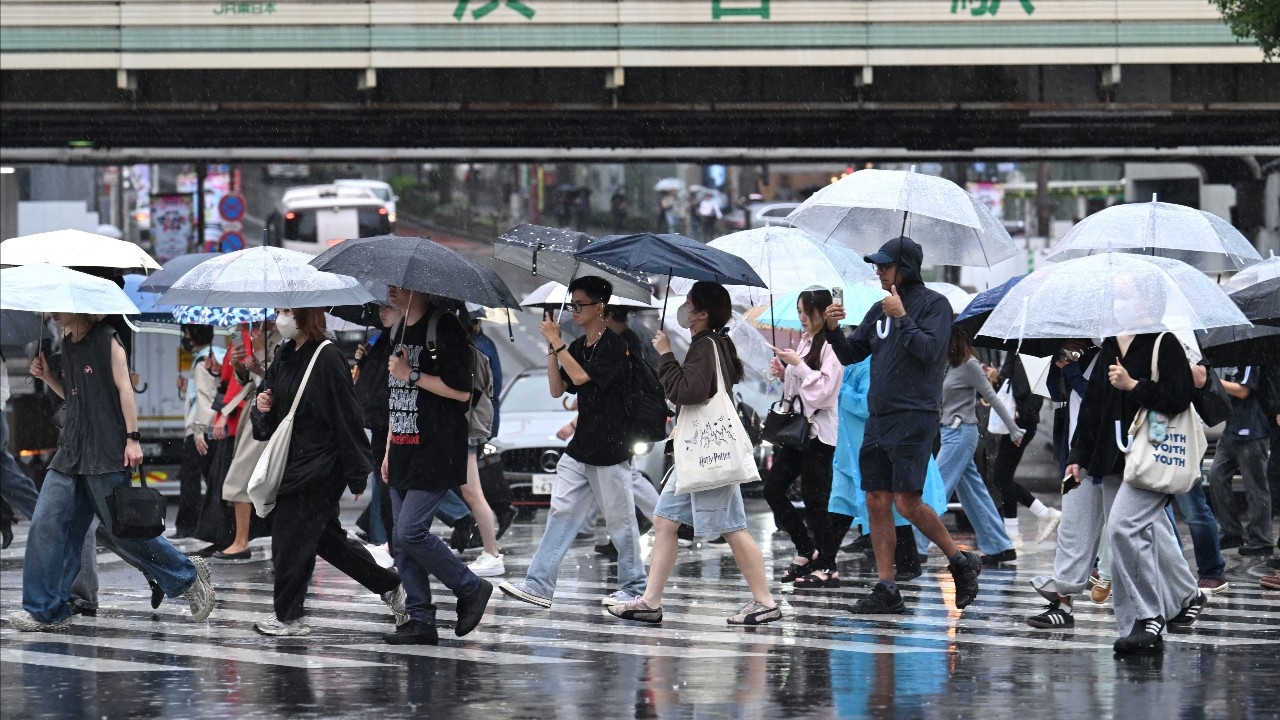
Central Tokyo in Japan has experienced continuous rainfall for 34 days, breaking the previous record set in 2019. The total rainfall through 28 September was nearly three times the average, and rain is expected to continue until about 1 October. The Japan Meteorological Agency attributes this to the autumn rain front and the El Niño phenomenon causing unstable atmospheric pressure.
The Japan Meteorological Agency reported that central Tokyo recorded its 34th consecutive day of rain on 29 September, marking the longest continuous rainfall period since Japan began keeping records in 1886.
Rainfall in the area has continued since 27 August due to several factors: the influence of a typhoon approaching Japan, a stalled autumn air front, and a low-pressure trough. The previous record for longest continuous rainfall in Tokyo was 33 days, from 27 June to 29 July 2019.
The heaviest rainfall in the past 34 days was 156 millimeters on 21 September. Central Tokyo accumulated 629 millimeters of rain from the start of September through 28 September—nearly three times the normal monthly average. This amount is close to the September record of 670.9 millimeters set in 1958.
On 29 September, widespread rain affected eastern and western Japan. In Eiheiji, Fukui Prefecture, in central Japan, heavy rain exceeding 30 millimeters per hour was recorded early in the morning.
The Japan Meteorological Agency forecasts that rain will continue, especially in eastern Japan, until about 1 October, partly due to the influence of the autumn air front.
Masayuki Kiyoda, an official from the Japan Meteorological Agency, said this month's weather pattern is partly influenced by the El Niño phenomenon, associated with higher Pacific Ocean sea surface temperatures. He added that the autumn air front has remained over the area longer than usual, while the Pacific high-pressure system has also persisted longer than normal.
Officials stated that they cannot directly link this record continuous rainfall to climate change. However, a report from the Japan Meteorological Agency last year concluded that global warming is impacting Japan's long-term weather patterns, including increasing rainfall amounts.
Experts say that climate change caused by greenhouse gas emissions from fossil fuels increases atmospheric moisture, raising the chance of heavy rain. This year's El Niño also affects wind patterns, air pressure, and cloud formation worldwide, potentially causing heavy rainfall in some areas and droughts in others.
Tokyo's usual rainy season occurs in June, but this year the capital has experienced heavy rain intermittently throughout summer, including flooding in several parts of the Tokyo metropolitan area.
The continuous rainy weather in Japan coincides with heavy rain and flooding in many parts of Asia. In Thailand, about 1.7 million people have been affected by recent floods following severe weather systems in the region, with 23 deaths reported since mid-September.
/sourceKYODO NEWS/AFP