

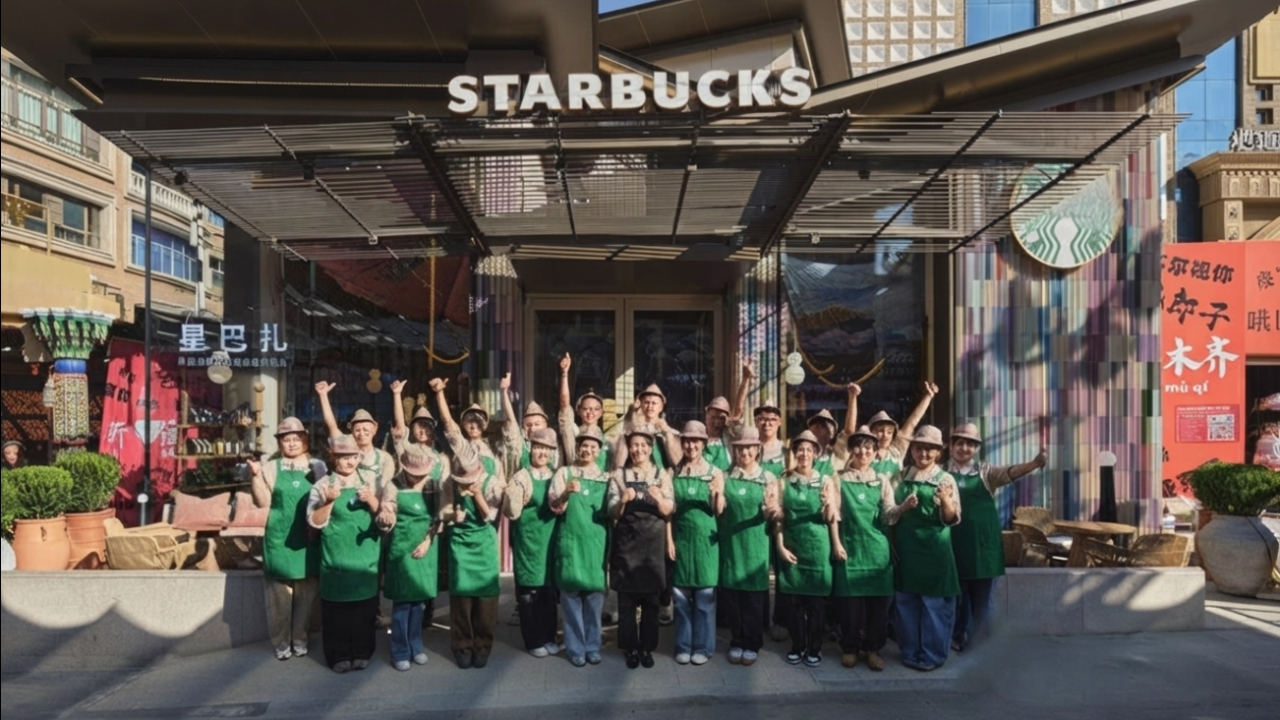
Starbucks, the global coffee chain giant, is facing heavy condemnation from U.S. members of Congress and human rights organizations after opening its first two stores in the Xinjiang Uyghur Autonomous Region in northwest China, amid allegations of human rights abuses and forced labor involving the Uyghur people.
Starbucks, a major American coffee chain, has expanded its business in China, the world's second-largest market after the U.S., by opening its first two stores in Urumqi, the capital of the Xinjiang Uyghur Autonomous Region, on 29 Sep 2023 GMT+7. The first store is located at a prominent landmark, the Grand Bazaar, featuring interior decorations with atlas silk and local musical instruments, and offers a special local menu item—salted milk tea.
Molly Liu, CEO of Starbucks China, stated in a press release that entering Xinjiang not only expands the store network but also allows the brand to deeply connect with a vibrant market and build sustainable relationships with local customers. Meanwhile, Xinjiang regional market regulatory officials said the government is promoting a first-branch economic policy to boost domestic consumption and is facilitating improvements in the business environment.
However, the store openings have faced strong backlash from the international political arena and human rights groups. John Mullenar, Chair of the U.S. House of Representatives' China Select Committee, condemned the move as "morally bankrupt," accusing Starbucks of tying the prominent American brand to the Chinese Communist Party's campaign against the Uyghur population.
This stance aligns with that of the World Uyghur Congress, which stated via social media that Starbucks is choosing to ignore the severe human rights situation and should not support an economic system still plagued by state-controlled forced labor.
The United Nations issued a warning in 2022 about potential crimes against humanity in Xinjiang, citing the detention of over one million Uyghurs and other Muslim minorities in internment camps. Human rights groups continue to report severe abuses, including forced labor, despite the Chinese government's denials, which claim their policies eliminate extremism and promote economic development.
Previously, several Western brands have faced criticism for alleged links to Xinjiang, such as Decathlon, the French sporting goods retailer, which was accused of sourcing textiles from suppliers using forced Uyghur labor. The company denied the allegations and pledged to investigate the facts.
Starbucks' move in China coincides with a major business restructuring. At the end of last year, Starbucks reached a joint venture agreement with Boyu Capital, a Chinese investment firm, which will hold up to 60% of Starbucks’ retail operations in China. Starbucks retains 40% ownership and continues to own the brand and licensing rights.
As of the end of September 2026, Starbucks operated 8,342 stores across mainland China, reflecting that despite geopolitical and human rights pressures, the Chinese consumer market remains a critically strategic target for the company, amid continued growth in foreign company registrations in China this year.