

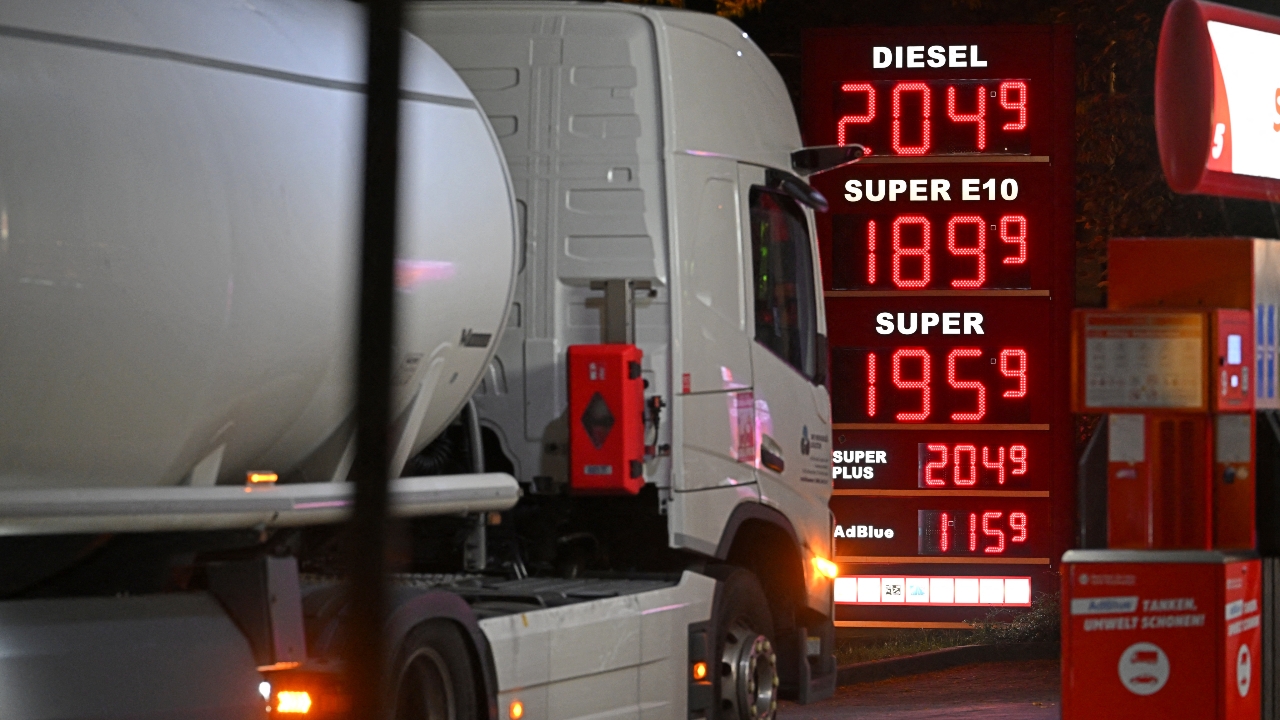
The U.S. government is pressuring France and Germany to release diesel from emergency reserves to help ease soaring global fuel prices, signaling that it may restrict or ban U.S. diesel exports if Europe does not act. Meanwhile, diesel prices in the UK have reached record highs amid impacts from the Iran conflict and export suspensions by Russia and China.
Under President Donald Trump, the U.S. has informed France and Germany to consider releasing diesel from emergency reserves to help alleviate soaring fuel prices, or face possible U.S. diesel export restrictions, according to three sources close to the discussions. The U.S. is considering these measures to increase domestic diesel supply and pressure retail prices ahead of the November midterm elections.
U.S. Treasury Secretary Steven Mnuchin called on European countries to be ready to release diesel reserves promptly, reasoning that U.S. farmers, transport operators, and businesses should not bear the burden of rising fuel costs. He stated the U.S. has already acted and expects allied nations to fulfill their commitments as well.
Meanwhile, U.S. Energy Secretary Rick Perry expressed strong confidence that Europe can help lower fuel prices by releasing diesel reserves, emphasizing that such releases should be coordinated, especially during the harvest season and approaching winter when demand for diesel and heating oil increases.
One source said the U.S. has requested the European Union to release about 120 million barrels of diesel within six months, a substantial volume compared to Europe's emergency reserves. France and Germany hold the majority of the EU's diesel and gas oil reserves.
This pressure arises as Europe faces high diesel prices and increasing reliance on imports from the U.S. after stopping Russian oil imports in response to its invasion of Ukraine. Meanwhile, the Middle East conflict affects oil production and supply routes from that region.
On 1 October, the European Commission, France, Germany, Italy, the UK, and Ireland discussed the possibility of releasing diesel reserves. The EU energy working group, including the European Commission and all 27 member states, is scheduled to meet again on 2 October to assess the situation and response options.
However, releasing reserves is a matter Europe must consider carefully, balancing the need to increase market supply to ease price pressures against maintaining reserves for potentially worsening situations if the Iran conflict prolongs.
European Commission data indicates Europe currently does not face an immediate diesel shortage, with emergency reserves remaining high and ready for release if supply disruptions occur. Nonetheless, diesel and jet fuel prices remain elevated due to tight global markets, while European refineries operate near full capacity.
The UK is severely affected, relying on imports for over half its diesel demand, with about 31% of imports coming from the U.S. According to the RAC, average diesel prices have hit a record 199.79 pence per liter, up from 142.38 pence previously.
The UK government stated it is coordinating with other European countries to prepare for possible U.S. diesel export restrictions but assures the public there is currently no cause for fuel shortage concerns, although prices are expected to rise further.
Global market tensions are exacerbated as Russia, a major diesel exporter, extends its diesel export ban through October, and Chinese refineries reportedly suspend exports of some oil products in October to boost domestic reserves, tightening global diesel supply.
The U.S. is a major diesel supplier globally, exporting about 1.2 to 1.5 million barrels per day. If the Trump administration bans exports, excess diesel would return to the U.S. market, potentially lowering domestic prices. However, energy experts warn that reduced U.S. exports could push global diesel prices higher if other countries cannot find replacement suppliers.
Diesel demand remains difficult to reduce as it is the main fuel for freight transport and agriculture. The UK had about 15.1 million diesel vehicles as of the end of June, down from 15.7 million the previous year, including approximately 9.8 million diesel passenger cars, down from 10.4 million the year before.
The global diesel price surge is largely due to Middle East conflicts affecting oil production and transport, including uncertainty around the Strait of Hormuz, a critical route that normally carries about one-fifth of the world's oil and gas. This has rapidly increased petroleum product prices, with export restrictions from Russia and China adding further pressure to global fuel markets.
Meanwhile, French President Emmanuel Macron is preparing to hold a video conference with G7 leaders to discuss rising energy prices and the availability of refined oil products globally, including coordination on reserve releases with the International Energy Agency (IEA).