

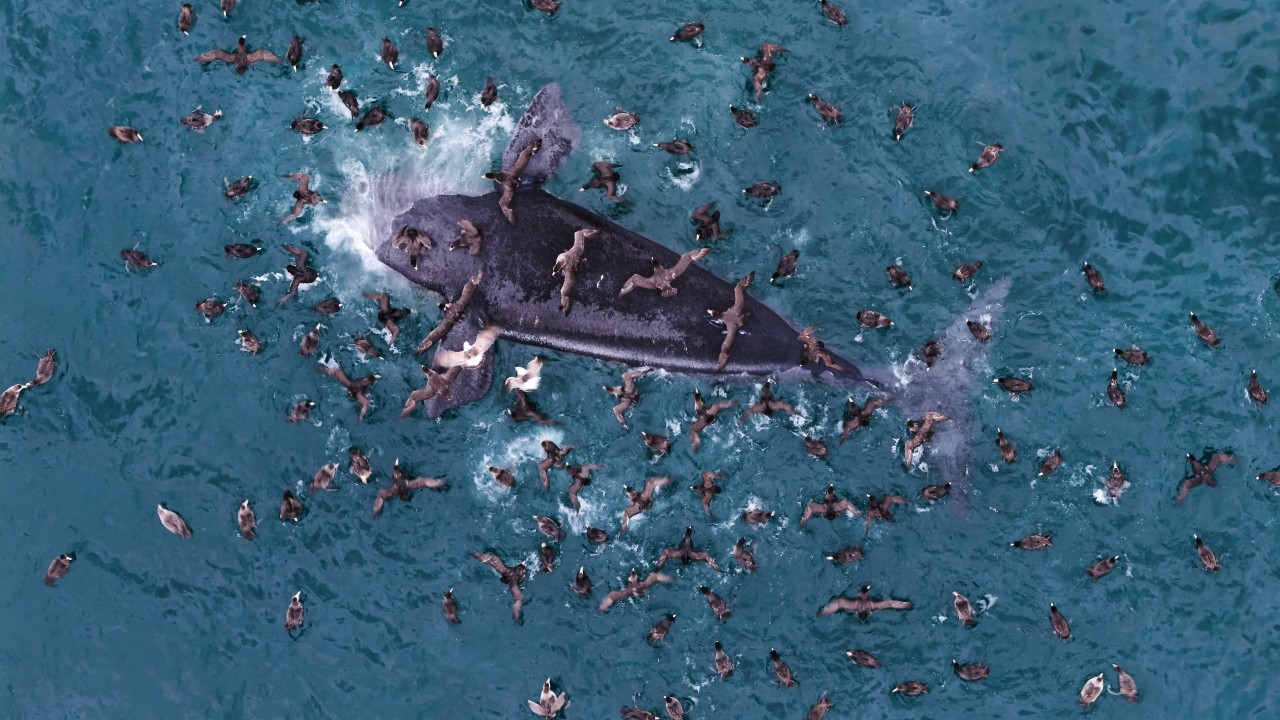
Researchers continue to urgently investigate the cause of death of an unusually large number of southern right whale calves stranded along Argentina's Patagonian coast, with initial suspicion of bacterial infection.
Researchers in Argentina are intensifying efforts to find the cause after an abnormal number of southern right whale calf carcasses were found stranded along the Patagonian coast, especially near the Valdés Peninsula, a key breeding and nursing area for this whale species in Chubut province.
Marcela Uhart, a veterinarian from the One Health Institute at the University of California, revealed that the main current hypothesis is infection by the bacterium Erysipelothrix, based on the discovery of square-shaped lesions on the skin, particularly on the backs of the dead whales.
Researchers stated that this bacterium occurs naturally in marine environments and has been identified as a cause of whale deaths in other parts of the world. However, further analyses are needed to confirm whether this bacterium is indeed the cause of death.
The research team, including biologists, veterinarians, and park rangers, is searching for whale carcasses both along the coast and by boat, plane, and drone, then collecting skin and organ samples for laboratory testing in the city of Tandil, north of the area.
Bacteria have been detected in tissue samples, but the team is still culturing them to identify the microorganism species and determine if the infection caused the whale deaths.
Uhart said that even if bacteria are confirmed as the cause of death, it will still be necessary to understand why the bacteria have become more harmful to the calves this year. Changes in the marine environment, such as higher sea temperatures possibly linked to climate change or El Niño, may be contributing factors.
Additionally, southern right whales face other threats including declining food sources, entanglement in fishing gear, oil spills, and collisions with ships.
Southern right whales were hunted nearly to extinction during the 19th and 20th centuries before international protection was established in 1935, allowing their populations to gradually recover. However, the recent unusual mass deaths of calves this year are causing concern among researchers monitoring the whale population at the Valdés Peninsula.
:AP
Click to read related newsInternational news