

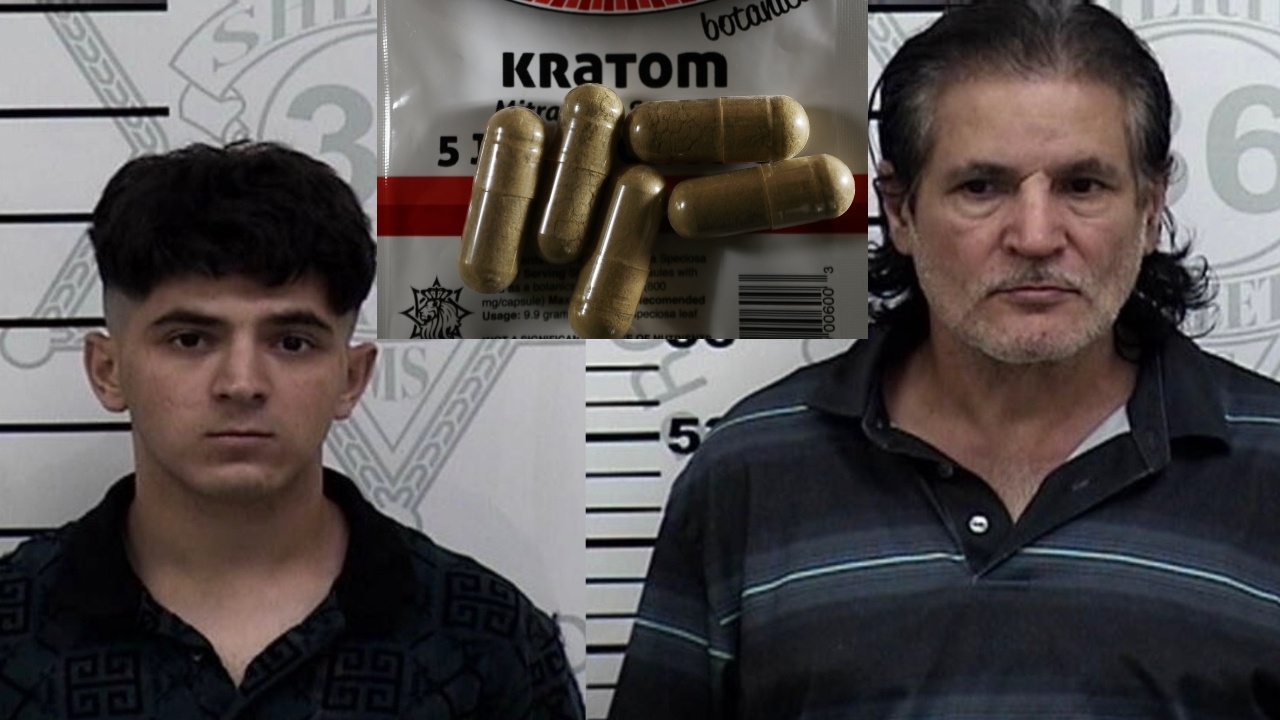
US officials arrested a 51-year-old man and his 18-year-old son who worked at a vape, tobacco, and beverage store in Mississippi. They face charges of possessing controlled substances with intent to distribute while being investigated for the deaths of two University of Mississippi students suspected of overdosing on kratom, also known as "gas station heroin." They were arrested amid inquiries into the students' deaths.
The US Attorney's Office for the Northern District of Mississippi disclosed that Yahya Mohammed Mosleh, 51, and his son Islam Yahya Mosleh, 18, were arrested and charged with possession of a controlled substance with intent to distribute following investigations into the deaths of two University of Mississippi students on 21 September.
According to criminal complaint documents, one male student was found dead in a university dormitory on that day. Officials noted the death was consistent with an overdose and discovered packaging containing a suspected kratom derivative, some with missing tablets.
About an hour later, another student was found dead at a different location. Officials found packaging also suspected to contain kratom derivatives, and the cause of death similarly aligned with a drug overdose.
The deceased students were identified as Aidan Hamilton, a first-year student from Englewood, Colorado, and Robert Strong, a third-year student from Atlanta. However, officials are still awaiting toxicology results and have not officially confirmed kratom as the cause of death.
Investigators found a connection between the products discovered at the scenes and Puffs Vape, Tobacco and Beer Store in Oxford, Mississippi, where the Mosleh father and son were employed.
Lafayette County Drug Enforcement officials examined Hamilton's financial records and found multiple purchases from the store. Undercover agents subsequently bought a product advertised as "7-O Kratom" from the store before raiding it on 24 September, seizing more than 500 kratom units. The Moslehs were arrested and charged with possession of a Schedule 1 controlled substance with intent to distribute.
Investigations into Strong revealed he had purchased products from the Express Mart #7 convenience store in Yalobusha County. Officials conducted a check there, purchasing tablets similar to those found at the scenes for laboratory analysis. So far, no charges have been filed against anyone from that store.
Kratom is a plant with active compounds that can stimulate at low doses and act like opioids at higher doses. In the US, kratom products—usually pills or liquids—have gained popularity over the past decade.
US authorities stated that some kratom derivatives, such as MGPI, MGM-15, and MGM-16, are classified as Schedule 1 controlled substances and may be more potent than natural kratom leaves and morphine, posing serious risks of addiction, overdose, and death. These substances are sold online and through vape shops and convenience stores in various areas.
Certain kratom derivative products are nicknamed "gas station heroin" in the US because they are sold in convenience stores or shops similar to gas stations.
The US Food and Drug Administration (FDA) warns that kratom, especially high-concentration 7-OH products, may cause addiction, mental health effects, and severe adverse reactions. Some US areas have banned kratom sales; Oxford, Mississippi—the university's location—has prohibited its sale, possession, and use since 2019.
Anti-kratom advocacy groups are urging the FDA to strengthen regulations on these products, including considering outright sales bans.
The case remains under investigation, with the US Drug Enforcement Administration (DEA), Lafayette County Sheriff's Office, Oxford Police Department, and University of Mississippi Police collaborating. Toxicology results for the two deceased students are still pending.