

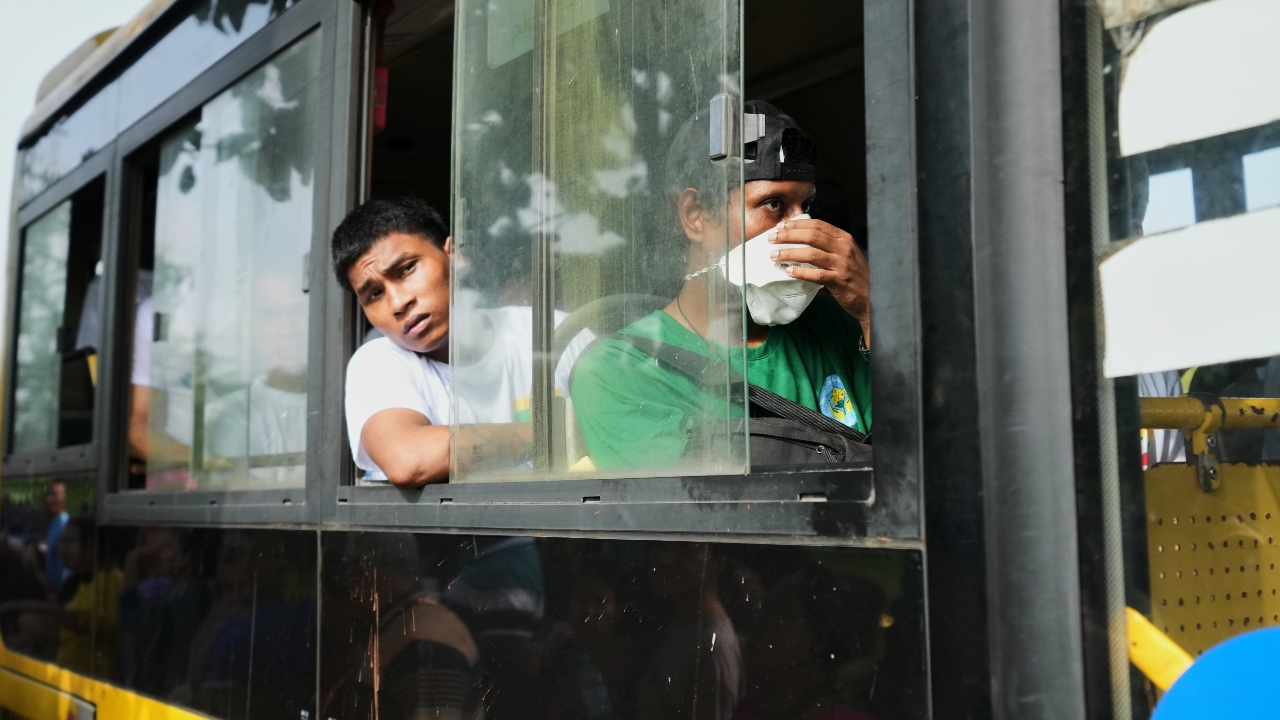
Three Myanmar naval vessels returned migrants from Malaysia amid UN and human rights groups' concerns, fearing the repatriated individuals face insecurity in a country still mired in civil war.
Nearly 1,500 Myanmar nationals arrived back in their country on Sunday, 4 October, after Malaysia repatriated them under a return program with unclear details, raising safety concerns as Myanmar continues to endure civil war since the military coup in 2021.
Myanmar Navy officials revealed that three naval ships carrying 1,476 Myanmar nationals from Malaysia reached the Thanlyin naval base before 07:30 on 4 October. This group is the first of about 5,000 people the Myanmar government says have agreed to return from Malaysia.
Outside the naval base, hundreds of family members gathered from early morning to welcome their relatives, with cars, taxis, and buses lined up waiting.
One family member waiting was 55-year-old Jo Myint, who came to receive his three grandchildren detained in Malaysia for about a year and a half, whom he had not seen for six years.
He said the family lost contact with the grandchildren after their imprisonment and is now worried they might be conscripted into fighting, either by the Myanmar military or ethnic armed groups.
Reports state this returning group includes 27 children, 79 women, and 1,370 adult men. There are also concerns that some Rohingya people, an oppressed ethnic minority in Myanmar, may be among them, though numbers are unconfirmed.
This issue has raised alarm from international organizations as the United Nations warns that Myanmar’s ongoing civil war since the 2021 coup means it cannot guarantee the safety of returnees under international law.
A 25-year-old sister of one repatriated Myanmar man said her family is worried about her brother’s safety, unsure of what life holds for him after returning to Myanmar.
Malaysia insists all returnees consented voluntarily from detention centers, while Myanmar authorities state that these individuals have served sentences related to immigration offenses.
However, the UN High Commissioner for Refugees (UNHCR) reported its officials were not permitted to meet the returnees to verify that their decision to return was truly voluntary and fully informed.
Meanwhile, human rights groups voiced concerns about conditions in Malaysian detention centers and warned that the treatment returnees will receive from Myanmar’s military government is unpredictable.
This repatriation follows Malaysian Prime Minister Anwar Ibrahim’s July announcement of the return program amid growing opposition to refugees, especially the Rohingya, who form a large refugee and asylum-seeker population in Malaysia.
The repatriation news triggered widespread concern since many Rohingya fled Myanmar after a major military crackdown from 2017, which human rights experts classify as genocide. UN High Commissioner for Human Rights Volker Türk stated this is not the time to forcibly return anyone to a country rife with serious abuses and human rights violations.
Meanwhile, Malaysia is proceeding with plans to repatriate over 3,500 more migrants in a second group. The Malaysian Home Ministry says migrants impose financial burdens, cause social problems, and threaten security.
Although the Myanmar government promises safe and dignified returns, human rights groups question the safety of returnees due to ongoing violence in Myanmar.
At the end of September, about 50 people died in an airstrike by the Myanmar military on a market in Rakhine State. The conflict monitoring group ACLED estimates the civil war in Myanmar has caused over 100,000 deaths.
Source:channelnewsasia
Click to read more international news