

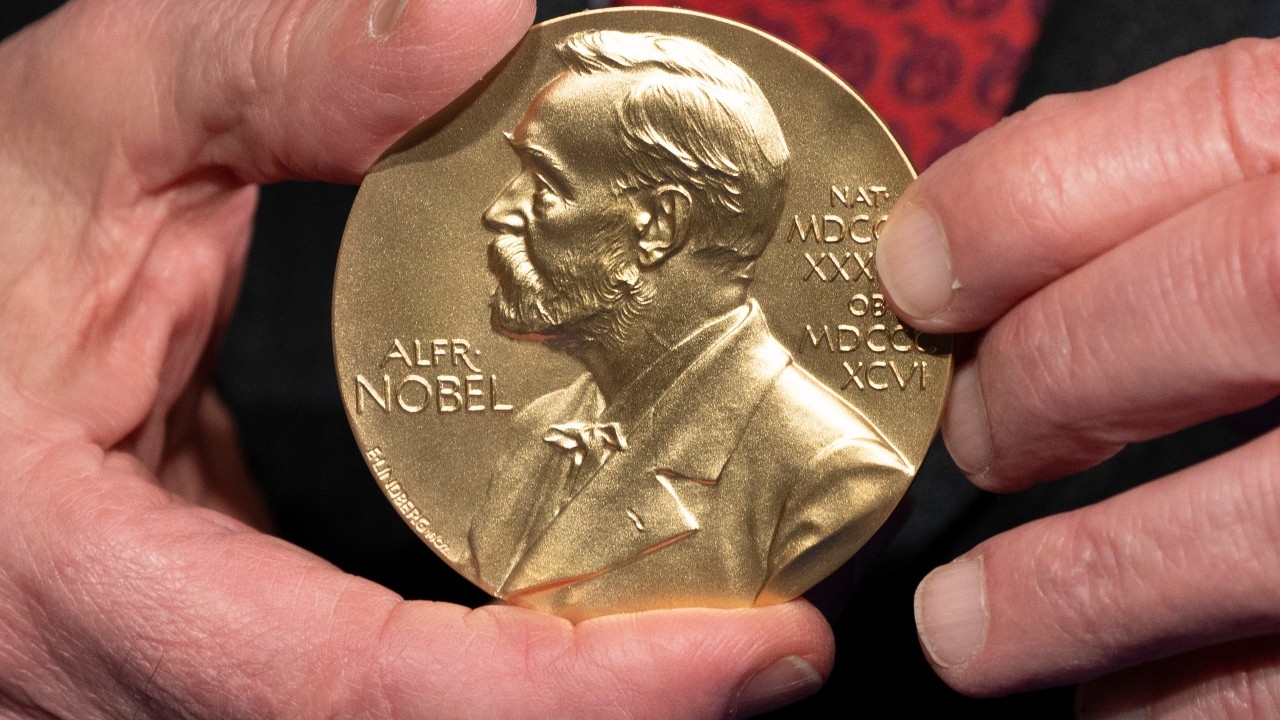
Research on hormones that regulate hunger and fullness, including GLP-1—which is a key basis for weight loss drugs like Ozempic and Mounjaro—is being watched as a possible winner of the 2026 Nobel Prize in Medicine, while Nobel Prize announcements across six categories will take place from 5 to 12 October.
The 2026 Nobel Prize announcements begin on 5 October, with the first being the Nobel Prize in Medicine. Predictions suggest that research on hormones controlling hunger and satiety, which led to the development of globally popular weight loss drugs, may be awarded this year.
The Nobel Committee is set to announce the Medicine Prize at 11:30 a.m. local time in Sweden, or 16:30 Thailand time. Many observers believe that research paving the way for GLP-1 drugs such as Ozempic and Mounjaro stands a good chance of winning.
David Pendlebury, head of research analysis at Clarivate, a data analytics firm that uses citation counts to forecast Nobel laureates, said this research has a high chance of winning. He noted that the discovery and development of GLP-1 knowledge is particularly outstanding due to its widespread impact on patient treatment worldwide.
A key focus is the study of the hormone GLP-1, or "glucagon-like peptide-1," which is secreted by the intestines after eating and signals to the brain that the body is full. GLP-1 drugs mimic this mechanism, helping reduce appetite and regulate blood sugar levels, and are therefore used to treat both diabetes and weight control.
Several scientists have played important roles in advancing this knowledge. Frequently mentioned potential laureates include Daniel Drucker, a Canadian endocrinologist; Jens Juul Holst, a Danish physician; and Svetlana Mojsov, an American chemist of Yugoslav descent.
However, medical research candidates are not limited to weight loss drugs. Another notable field is stem cell research related to skin regeneration and wound healing, with leading researchers including American cell biologist Ellen Fuchs and British scientist Fiona Watt.
Additionally, there is a medical imaging technique called Optical Coherence Tomography (OCT), which uses light reflection to produce high-resolution cross-sectional images of tissues, especially the retina and optic nerve. This non-invasive technique enables doctors to detect and monitor diseases in detail.
Another area under consideration is the discovery of cell adhesion receptors in the immune system, studied by American immunologist Timothy Springer. These receptors act like “anchors” on immune cells, enabling them to attach to blood vessels, move into tissues, and reach infection sites, which is critical for regulating immune responses and could lead to treatments for inflammatory and autoimmune diseases.
Research on breast cancer and the development of DNA sequencing techniques that contributed to COVID-19 responses are also among works likely to be recognized.
After the Medicine Prize announcement on Monday, the Nobel Prizes for Physics and Chemistry will be announced on Tuesday and Wednesday, respectively, followed by Literature on Thursday.
Regarding the Nobel Prize in Literature, some critics predict that the Swedish Academy may select a female writer this year, following last year’s award to Hungarian author László Krasznahorkai.
One frequently mentioned name is 48-year-old Argentine writer Samanta Schweblin. Other commonly predicted contenders include Jamaica Kincaid from Antigua and the US, Chinese writer Kan Xue, Australians Gerald Murnane and Alexis Wright, American author Thomas Pynchon, and Mexican writer Cristina Rivera Garza.
One of the most closely watched awards is the Nobel Peace Prize, which will be announced on 9 October in Oslo, Norway—the only Nobel award presented outside Sweden. Some experts predict that this year the committee may select widely recognized individuals or organizations after last year’s controversial award to Venezuelan opposition leader María Corina Machado.
Former US President Donald Trump campaigned heavily for the Nobel Peace Prize last year, while Machado gave her Nobel medal to Trump. The Nobel Committee acknowledged it expects heightened interest from Trump again this year.
Christian Berg Harpviken, secretary of the Nobel Peace Prize Committee, said lobbying for individuals or organizations to receive the prize happens regularly, and sometimes there are attempts to pressure the committee, but the committee is well accustomed to such situations.
Those mentioned as possible laureates this year include the organization Save the Children and Mykola Kuleba, a Ukrainian child rights activist campaigning to return children taken from occupied areas of Ukraine back to their families.
Another group in the spotlight is Emergency Response Rooms (ERR), a large volunteer network in Sudan risking their lives to help people facing war and food shortages.
Also under consideration is the Committee to Protect Journalists (CPJ), which may be recognized following 2025 being the deadliest year ever recorded for journalists and media workers killed in the line of duty.
The 2026 Nobel Prize announcements will conclude with the Prize in Economics on 12 October.
Source: AFP