

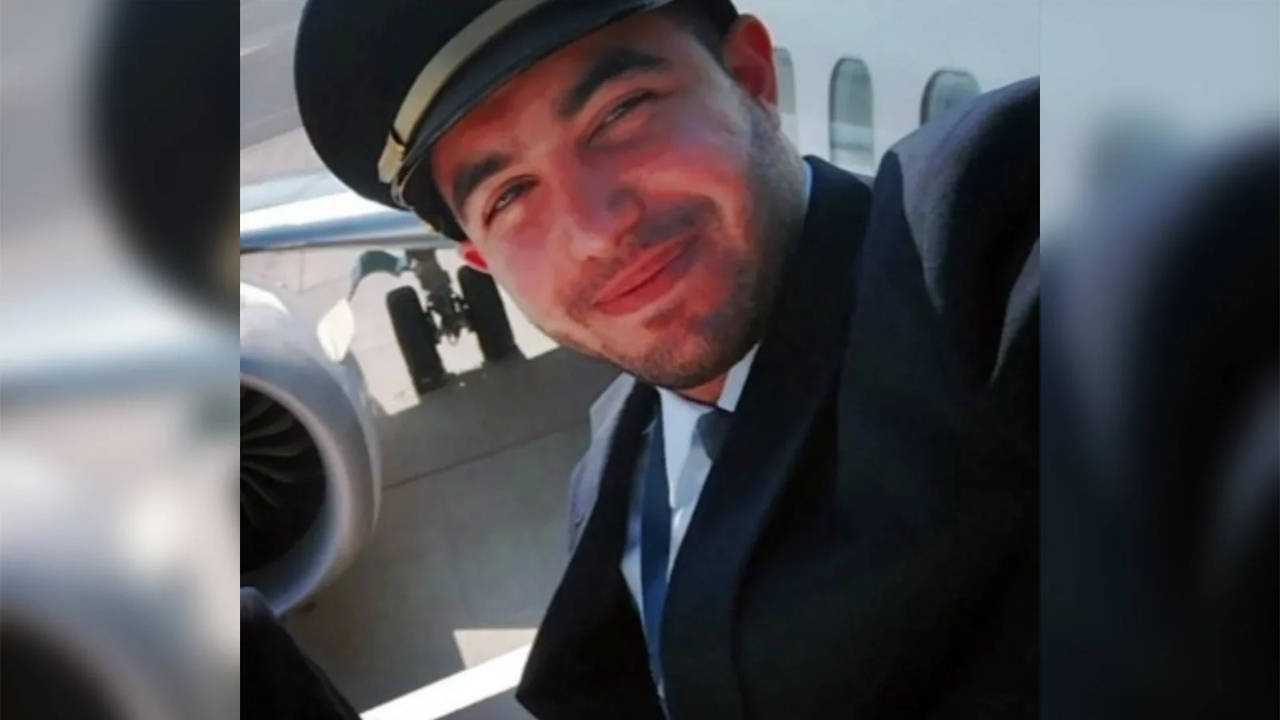
Israeli media and international news agencies revealed the confession of Hamam Al-Hammami, an Omani co-pilot for Flydubai, who admitted to planning to eliminate the captain and forcibly crash the plane into Ben Gurion Airport in Tel Aviv. Meanwhile, UAE authorities are conducting an urgent investigation, and Israel's Prime Minister has ordered a major review of aviation security measures.
Hamam Al-Hammami, the Omani co-pilot for Flydubai who was arrested and is under investigation in the UAE, is accused of planning to hijack flight FZ1073 and crash it into Israel's Ben Gurion Airport, according to Israeli media reports on Sunday.
Reports state that Al-Hammami told investigators that after eliminating the captain, he intended to continue flying normally to receive permission to land, then crash the plane into buildings or aircraft at Ben Gurion Airport. He believed waiting until the last moment would prevent ground personnel from detecting or stopping his plan.
Authorities believe this may explain why Al-Hammami waited until the plane entered Jordanian airspace before attempting to seize control of the cockpit and attacking the captain, Indian pilot Smeet Mashar.
According to reports, Al-Hammami used the onboard emergency axe to attack and stab the captain. Although injured, the captain managed to open the cockpit door from inside, enabling several Israeli passengers to rush in and help restrain Al-Hammami.
One passenger, an off-duty pilot, helped control the aircraft, before two other off-duty pilots on board took over flying the plane.
An Italian newspaper, Corriere della Sera, citing Israeli intelligence, reported the incident began around 09:15 when Al-Hammami requested to pray before attacking the captain with the emergency axe.
At about 09:20, passenger Tali Manes, traveling with her five-year-old daughter, heard a commotion from the cockpit while taking her child to the bathroom. She alerted an off-duty pilot seated in business class. When the cockpit door opened, she saw Al-Hammami attacking the captain and shouted, "He is killing the pilot."
After realizing his original plan was failing, Al-Hammami allegedly tried to force the plane into a steep dive, aiming for a crash in the desert. He also attempted to disable control systems to prevent others from retaking control.
The plane dropped nearly 14,000 feet (about 4,267 meters) within less than 30 seconds, causing extreme fear among passengers.
However, several passengers managed to regain control of the cockpit and stabilize the plane. An off-duty pilot who was on board took control and declared emergency code 7700 at approximately 09:31.
After Al-Hammami was subdued, the pilot changed the code to 7500, the international signal for unauthorized cockpit intrusion.
Saudi Arabia’s air traffic control ordered an emergency landing at Tabuk Airport in the country's northwest, where the plane landed safely at 10:57.
The flight originated in Dubai, UAE, bound for Tel Aviv, Israel, carrying about 180 passengers and crew, mostly Israeli. After landing, passengers were flown back to Israel on a special flight, the injured captain was sent to the UAE for treatment, and Al-Hammami was detained for investigation.
Israeli media reported that Al-Hammami had visited Ben Gurion Airport multiple times in the months prior, traveling on Flydubai flights. In June, during a visit to Israel, he focused on gathering information and planning the attack.
He is accused of planning an attack in July but aborted it at the last minute due to a personal relationship with a crew member.
Israel’s Channel 13 reported that Al-Hammami told investigators he studied airlines servicing Tel Aviv before choosing Flydubai, and that he planned the attack before joining the airline. Reports also suggest he might have intended to crash into a U.S. military base in Jordan if he couldn't reach Israel.
Al-Hammami was previously suspended from flying by Oman Air after being identified as a security risk, according to U.S. media reports.
Last weekend, the UAE Attorney General declared the incident as terrorism. Ynet reported, citing senior UAE sources, that Al-Hammami may face the death penalty, with Abu Dhabi seeking the harshest punishment.
Israeli intelligence officials reportedly traveled to the UAE to assist in investigating Al-Hammami, an Omani national, with prior reports indicating Israeli authorities would question him.
Australia confirmed that its counterterrorism teams are investigating possible links between Al-Hammami and Australia. The probe is led by Victoria's joint counterterrorism team, including the Australian Federal Police (AFP), Victoria Police, and the Australian Security Intelligence Organisation (ASIO).
Sources close to the case revealed that Al-Hammami obtained an Australian student visa in 2014 and studied engineering at Melbourne's RMIT University from 2015 to 2017 but did not graduate. His visa was canceled in 2019.
The visa cancellation was not due to behavioral issues but because he was no longer enrolled in a course, making him ineligible to hold a student visa. Australian investigators are also examining whether Al-Hammami adopted extremist views during his time in Australia.
Israeli Prime Minister Benjamin Netanyahu stated that Al-Hammami was indoctrinated with extremist Islamic ideology and exhibited signs of suicidal tendencies, though he did not specify where or when this occurred.
This incident raises questions about the screening and vetting processes for foreign airline crew, especially considering that Al-Hammami had previously been banned from flying in his own country over extremist concerns.
There are also concerns over how an Omani pilot, from a country without formal diplomatic relations with Israel, was assigned to a flight carrying Israeli passengers to Tel Aviv.
Netanyahu ordered the National Security Council to appoint an inspector to thoroughly review all security measures related to foreign civil flights arriving in Israel.
Meanwhile, the Israeli government affirmed that pilots from countries without diplomatic ties to Israel should not be authorized to operate flights to the country. However, it remains unclear how Al-Hammami was assigned to this flight.