

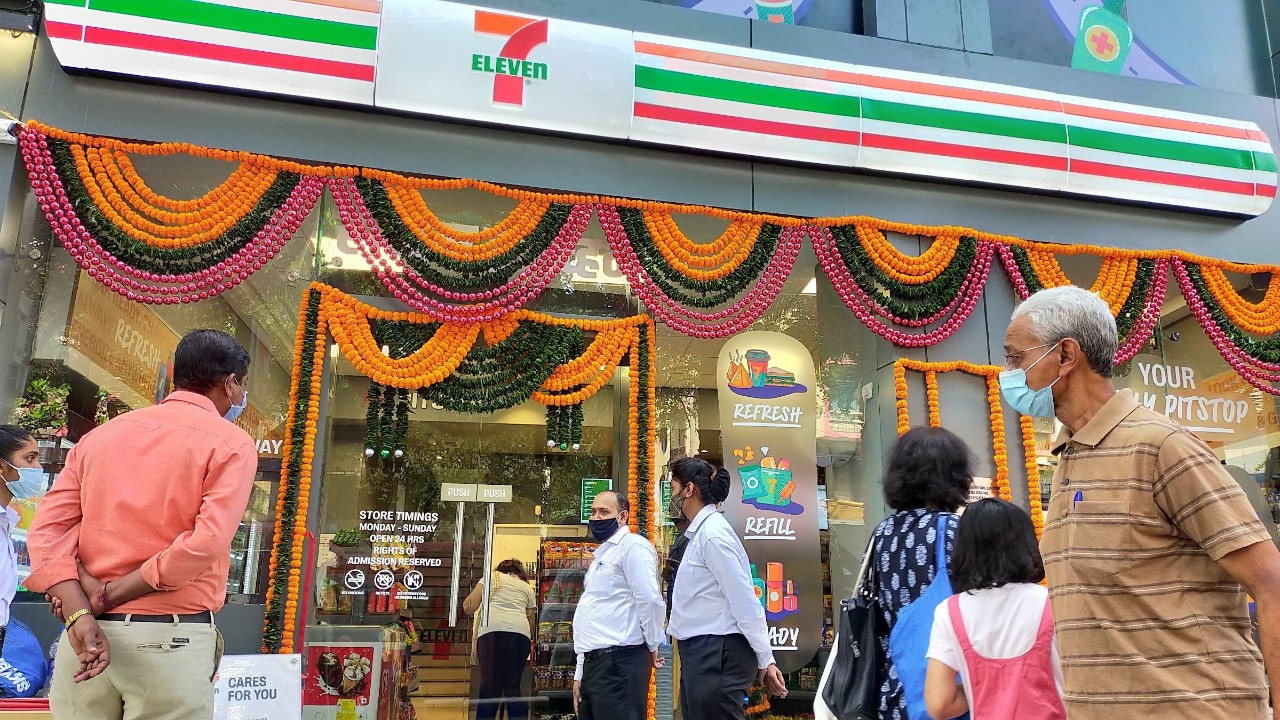
7-Eleven, the global convenience store chain, has decided to cease operations and close all its outlets in India after facing intense competition in the local retail market, including pressure from the rapidly growing quick commerce delivery sector. Meanwhile, its Japanese parent company confirmed it has not abandoned long-term business prospects in India.
All 7-Eleven convenience stores in India ceased operations as of last September after Reliance Retail, a major Indian retail company, ended its 5-year franchise agreement with 7-Eleven. The Japanese parent company, Seven & i Holdings, confirmed that all 31 stores still operating in Mumbai and Pune were closed on 30 September.
A spokesperson for Seven & i Holdings told AFP that 7-Eleven entered the Indian market in October 2021 after signing a master franchise agreement with Reliance Retail, initially opening its first store in Mumbai before expanding to about 60 outlets at its peak.
However, reports from Japanese newspapers Nikkei and Yomiuri indicated the business struggled due to intense competition from local retailers, while Indian media reported the decision to end the partnership followed the business’s failure to meet profitability targets.
Industry sources stated that some stores might remain open briefly to sell remaining stock before complete closure. Reliance Retail has yet to issue an official statement regarding the 7-Eleven store closures.
The shutdown occurred amid increasing competition in India’s retail market, particularly from quick commerce platforms offering delivery of consumer goods, snacks, beverages, and daily essentials to homes within about 10–15 minutes.
Platforms serving this market include Blinkit, Zepto, and Swiggy Instamart, which enable consumers to shop without visiting physical stores, putting additional pressure on brick-and-mortar convenience stores.
Additionally, India has a widespread network of traditional grocery stores known as Kirana, which have close community ties and effectively meet local consumer needs. This forces foreign operators to compete on price, convenience, and product variety.
Although 7-Eleven is globally recognized for selling ready-to-eat food, beverages, snacks, and essential consumer goods, expanding its convenience store format in the price-sensitive Indian market remained a challenge.
High rental costs, low profit margins, and rising operational expenses also posed significant obstacles for physical convenience store businesses.
Following the end of its partnership with 7-Eleven, Reliance Retail is reported to be focusing on food and consumer goods retail, including its Smart Bazaar and Smart Point stores, as well as expanding its online platform JioMart across multiple locations.
The company is also emphasizing investment in large-format consumer goods stores and e-commerce platforms, viewing these businesses as having growth potential and positive consumer reception.
Quick delivery services and local area deliveries via JioMart represent another key growth avenue, reflecting consumer demand for rapid home delivery of daily essentials.
Furthermore, reports indicate that employees who worked in the 7-Eleven business will be reassigned to Reliance Retail’s food retail and community stores to retain trained staff and operational experience gained from the partnership.
Though all 7-Eleven stores in India have closed, Seven & i Holdings stated it remains committed to serving Indian customers and will consider various options to expand its business in this market over the long term.
There are reports that 7-Eleven may consider partnering with other Indian companies to re-enter the market, but no official decisions have been made yet.
Previously, 7-Eleven had an agreement with Future Retail, led by Kishore Biyani, in 2019 to enter India, but this ended in 2021 after Future Retail faced financial difficulties and entered liquidation under Indian bankruptcy laws.
Subsequently, 7-Eleven partnered with Reliance Retail and opened its first store in October 2021. The recent termination of this partnership marks another setback for the brand’s expansion plans in India.
Meanwhile, Lawson, a Japanese competitor, plans to open its first store in India in 2027 and aims to expand to about 100 stores by 2030.