

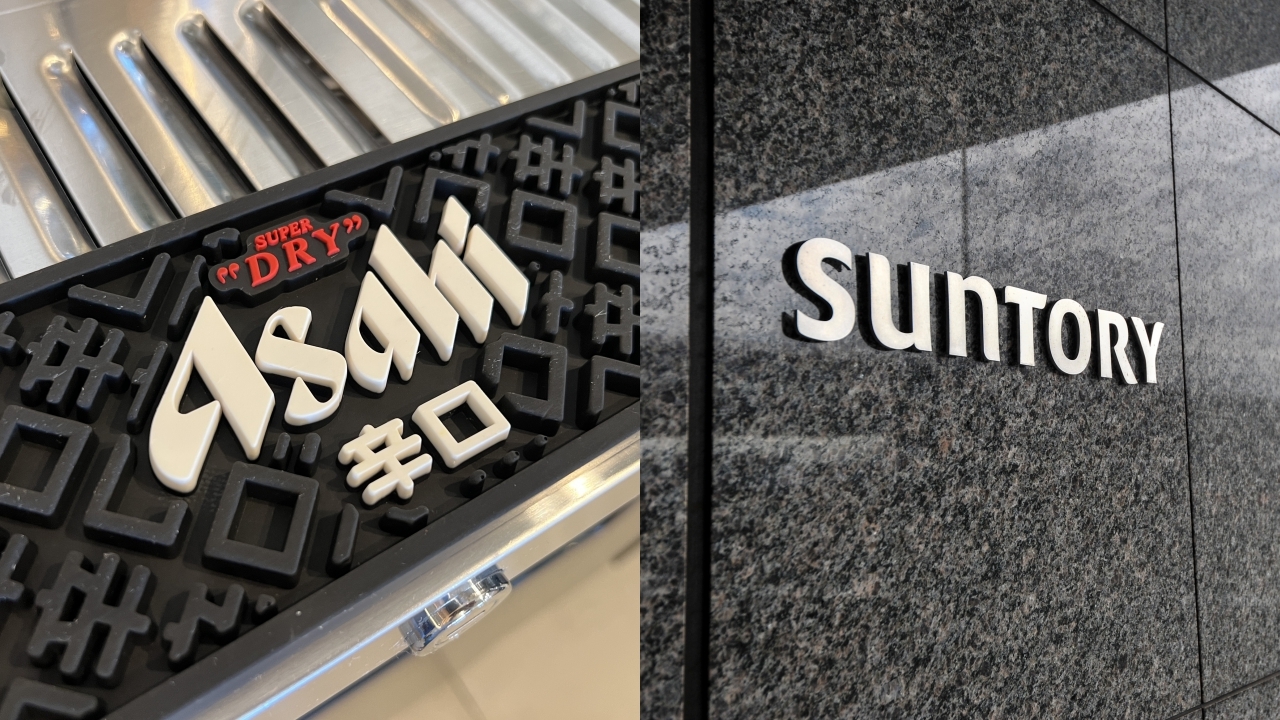
The Japan Fair Trade Commission (JFTC) has raided and investigated four major beer producers — Asahi, Kirin, Sapporo, and Suntory — on suspicions that they formed a group to jointly set prices and coordinate timing for wholesale price increases of beer and beer-type beverages, potentially violating antitrust laws.
The Japan Fair Trade Commission (JFTC) launched an investigation into the country's four leading beer producers amid suspicions that the companies colluded to set prices to raise wholesale prices for beer and beer-type beverages, possibly breaching Japan's antitrust laws.
Sources say JFTC officials have raided the four major beer producers: Asahi Breweries, Kirin Brewery, Sapporo Breweries, and Suntory.
This is the first time the JFTC has used its criminal investigative powers to simultaneously raid the four major beer producers on suspicion of price-fixing to restrict competition. Officials executed search warrants, seized evidence, and may refer the case to prosecutors for potential legal action.
JFTC suspects that sales management and relevant personnel from the four companies have met and exchanged pricing information for several years, coordinating price levels and timing for increases in beer and beer-type beverage prices.
The products under investigation are not limited to regular beer but also include happoshu, a low-malt beer, and "third-category beer" — inexpensive beer-type beverages in Japan with different ingredients and tax rates from regular beer.
Officials suspect the four companies may have coordinated wholesale price increases, causing retail prices to rise by a few to several tens of yen per item. Wholesale prices directly influence what consumers pay at supermarkets, convenience stores, restaurants, and bars nationwide.
The four companies are Japan's largest beer producers, collectively holding a very high market share. According to the Japan Brewers Association, in 2018, they accounted for about 99% of all beer shipments.
However, since 2019, the association has stopped publishing such data, citing the rise of craft beers from smaller producers and private-label products from retailers, making overall market trend assessments less precise.
Sources note that over recent years, the four producers have raised product prices multiple times, citing rising raw material and transportation costs, while JFTC is examining whether there was behind-the-scenes price coordination to maintain or increase profits.
If price coordination is proven, it would imply the price competition mechanism in the market is not functioning properly, causing consumers to bear higher costs.
All four companies confirm they are under JFTC investigation and state they will fully cooperate. Suntory disclosed that it is currently being searched in relation to suspicions of violating antitrust laws in its alcoholic beverage business.
Data from the Japanese National Tax Agency show that domestic sales of beer and low-malt beer in 2024 totaled about 1.6 trillion yen, approximately 10 billion U.S. dollars.
Meanwhile, total sales of alcoholic beverage manufacturers and operators in Japan for the same year reached around 3.84 trillion yen, about 24.3 billion U.S. dollars, with beer accounting for roughly 30% (1.15 trillion yen) and low-malt beer about 10% (457.8 billion yen).
Although alcohol consumption and sales volume in fiscal year 2024 have dropped by about 20% from their peak in fiscal year 1996, the four major producers have still increased revenue through overseas expansion and diversification into other product categories.
This beer producers’ investigation follows JFTC's recent intensified probes into suspected price-fixing in the food and beverage industry, including a case involving six major ice cream companies accused of coordinating price hikes over several years, with increases exceeding what raw material cost rises would justify.
/sourceKYODO NEWS/The Mainichi/Jiji Press