

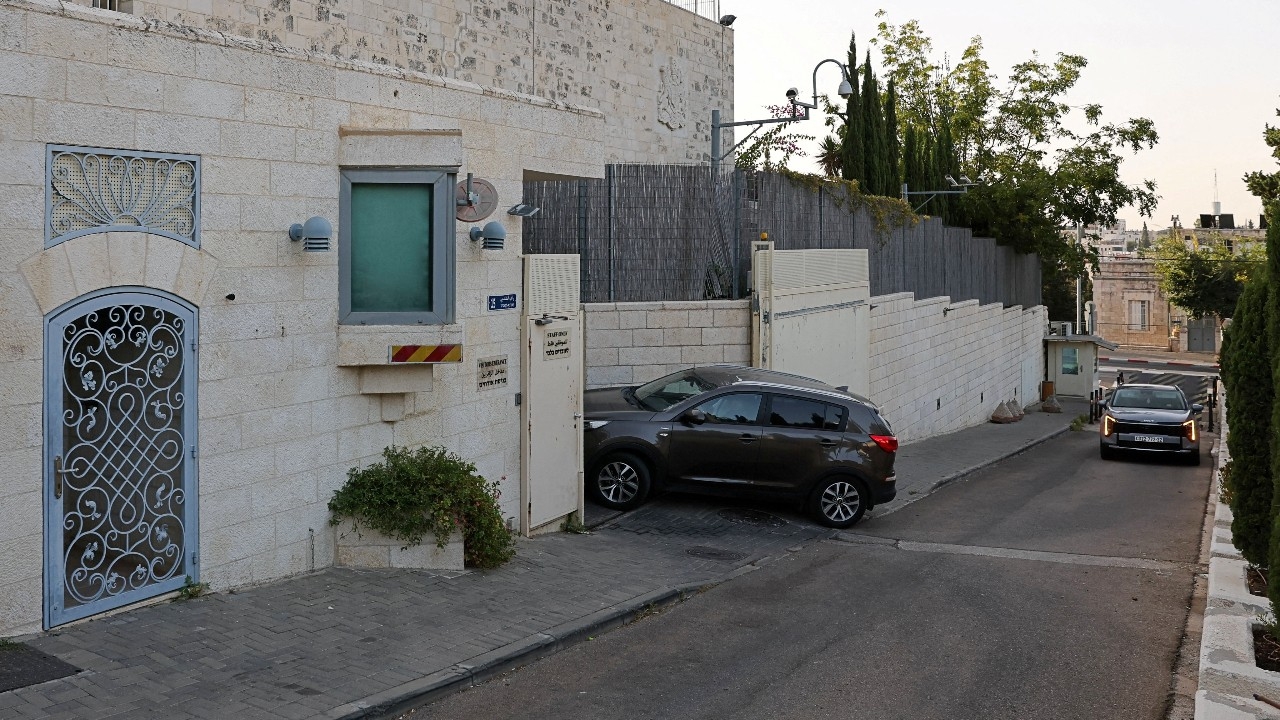
Israel has ordered a downgrade of the British consulate's operations in Jerusalem, permitting only seven British diplomats to work within limited scope. Meanwhile, the UK affirms the building remains open under the name "United Kingdom Representative Office in Jerusalem" and will continue providing essential services to Palestinians amid tensions related to British sanctions on Israeli settlements in the West Bank.
Israel stated that the British consulate in Jerusalem officially downgraded its status as a consulate on 8 Oct, with most British diplomats departing Israel. Only seven diplomatic staff are authorized to work in the building under restricted conditions.
Gideon Sa’ar, Israel’s Minister of Foreign Affairs, said the measures resulted from consultations with the British government to prevent further escalation of tensions between the two countries.
Sa’ar said that 20 British diplomats, including the consul general, would end their missions and leave Israel. Israel permits a team of only seven diplomats to remain working in the same building, but their operational scope will be severely limited.
The building is British government property. Sa’ar noted that Israel and the UK agreed to continue government-level negotiations, allowing both sides to raise issues important to them.
However, the UK insists it has not fully closed the consulate. UK Foreign Secretary Ed Miliband stated the building will remain open and be renamed the "United Kingdom Representative Office in Jerusalem."
Miliband said this representative office remains an independent entity operating normally, affirming it will continue providing essential services and working with the Palestinian people.
However, the UK reported it temporarily withdrew some staff and their families citing security reasons, after failing to reach an agreement with Israel on necessary guarantees for personnel and building protection.
The UK Foreign Office said the seven diplomats remaining will continue to work independently and provide necessary services, while Israel stated these staff will operate within a “limited scope.”
This move follows Israel’s announcement to close the British consulate in retaliation for the UK being among Western countries imposing trade sanctions on Israeli settlements in the occupied West Bank, amid rising violence by Israeli settlers against Palestinians.
The UK's measures are part of coordinated actions with 11 other countries, including Canada and France, that have announced trade sanctions on West Bank Israeli settlements, which most of the international community considers illegal under international law.
Previously, Sa’ar announced several retaliatory measures: besides closing the consulate, expelling British representatives from the Gaza ceasefire monitoring center mediated by the U.S., suspending UK training for Palestinian Authority forces, and banning 12 Britons, mostly MPs, from entering Israel. Israel says these measures have been implemented.
Before the consulate's closure deadline, the UK government made last-minute efforts to persuade Israel to rescind the order after Israel demanded the consulate cease operations within 30 days following the UK’s sanctions announcement.
Sa’ar said negotiations with the UK government led to some principled agreements, allowing the seven-diplomat team to remain in the building and no further Israeli measures during ongoing talks.
Israeli media previously reported the UK might consider expelling Israeli diplomats from London in retaliation if Israel closed the consulate, which could further worsen bilateral relations. The recent agreement is thus a compromise, with Israel confirming the consulate has "ceased operations" while the UK retains some status and personnel on site.
Miliband reiterated that the UK government maintains its long-term position that East Jerusalem is occupied territory and rejects Israel’s right to close the consulate.
Stephen Doughty, UK Deputy Foreign Secretary, said the building remains operational and UK personnel continue to work with Palestinian authorities, adding that the UK government maintains ongoing discussions with Israel on this issue.
Doughty also affirmed that although the mission’s name has changed, the key point is the UK still maintains presence and personnel in the area and will continue to pursue its policies with the Israeli government on contested issues.
Meanwhile, Miliband noted the UK reserves the right to retaliate if necessary but will refrain from doing so while credible progress is made in talks, making it unlikely the UK will take retaliatory action before Israel’s upcoming elections later this month.
AFP photographers observed that the official diplomatic insignia and British consulate signs were removed from the building's front. However, the British flag remains outside, and some staff were seen entering the building. It is unclear if new signage for the UK representative office has been installed.
The British consulate in Jerusalem was established in 1838, nearly 200 years ago, tasked with managing UK relations with Palestinians in Jerusalem, the West Bank, and Gaza Strip, as well as overseeing political, trade, security, and economic interests related to Palestine and providing consular services to British citizens in the area.
The consulate is located in East Jerusalem, territory formerly part of Palestine, which Israel captured in 1967, later annexing the area and declaring Jerusalem its undivided capital.
However, the UK and most of the international community do not recognize Israeli sovereignty over all of Jerusalem. The British consulate in East Jerusalem operates separately from the British Embassy in Tel Aviv, which serves as the UK's main diplomatic mission to the Israeli government.