

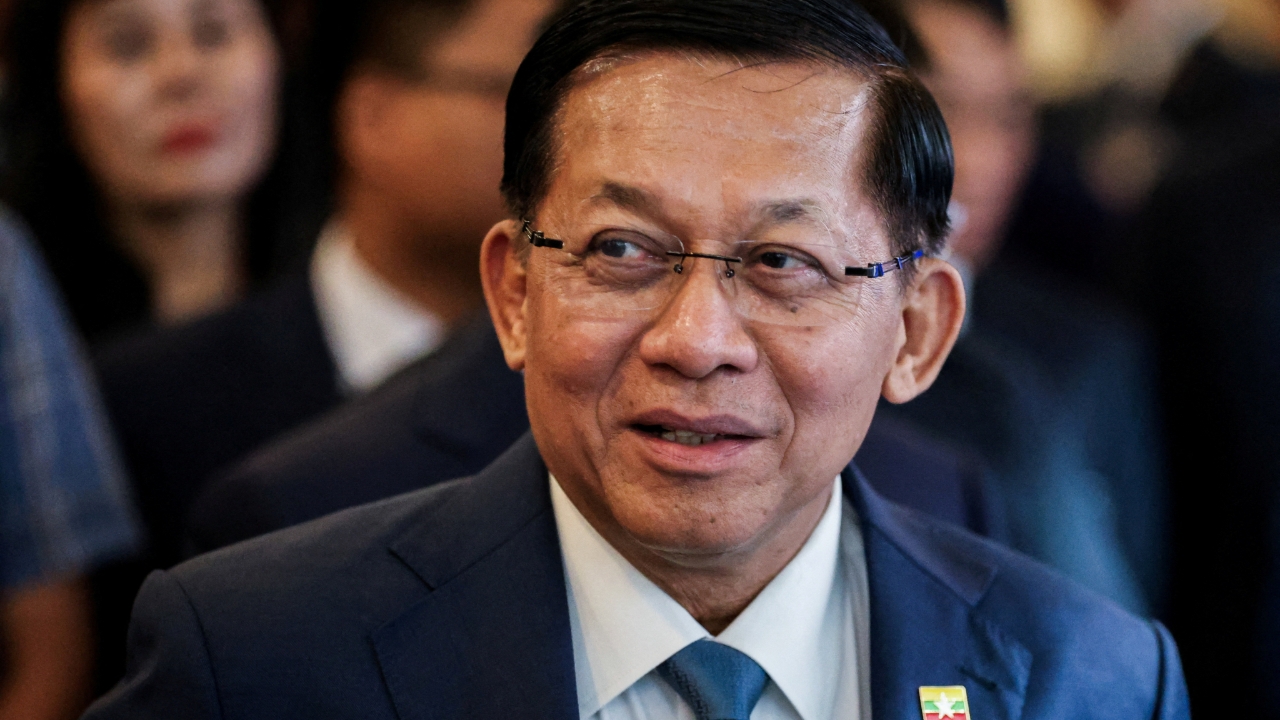
The Trump administration has initiated talks with Myanmar’s military government for the first time since the coup five years ago, marking a reversal from its previous policy focused on isolating Myanmar’s top generals.
Foreign news agencies reported on 8 Oct 2026 that the Trump team has begun direct negotiations with Myanmar’s military government, representing a complete policy reversal by Washington, which had previously sought to isolate Myanmar’s generals since the military seized power in 2021.
Michael Wance, US Deputy Assistant Secretary of State for Intelligence and Research, traveled to hold direct talks with Senior General Min Aung Hlaing in Naypyidaw on 15-16 September, marking the highest-level contact since the coup.
The main purpose of the talks was to expedite the release of Adam Castillon, an American businessman detained in Myanmar, who has now been freed. Additionally, the US sought Myanmar’s cooperation in dismantling call center gangs and scam operations that have caused huge losses to Americans, with FBI coordination involved.
The US is also trying to gain access to rare earth minerals—critical for manufacturing electric vehicles and wind turbines—to reduce reliance on and diversify risk away from China, despite significant obstacles as most mining areas in Myanmar are controlled by ethnic groups and Chinese influence.
These talks took place even though Senior General Min Aung Hlaing remains sanctioned by the US for serious human rights violations, raising concerns that the meeting may legitimize the military government. Moreover, less than two weeks after the meeting, Myanmar’s military conducted an airstrike on a market in Rakhine State, killing over 50 people.
Another sign of the US shift is the Trump administration’s cut to non-military aid budgets that support anti-military opposition groups in Myanmar, in contrast to the policies under President Joe Biden.
Richard Betts, senior advisor at the Council on Foreign Relations (CFR), expressed concern that having intelligence leader Wance head the policy talks could undermine neutrality and credibility in factual assessments.
"If you allow political policy to guide intelligence work, you cannot be confident that you are receiving honest and straightforward factual evaluations," Betts said.
Meanwhile, Congressman Gregory Meeks, a Democrat, stated that this action contradicts US values and interests and legitimizes Myanmar’s military government on the international stage.
However, US State Department spokesperson Tommy Pickett explained that the Trump administration resumed talks with Myanmar’s military government because "You cannot solve problems by ignoring them, but by confronting and managing them."
Follow international news:https://www.thairath.co.th/news/foreign
Source:cna