

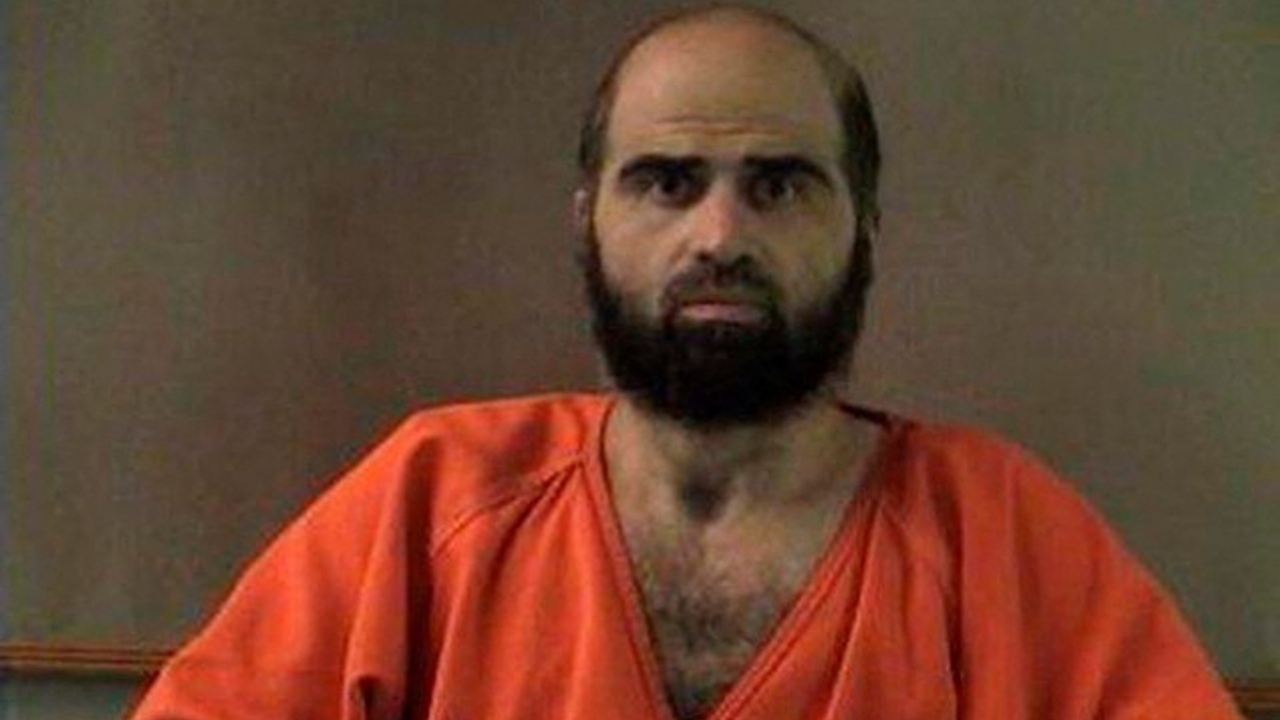
The U.S. Department of Defense has confirmed plans to live broadcast the execution of Nidal Malik Hasan, a former military psychiatrist who carried out the 2009 Fort Hood shooting that resulted in 13 deaths and 32 injuries. The execution by firing squad is scheduled for 3 December. This will be the first military execution using this method in more than 65 years, igniting debate about transparency, human dignity, and the application of the death penalty in the U.S.
The U.S. Department of Defense, also known as the Pentagon, announced on Thursday that the execution of Nidal Malik Hasan, a former U.S. Army major and psychiatrist who perpetrated the Fort Hood shooting in Texas, will be broadcast live. Previously, U.S. Secretary of Defense Pete Hegseth stated that the execution would be carried out in a "publicly transparent" manner.
The U.S. Army declared this week that Hasan will be executed by firing squad on 3 December at Fort Hood, after being convicted of murdering 13 soldiers and injuring 32 others in the 2009 shooting incident.
Hegseth told Real America's Voice television station that authorities will enable the public to watch the execution and will proceed openly. Pentagon officials clarified the next day that the event will be live streamed and said further details would be disclosed later.
This announcement has sparked controversy over U.S. execution methods, particularly the choice of firing squad and the public broadcast of executions. The issue gained attention following the botched lethal injection of Krista Pike in Tennessee, raising questions about the safety and propriety of execution procedures.
Legal experts note that Hasan may file a petition in civilian court to challenge the legality of his detention and the execution process, which could significantly delay the execution.
Eugene R. Fidell, a visiting military law professor at Yale Law School, said legal proceedings could be prolonged beyond the current administration's term, and it remains uncertain whether the next administration will support similar executions.
Deborah Denno, a law professor at Fordham University and expert on the death penalty, believes that live broadcasting could increase transparency and help the public better understand the details and consequences of capital punishment, especially in light of renewed questions following Pike's case.
Brenner Fissell, a law professor at Villanova University and vice president of the U.S. National Institute of Military Justice, pointed out that many states face difficulties carrying out lethal injections due to limited access to drugs and medical personnel willing to participate, making firing squads a possible alternative that may reduce suffering.
However, Fissell suggested that choosing firing squads may not be motivated solely by efficiency but also relates to masculine and military imagery, aligning with Hegseth’s emphasis on a culture that values the power to kill.
Elizabeth Semel, co-director of the Capital Punishment Clinic at the University of California, Berkeley School of Law, said the live broadcast announcement raises numerous legal and public policy questions, from preserving the dignity of the condemned to deciding who is permitted to watch, and why President Donald Trump's administration chose a method likely to attract public attention.
Semel noted that although televised executions have been debated for a long time, she has never seen a case initiated by the government itself, making it necessary to question the administration's motivations. She added that the focus on public spectacle reflects Trump's approach and questioned whether the administration has fully considered the legal and societal impacts.
Hasan, a U.S. Army major and psychiatrist, entered the medical building at Fort Hood on 5 November 2009, where many soldiers were lined up to receive vaccines and undergo health checks before deployment.
Hasan shouted "Allahu Akbar," an Arabic phrase meaning "God is greatest," before using a laser-sighted pistol to shoot at people. He also fired at soldiers fleeing to the parking lot from the rear. Hasan claimed he acted to prevent soldiers from deploying to Afghanistan and killing fellow Muslims, but the military judge rejected this defense during the 2013 trial.
Law enforcement officers shot Hasan in the back during the incident, leaving him paralyzed from the waist down and confined to a wheelchair since then.
Although Hasan has the legal right to seek a stay of execution, it is unclear if he will do so, as his behavior during trial suggested he might not have tried to avoid the death penalty from the outset.
After dismissing his lawyer and choosing to represent himself, Hasan began his defense by admitting guilt to the jury. He spoke little over the next three weeks, leading the court-appointed attorney assisting him to conclude that Hasan’s goal may have been to receive the death sentence.
Military prosecutors called nearly 90 witnesses, but Hasan ended his case without presenting any defense witnesses or a closing statement. However, during the trial, he provided documents to reporters revealing that he told military mental health officials he could still be a martyr even if executed.
John Galligan, a former military judge who represented Hasan in several civil cases after the criminal trial, said he spoke with Hasan on Wednesday but could not disclose many details of the conversation.
Galligan, who was not Hasan’s criminal defense attorney, expressed concern about Hasan's physical health under the planned execution and said Hasan has not yet had adequate access to legal counsel.
Galligan said that according to Hasan, the military prison commander brought a chaplain to see him upon notifying that Trump had approved the execution, but no military defense counsel or civilian defense attorneys were present. He viewed this as a possible violation of Army regulations.
Hegseth stated that the U.S. military has not executed a soldier by firing squad since World War II. The most recent military execution occurred on 13 April 1961, when Private John Bennett was hanged.
According to Amnesty International’s 2025 global death penalty report, the organization documented at least 17 public executions, with 11 in Iran and 6 in Afghanistan.