

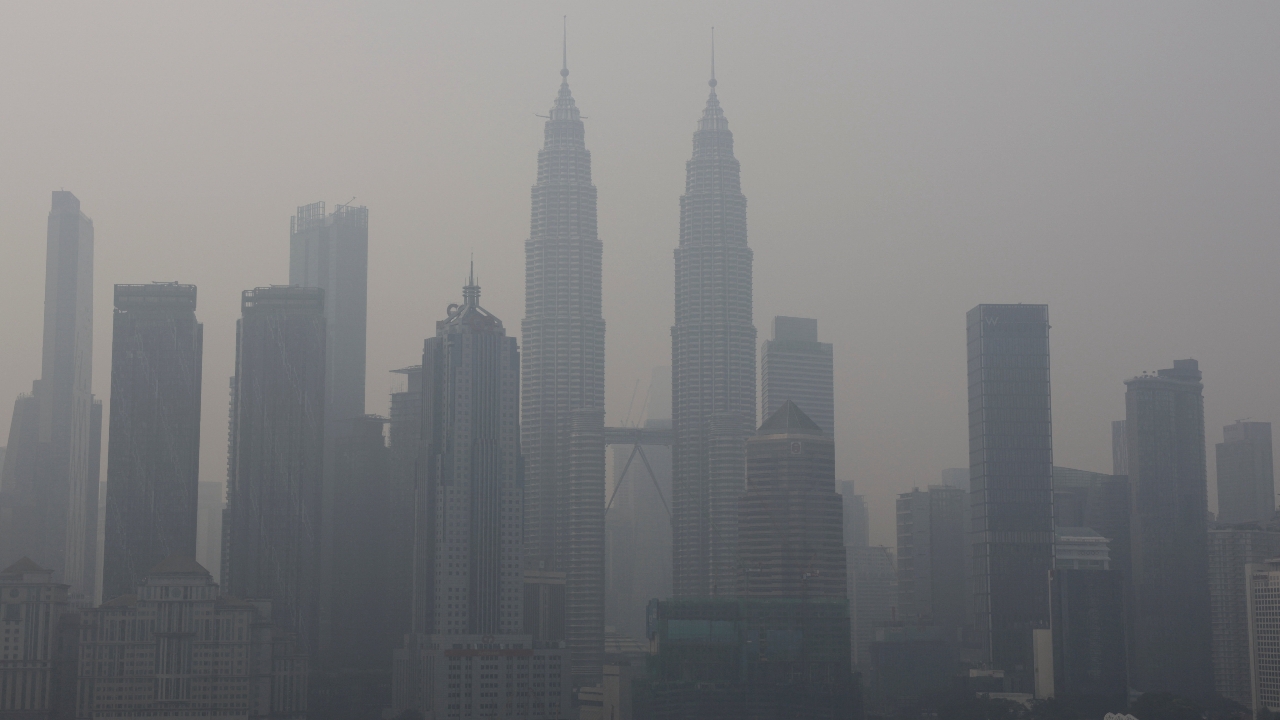
Malaysia has ordered the closure of schools in several states and key areas as the haze situation worsened to levels hazardous to health. On the morning of 9 Oct, 37 locations reported air pollution indices at unhealthy levels. Singapore is also facing severe conditions, with the 24-hour average Pollutant Standards Index (PSI) in the central region rising to 181, the highest this haze season. The main cause is transboundary haze linked to forest and agricultural fires in Indonesia.
Schools in various parts of Malaysia were closed on 9 Oct due to the intensifying haze, which has caused air quality in many areas to reach unhealthy levels.
Fadhlina Sidek, Malaysia's Minister of Education, revealed that affected areas include the states of Johor, Malacca, Negeri Sembilan, and Selangor, as well as Kuala Lumpur and Putrajaya, the administrative center. Additionally, schools in Rompin district, Pahang state, were also closed.
The Education Minister stated that state and district education offices have been instructed to continuously monitor the haze situation and implement immediate measures if further response is necessary. She acknowledged that school closures disrupt daily routines and childcare arrangements for parents, but assured that the government will try to announce closures in advance to allow families time to prepare. She emphasized that the safety and health of students, teachers, and education personnel remain the highest priority.
Malaysian government data indicates that the Air Pollution Index (API) categorizes values between 101–200 as unhealthy, 201–300 as very unhealthy, and above 300 as hazardous. On Friday morning, 37 locations reported API readings within the unhealthy range.
The Star newspaper reported on Thursday that Malaysia's Ministry of Education mandates closure of schools and educational institutions if the API exceeds 180 or remains above 150 for three consecutive days.
Mohammad Aslam Ahmad, Director General of Malaysia's Education Department, said the ministry is following the directives of the King of Malaysia, who is concerned about student safety, especially in areas where the API has been between 150–180 for prolonged periods.
He stated that affected schools and educational institutions must arrange home-based learning to ensure students' education continues, taking into account learning capabilities, access to devices and resources, and teacher readiness.
Additionally, teachers and support staff are allowed to work from home throughout the school closures, while the Ministry of Education will continuously monitor the situation and coordinate with the Ministry of Health and relevant agencies to protect the health and welfare of students and education personnel.
Earlier, Johor state announced the closure of all schools for two days starting 8 Oct to prevent health and safety impacts on students. Johor was the first state on the Malay Peninsula to temporarily close schools during this haze season, following the earlier closure of about 300 educational institutions in Batu Pahat district on Wednesday due to a significant rise in API to very unhealthy levels.
Nagib stated that scheduled exams and assessments during the school closures will be postponed, subject to decisions by the Johor State Education Department and relevant authorities. He emphasized that despite the need to adjust plans, the health and safety of children in Johor must be the top priority.
The regional haze situation is linked to forest and agricultural fires in several provinces of Indonesia, which have caused dense smoke to drift across borders into neighboring countries including Malaysia and Singapore.
Malaysia's Prime Minister Anwar Ibrahim revealed on Thursday that Indonesian President Joko Widodo (Prabowo Subianto is an Indonesian Defense Minister; the text likely intended President Joko Widodo) agreed to implement necessary measures to tackle the haze issue, with Malaysia ready to assist.
Anwar also said he requested Malaysia's Foreign Minister to push for an ASEAN ministerial meeting to coordinate regional response measures and support Indonesia's efforts to control forest fires and haze.
Meanwhile, air quality in Singapore worsened on the morning of 9 Oct, with the 24-hour average Pollutant Standards Index (PSI) in the central region rising to 181 by noon, the highest level recorded this haze season.
Data showed the 24-hour average PSI steadily increased nationwide since midnight, with all regions experiencing unhealthy air quality. By noon, the northern region recorded 123, western 170, southern 160, and eastern 155.
The one-hour average PM2.5 particulate matter concentration in the central region rose back to high levels at 11:00 a.m., reaching 152 before slightly dropping to 151 by noon. This particulate level had previously reached high levels from 11:00 p.m. Thursday before decreasing to elevated levels at 3:00 a.m. Friday.
In the western region, the one-hour average PM2.5 fluctuated between high and elevated levels multiple times overnight Thursday into Friday morning, measuring 117 at noon, categorized as elevated. Other regions in Singapore also maintained PM2.5 levels within the elevated range, between 104 and 147.
Singapore's National Environment Agency (NEA) reported in its latest haze update on Friday morning that transboundary haze from fires is moderately to densely covering parts of the Malay Peninsula, Singapore, Kalimantan, and the southern and central areas of Sumatra island.
The agency detected scattered hot spots in Kalimantan and southern and central Sumatra, while other southern ASEAN regions observed only a few hot spots. However, the exact number and status of hot spots in Kalimantan and parts of Sumatra remain uncertain due to dense haze and cloud cover.
NEA advised the public planning outdoor activities nearby to check hourly PM2.5 levels before leaving home. For planning outdoor activities for the following day, the 24-hour average PSI forecast should be considered alongside health advisories.
If hourly PM2.5 levels reach elevated ranges, healthy individuals should reduce strenuous outdoor activities during the next hour. Elderly people, pregnant women, children, and those with heart or chronic lung diseases should avoid strenuous outdoor activities altogether.