

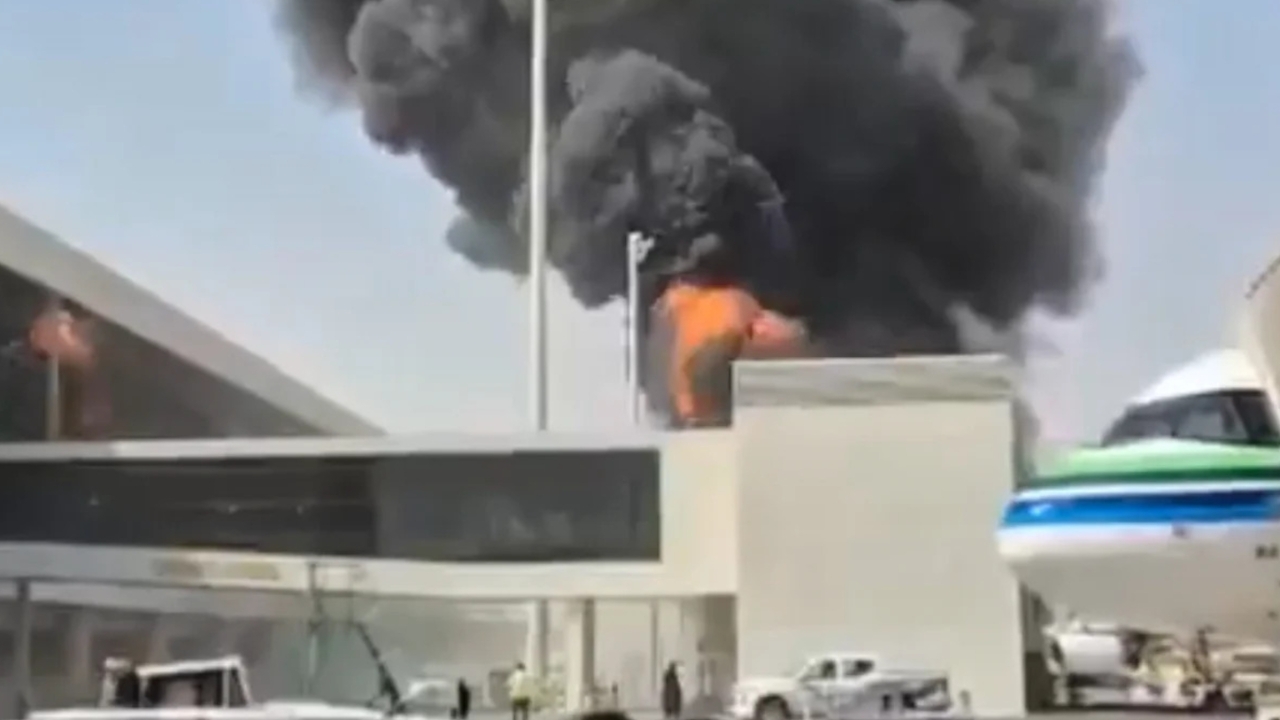
An attack occurred at the passenger terminal of King Khalid International Airport in Riyadh, the capital of Saudi Arabia, resulting in at least 12 deaths and 309 injuries, including one American. The Saudi-led military coalition blamed Yemen's Houthi group for the attack and vowed to retaliate, while several countries warned their citizens to avoid the airport amid escalating regional conflict.
Saudi officials reported at least 12 fatalities and 309 injuries from the attack at King Khalid International Airport in Riyadh. This marks the deadliest attack in Saudi Arabia in over a decade, with some injured in critical condition.
Saudi Arabia's Civil Aviation Authority stated the fatalities include four Saudis, two Bangladeshis, and one citizen each from the United States, Egypt, Jordan, Syria, Palestine, and Sudan. U.S. Secretary of State Mike Pompeo condemned the attack and confirmed an American citizen was among the dead.
An eyewitness told AFP news agency that while at gate 403 in the domestic terminal, they saw gate 401 being attacked and people injured, prompting a chaotic evacuation. Reports indicated over ten ambulances rushed to the airport.
Following the attack, airport services were suspended as officials assessed damage. Several Gulf airlines canceled flights to and from Riyadh, with Kuwait Airways citing security concerns. Embassies of the U.S., Canada, Germany, Spain, and the U.K. warned citizens to avoid the airport vicinity.
Brigadier General Turki al-Maliki, spokesperson for the Saudi-led coalition, accused the Iran-backed Houthi group of perpetrating the attack, calling it terrorism against a civilian site and a "full-scale war crime" due to casualties among passengers and airport staff.
Earlier, the coalition reported intercepting missiles targeting Saudi Arabia and destroying launch sites. However, the Houthi group has yet to claim responsibility for Saturday's attack.
This incident follows Houthi claims of multiple attacks on the same airport on Thursday, which killed three and damaged aircraft. Additionally, attacks on two Saudi airports on 6 and 7 October resulted in three more deaths. On Saturday, objects resembling projectiles reportedly fell near King Fahd International Airport in Dammam, eastern Saudi Arabia.
U.S. President Donald Trump said Saturday that the U.S. might join Saudi Arabia in military action against the Houthis. He described the event in Saudi Arabia as unacceptable and said he would consult with Saudi Crown Prince Mohammed bin Salman.
Tensions escalated after an informal ceasefire between Yemen's conflicting parties broke down in July, reigniting intense fighting between the Saudi-backed Yemeni government forces and the Houthis.
The Houthi group declared a "maritime blockade" against Saudi Arabia and targeted airports, energy plants, and oil tankers in the Red Sea, citing retaliation against what they view as a prolonged Saudi siege of Yemen and airstrikes on Sana'a airport, the Houthi-controlled capital.
Previously, the Houthis seized strategically important Red Sea coastal areas, including the Mocha port near the Bab al-Mandeb strait, a vital shipping route at the southern entrance to the Red Sea critical for global goods and energy transport.
Military sources report Yemeni government forces are advancing to attack Houthi positions near Bab al-Mandeb after announcing operations to reclaim territory held by the Houthis. Independent verification remains difficult due to rapidly changing conditions and restricted journalist access.
Analysts from the Arab Gulf States Institute predict Saudi Arabia may intensify operations against the Houthis following the latest attacks, warning the conflict is escalating to dangerously high levels of violence.
Saudi Arabia leads a military coalition formed in 2015 to support Yemen's internationally recognized government after the Houthi group's attempt to seize control. The years-long conflict has caused hundreds of thousands of deaths and triggered one of the world's worst humanitarian crises. Despite a 2022 UN-backed temporary ceasefire, the situation worsened again this year.
The recent Riyadh airport attack raises concerns that the Yemen conflict could widen, drawing in other countries militarily, potentially destabilizing the Middle East and impacting international energy and trade routes.