

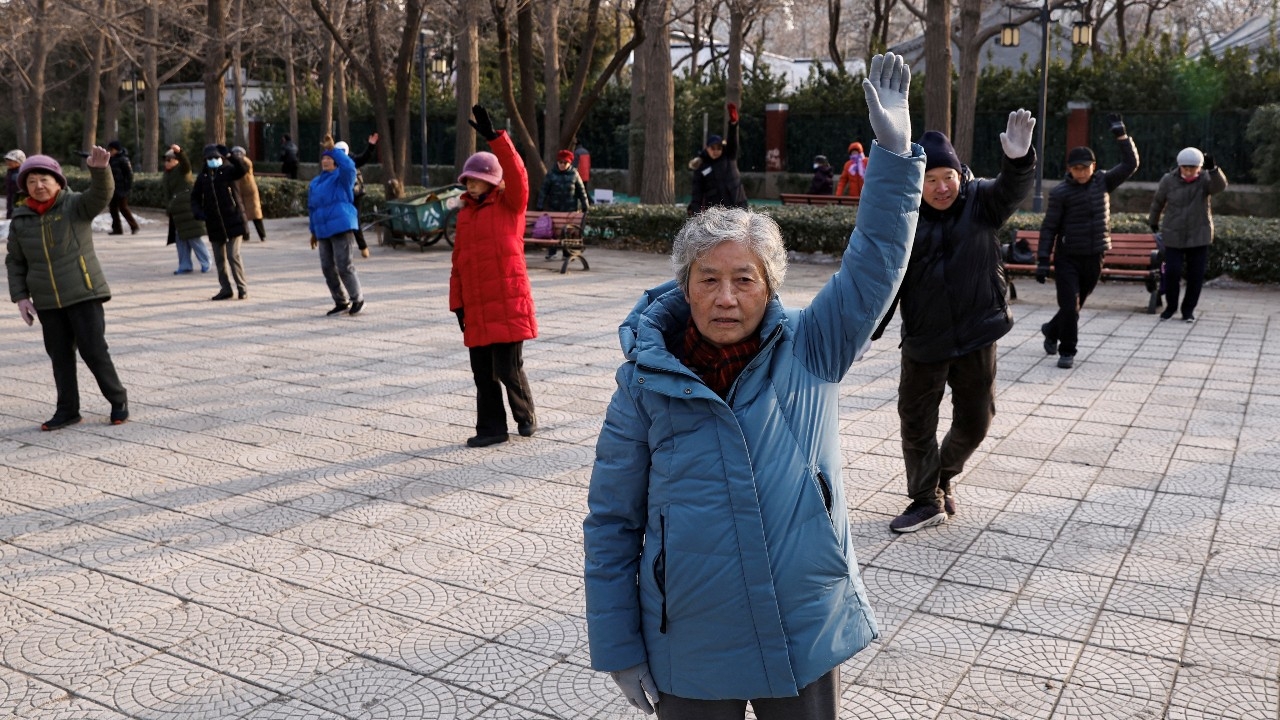
Beijing, China, is expected to enter a "super-aged society" by 2035, with about one in three residents aged 60 and above. According to the latest report, by the end of 2025, Beijing will have nearly 5.29 million elderly people, representing 24.3% of the total population, while authorities are accelerating the expansion of pension systems, elderly care services, and home care to meet growing demand.
The Beijing Daily reported that Beijing, the capital of China, is likely to become a super-aged society by 2035, with over 33% of its population aged 60 or older, equating to roughly one-third of all residents.
Data revealed at a business conference related to elderly care, held before China's Chongyang Festival (Senior Citizens' Day), showed that by the end of 2025, Beijing's permanent residents aged 60 or above will number approximately 5.288 million, making up 24.3% of the city's population.
To address the rapidly growing elderly population, Beijing authorities have enhanced elderly care measures across multiple areas, including improving laws and social security, increasing basic pensions, expanding healthcare services, and promoting cooperation between hospitals and elderly care providers.
In January, Beijing implemented its first local regulation covering systematic elderly care services, establishing a three-level elderly care service network spanning administrative districts, subdistricts or communities, and neighborhoods or villages, aiming to provide comprehensive service access for residents.
Additionally, the local government has continuously increased basic pensions for both urban and rural residents, allocating subsidies for elderly care. In 2025, about 3.51 billion yuan (approximately 525 million U.S. dollars) was disbursed to assist financially disadvantaged seniors, those unable to care for themselves, and the very elderly.
Currently, Beijing has 620 registered elderly care facilities, 168 regional elderly care centers, and over 1,500 community elderly care service stations, with a combined capacity of approximately 155,000 beds.
Authorities also prioritize care for the very elderly through benefits, fee reductions or waivers, regular welfare visits, and emergency assistance services.
Since most elderly prefer to live at home, Beijing is rapidly developing an elderly care service network accessible within 15 minutes. Nearly 3,000 registered food service points for seniors cover 90% of urban and rural communities, with plans to add 30,000 home care beds over the next three years.
This situation reflects China's nationwide aging issue, with about 323.38 million people aged 60 or older at the end of 2025, accounting for 23% of the total population.
The rising number of elderly who are dependent, suffer dementia, or live alone increases demand for long-term care services, while a shortage of professional elderly care workers remains a significant challenge.
Beyond impacts on welfare and pension systems, population decline and low birth rates pressure China's economy due to a shrinking workforce, rising welfare costs, and a decreasing number of households, potentially slowing domestic consumption growth.
The Chinese government must swiftly adjust population policies and welfare systems to align with demographic changes to sustain economic stability and meet long-term elderly care needs.