

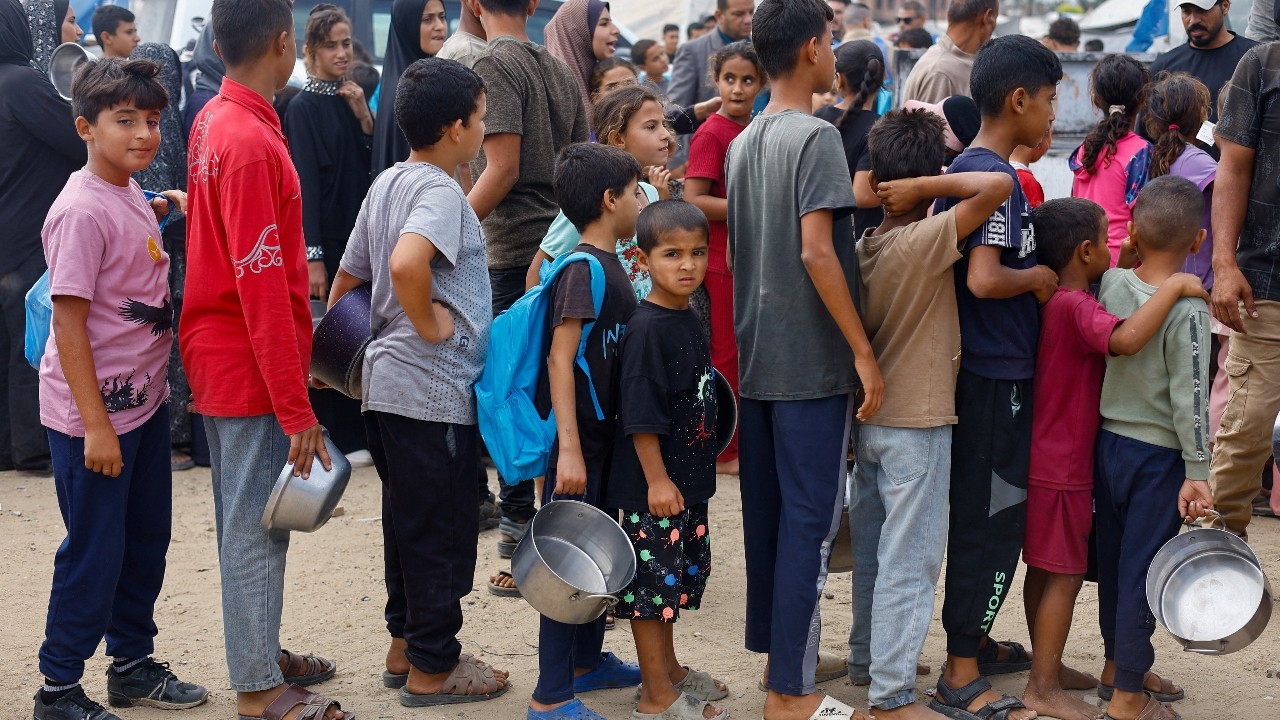
The United Nations World Food Programme (WFP), facing a severe budget shortfall, plans to reduce the number of Palestinians in the Gaza Strip receiving monthly food assistance from 1.6 million to 1.1 million. This will result in around 500,000 people losing food aid. Approximately two-thirds of the population are already facing critical food insecurity ahead of winter, and the agency urgently needs $450 million to carry out humanitarian operations in Gaza and the Israeli-occupied West Bank over the next six months.
The UN World Food Programme, one of the main agencies delivering food aid to people in Gaza, revealed that funding shortages have forced significant cuts to humanitarian assistance, even as many people still struggle to secure enough food for their families, especially with winter approaching.
WFP stated it will reduce the monthly food aid recipients from 1.6 million to 1.1 million—a cut of about one-third. Additionally, the amount of food distributed to each family will be halved, and cash assistance will be cut for 75,000 households.
Furthermore, the number of cooked meals provided through community kitchens will be reduced from 250,000 to 150,000 daily for those unable to cook for themselves. Families in hard-to-reach areas, particularly near the "Yellow Line" marking the military-controlled zone by Israel, may receive food every other day instead of daily.
WFP reported that approximately 1.4 million people, or around two-thirds of Gaza’s population, are facing crisis-level or worse food insecurity. Of these, about 200,000 are in an emergency food situation.
This data aligns with the Integrated Food Security Phase Classification (IPC) assessment released in July, which indicated that 1.4 million people—about two-thirds of Gaza’s population—are expected to experience acute food insecurity at crisis or worse levels from July to December 2026.
The aid reduction has raised concerns among displaced families who depend on distributed food to survive.
Mervat Al-Satari, a Palestinian mother of five living in the Al-Mawasi refugee camp in Khan Yunis, said the cut in food quantities leaves her family uncertain about how to feed her young children. She noted that sometimes food aid is the only source her family relies on to have meals.
Sawsan Bahlul, a mother of three from the same area, said daily aid previously helped sustain her family, but now they must wait for food every other day. She added that the community kitchen meals—mostly pasta or lentils with occasional potatoes and eggplants—are already insufficient to feed her family adequately.
Sean Hughes, WFP’s director for Palestine, emphasized that the aid cuts are due to funding constraints, not a decrease in the population’s needs or difficulties accessing the area.
Since July, WFP has reduced direct cash assistance to some beneficiaries, which previously covered about 500,000 people, decreasing their ability to buy food locally. Concurrently, the number of people receiving flour bags and food boxes from WFP will drop from 1.1 million to 600,000 per month.
The agency disclosed that its 2026 funding for operations in Palestine is less than half of what it used to receive in previous years. It now urgently requires $450 million to maintain essential operations in Gaza and the West Bank over the next six months.
Carl Skau, acting executive director of WFP, told Reuters in Gaza that although the ceasefire has lasted a year, life remains extremely difficult for people due to lack of adequate shelter, basic services, and security.
He added that aid reductions are occurring just before the fourth winter, a period when living conditions become particularly harsh. He called on the international community to increase support to maintain existing aid and push early-stage recovery efforts.
Despite a ceasefire agreement between Israel and Hamas a year ago, violence continues, including almost daily Israeli airstrikes. Reconstruction in Gaza has barely progressed, and Israel continues to tightly control goods entering through border crossings.
Nearly all of Gaza’s approximately 2.1 million residents have been displaced from their homes, and about two-thirds depend on food aid to survive. Although local markets have more food available, many people cannot afford it, with unemployment exceeding 80 percent, forcing most households to rely on aid from various organizations.
Additionally, a shortage of cooking gas makes meal preparation difficult. The Israeli government classifies gas as a dual-use item—usable for both civilian and military purposes—which restricts supply. As firewood is expensive, many families send children to collect scrap plastic and paper from the streets to use as fuel for baking bread or heating food.
Hughes said many people still live in extremely difficult conditions without proper housing, residing in tents with limited access to clean water, sanitation, and healthcare. The food aid cuts will exacerbate the hardships families have endured over the past three years.
Humanitarian officials warn that although the situation in Gaza has slightly improved compared to a year ago, acute food insecurity remains severe, and there is ongoing concern about the risk of famine returning.
Despite the aid cuts, WFP said it can continue supporting bakeries producing about one-third of Gaza’s bread supply, provide nutritional support to around 300,000 women and children, and distribute nutritious snacks to approximately 200,000 children.
In the Israeli-occupied West Bank, WFP continues to assist about 200,000 Palestinians after halving the number of aid recipients in September.
The agency noted that food insecurity in the West Bank is rising, primarily due to increasing violence by Israeli settlers and the displacement of Palestinians.
WFP urged the international community to urgently mobilize funding and support humanitarian operations, warning that current aid cuts could worsen conditions for already vulnerable families amid shortages of shelter, basic services, and adequate food ahead of winter.