

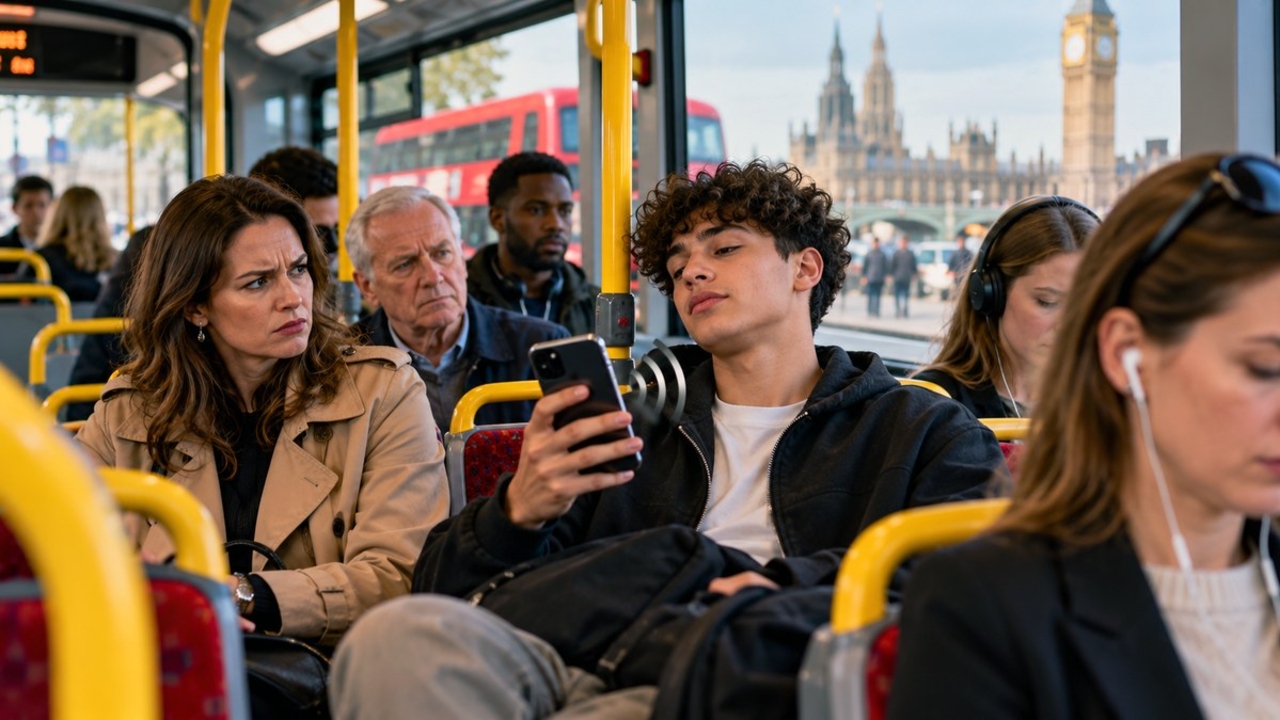
The UK government plans to empower local transport authorities to fine bus passengers up to £100 (approximately 4,470 baht) for playing loud music or videos if they refuse to stop when asked. Alongside this, a campaign encouraging the use of headphones and respect for others’ privacy has been launched to reduce antisocial behavior on public transport, amid both support and concerns about rule enforcement.
The UK government is advancing measures to crack down on behaviors that disturb others on public transport. Passengers playing loud music or videos from mobile phones on buses in England may face fines up to £100 (around 4,470 baht) if they refuse to cease such behavior when requested by authorized officials.
This initiative also aims to address other antisocial behaviors including littering, vaping, and intimidating or threatening conduct, to make public transport journeys across all modes more comfortable and safer.
The government will issue guidelines for local transport authorities to exercise powers under bus service laws, allowing them to set and enforce rules on buses. The guidance will recommend fines up to £100 for passengers who fail to comply with requests to stop disruptive behavior.
Government officials stated that bus drivers will not be responsible for enforcing these rules; this duty will lie with transport security officers or the police.
At the same time, a national campaign for train passengers will be launched under the slogan "Share the carriage, not the noise," promoting headphone use, avoidance of speakerphone calls, and watching videos without disturbing others.
Prime Minister Andy Burnham said many have experienced passengers playing loud music or videos on trains, which quickly disrupts the travel atmosphere. The government wants to encourage headphone use and empower local leaders to tackle loud music, vaping, and littering on buses.
For trains, service operators already have the authority to fine passengers up to £1,000 for similar behaviors, especially if warned to stop but continue, and may also remove offenders from trains.
Playing audio loudly from mobile phones without headphones, known as "loudcasting" or "sodcasting," has become a notable problem in the UK. Surveys by Ofcom, YouGov, and Transport for London reveal widespread public dissatisfaction with this behavior.
While some campaigners and transport stakeholders support the new measures, doubts remain about practical enforcement, particularly on buses where there is no permanent transport police presence as on some rail services.
Maryam Aslamdust, general secretary of the Transport Salaried Staffs' Association (TSSA), said tackling antisocial behavior on public transport is a step in the right direction but urged the government to urgently address violence, threats, and harassment faced by passengers and staff. She emphasized increased funding for transport police as critical for public protection, incident response, and bringing violent offenders to justice.
Michael Solomon Williams from the Campaign for Better Transport warned that antisocial behavior might discourage public transport use, especially among those with accessibility needs. He questioned how local authorities will enforce the measures on buses and what role local police will play.
Richard Holden, Conservative shadow transport minister, said the government has just realized passengers do not want to endure booming electronic or hip-hop music on crowded trains and buses. However, he noted staff face more severe issues, with assaults on train staff up 68%, prosecutions down, and called for government focus on law enforcement, violence reduction, and staff protection.
Ollie Glover, Liberal Democrat transport spokesperson, stated that strict measures mean little without proper enforcement and called on the government to fund transport security officers to operate on the ground.
Sharon Graham, general secretary of the Unite union, said while the government’s proposals have good intentions, they are insufficient to address daily issues and violence faced by bus staff, and the proposed penalties cannot fully solve the problems employees encounter.
Transport Focus, the public transport watchdog, noted in a June report that personal safety and security during travel have become key factors influencing rail passengers’ confidence.
Alex Campbell, policy and insight director at Transport Focus, said four in ten passengers have felt unsafe or vulnerable during travel due to antisocial behavior. He pointed out that reducing disturbances like loud music and vaping could improve travel experiences and encourage more people to use public transport.
Previously, London Mayor Sadiq Khan launched a campaign promoting courteous travel, including headphone use. The Liberal Democrats had proposed raising fines for loud music on buses and trains up to £1,000.
The UK government hopes the new measures and national campaign will reduce disruptive behavior and make shared public travel smoother. However, the effectiveness depends on clear enforcement and sufficient personnel to oversee incidents.