

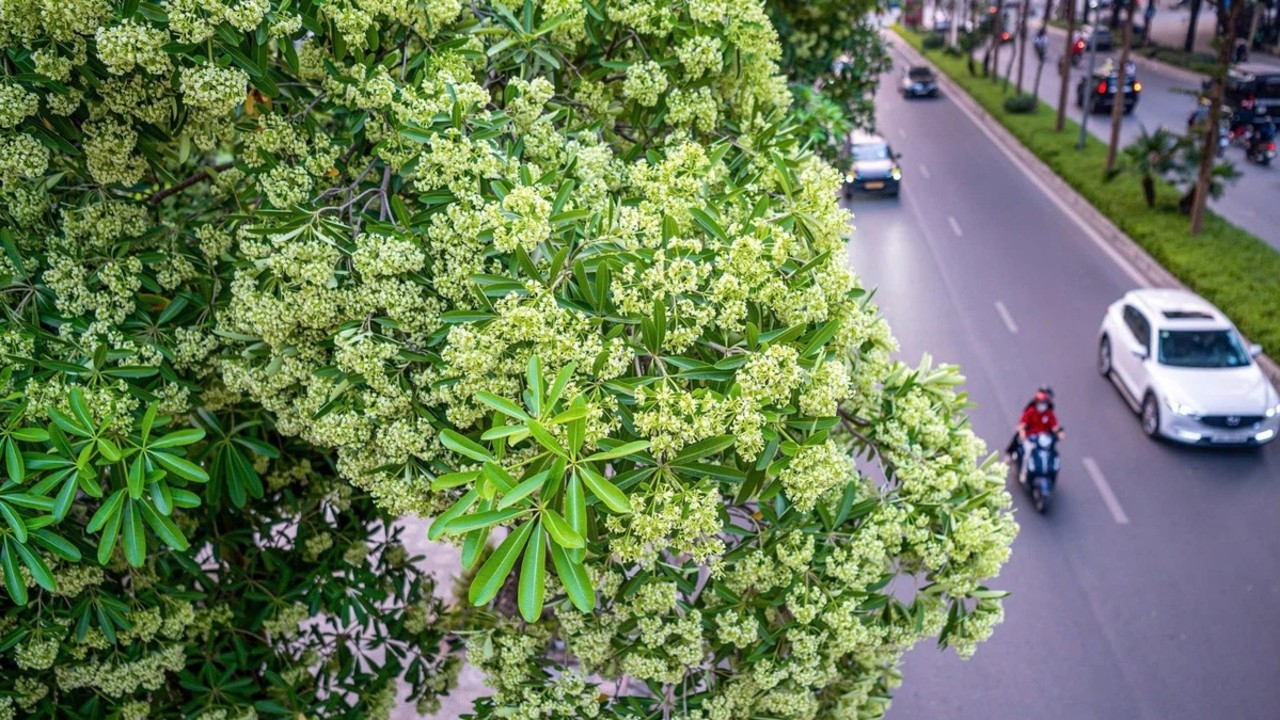
Hanoi authorities in Vietnam are preparing to conduct field surveys and gather public feedback to address the odor problem from the "Golden Shower Tree" or "Cassia fistula," which has been planted too densely, affecting health and daily life. They will proceed with short-term measures by pruning flower clusters and plan long-term appropriate tree relocations, emphasizing that there will be no mass tree removal or citywide replacement.
Hanoi, the capital of Vietnam, is reviewing the placement and density of "Golden Shower Trees" or "Cassia fistula" after some residents complained that the strong floral scent affects living conditions and the environment. The Technical Infrastructure Management Center, under Hanoi's Construction Department, has requested cooperation from local agencies and industrial area administrators to survey the trees and collect public opinions.
The survey will focus on streets and communities where Golden Shower Trees are densely planted, especially near residential areas, schools, hospitals, and sites with complaints about the flower scent. Relevant agencies must gather data on the number of trees, planting locations, growth conditions, spacing between trees, and the level of impact on residents to identify priority areas for intervention.
After the survey, local authorities will hold meetings to hear opinions from residents and community representatives to consider management options, including maintaining the current state, pruning flower clusters, or relocating some trees to suitable areas, along with planting other appropriate species as replacements.
In the short term, areas heavily affected by the scent will be considered for appropriate pruning of flower clusters and flowering branches to reduce the amount of flowers and scent dispersion, without harming tree growth, shape, or safety. It is prohibited to cut the tops excessively, over-prune, or use unauthorized chemicals to control flowering.
For the long-term measures, relocating some trees from areas with overly dense planting or unsuitable environments will be considered. Any relocation, removal, or replacement must have a plan and receive approval from authorized agencies before implementation.
The Technical Infrastructure Management Center confirmed that rumors about Hanoi replacing all Golden Shower Trees on Nguyen Su Street with mahogany trees, or changing all trees simultaneously on several streets, have no official orders or concrete plans. The city’s policy is to listen to public voices, address only problematic spots, and preserve the tree lines that are part of the city’s identity and landscape as much as possible.
Currently, Hanoi has about 14,400 Golden Shower Trees, ranking fourth among the city's most common trees after approximately 26,400 ironwood (known locally as sấu), about 17,500 Indian lilac, and around 16,000 royal poinciana trees. Golden Shower Trees are found along many streets such as Nguyen Su, Quan Thanh, Tran Xuan Huong, Trung Hoa, Trung Kinh, Duy Tien, Nguyen Chi Thanh, Dao Tan, and Le Van Luong.
Experts and representatives in the Vietnamese parliament believe that decisions about relocating Golden Shower Trees should be based on scientific data, including the impact level on residents, planting density, and landscape value, rather than solely on subjective feelings about the flower scent.
Taung Ha, Vice Chairman of the Culture and Social Commission of the Vietnamese National Assembly, said listening to complaints and considering adjustments to Golden Shower Tree plantings is necessary. Although the tree is tied to Hanoi's memories, culture, and image, symbolic value should not justify ignoring residents’ hardships. Public health must be the top priority.
He explained that the scent of Golden Shower Tree flowers might feel refreshing when trees are spaced out in open areas, but if densely planted along narrow streets near homes, the scent can be strong enough to disturb rest and daily life. He suggested preserving trees with beautiful shapes in some areas while considering replacing others as appropriate.
Ta Dinh Thi, Vice Chairman of the Science, Technology, and Environment Commission of the Vietnamese National Assembly, said the city should not rush to cut mature Golden Shower Trees because large trees take many years to reach full growth and represent valuable assets nurtured through continuous care.
He proposed assessing each street’s conditions individually, including road width, distance from residences, and tree density. Areas with minimal impact might retain the trees, while densely planted areas could undergo pruning or partial relocation.
Additionally, replacement tree planting should consider climate, soil, urban space, and the unique landscape identity of each location. Experts also recommend that Hanoi plan tree species selection and spacing during new community designs to reduce the need for relocating or replacing trees once residents settle in.
This approach aims to balance improving residents’ quality of life and health with preserving the Golden Shower Tree as part of Hanoi’s identity, avoiding large-scale relocation or replacement without data support.
.sourceVnExpress