

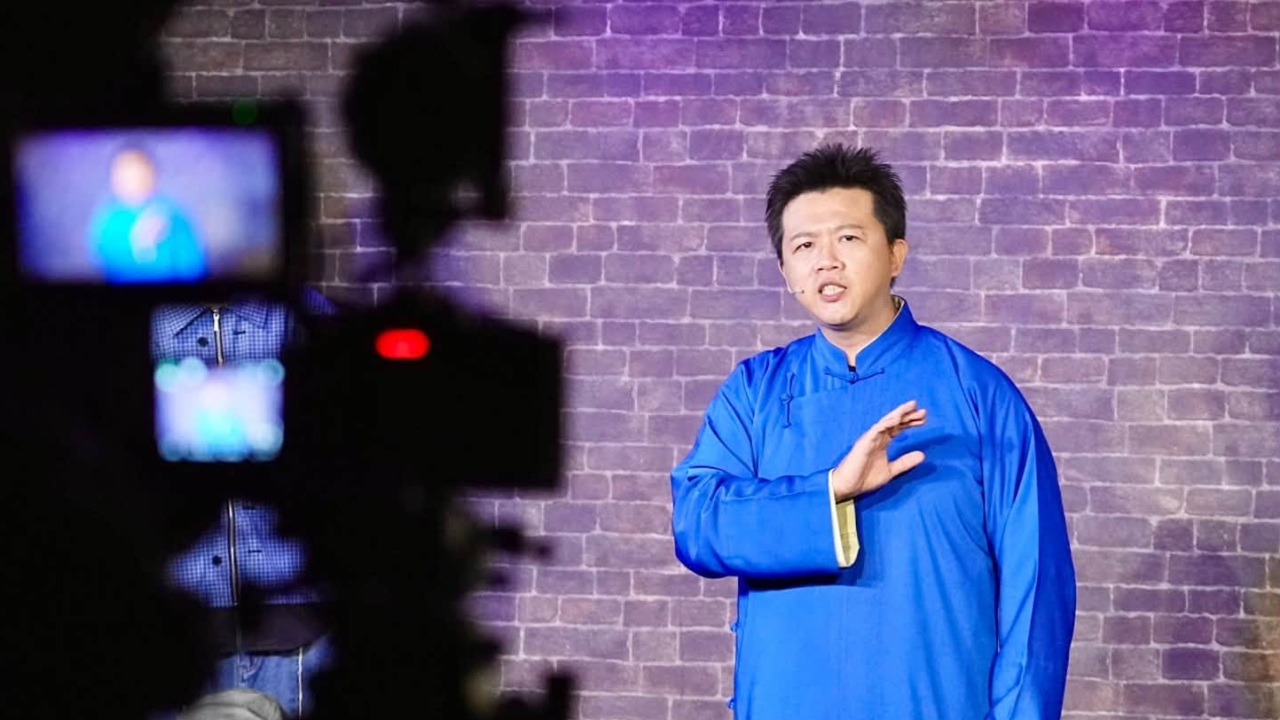
Taiwan prosecutors have charged five suspects for involvement in a plan to assault Huang Yi-hao, a Taiwanese comedian who criticized the Chinese Communist Party and President Xi Jinping. The suspects are accused of being hired by a Chinese individual to follow Huang and stage a car accident to injure him so he could not perform. Prosecutors indicated the case may be related to cross-border suppression of dissent.
Taiwan prosecutors have charged five suspects in a case involving a plan to assault Huang Yi-hao, a Taiwanese stand-up comedian known for satirizing the Chinese government and criticizing Chinese leader Xi Jinping. The suspects are accused of being hired by a Chinese individual to follow and harm Huang to prevent him from performing at an event on 20 September.
The New Taipei Prosecutor's Office stated in a press release that the five suspects began monitoring Huang's movements in July and planned to stage a car accident aiming to break his arms and legs, requiring hospitalization and preventing him from going on stage.
On 11 September, two suspects allegedly drove a vehicle to collide with Huang's motorcycle as he was returning home, causing pelvic injuries. However, the injuries were not as severe as planned. The two suspects have admitted involvement in the plot.
Prosecutors said a Chinese individual identified only as "K" hired the suspects to carry out the assault on Huang. The suspects received a total payment of 450,000 New Taiwan dollars (about 13,900 US dollars). After the incident, the suspects reportedly requested Huang's medical records to support their claim for the final payment from the Chinese hirer.
The New Taipei Prosecutor's Office described the case as a serious incident suspected to involve the Chinese Communist Party using cross-border tactics to suppress dissent. They ordered individuals breaking Taiwanese law to use violence to silence political opponents. The suspects are accused of willingly serving a hostile foreign force to instill fear in Taiwanese society, demonstrating malicious intent and disregard for human life.
Following the incident, Huang thanked investigators for pursuing the case and warned that freedom of expression in Taiwan could be at risk if China gains control over Taiwan in the future.
Huang revealed on Facebook that he spent only about two and a half minutes on stage criticizing Xi Jinping but became the target of two attacks: an incident involving someone throwing feces at him and the deliberate vehicular assault.
He questioned how Taiwanese people can preserve freedom of speech if they are treated this way merely for criticizing the Chinese Communist Party, which does not yet govern Taiwan. He also shared a video of his satirical performance about Xi Jinping on social media on Wednesday.
Earlier in May, two people faced charges after throwing feces and paint at an entertainment venue in Taipei hours before Huang was scheduled to perform. Other critics of China in Taiwan have also been targeted; in 2019, Hong Kong singer and democracy activist Denise Ho was hit with red paint by a masked man during a pro-Hong Kong democracy event in Taipei.
Taiwan's Mainland Affairs Council issued a separate statement warning that anyone following orders from the Chinese Communist Party or collaborators to participate in cross-border suppression of dissent will face the strictest legal action without leniency.
This case arises amid longstanding tensions between China and Taiwan, with Beijing considering Taiwan part of its territory and not ruling out forceful reunification. Taiwan rejects China's sovereignty claims and asserts that its future must be determined solely by the Taiwanese people.
Freedom of expression is protected under Taiwan's constitution. Taiwanese authorities have increasingly accused China of using cross-border suppression to intimidate those seen as pro-independence or holding political views opposed by Beijing. However, China's Taiwan Affairs Office has not responded to requests for comment on this case.
/sourceThe Taipei Times/Reuters