

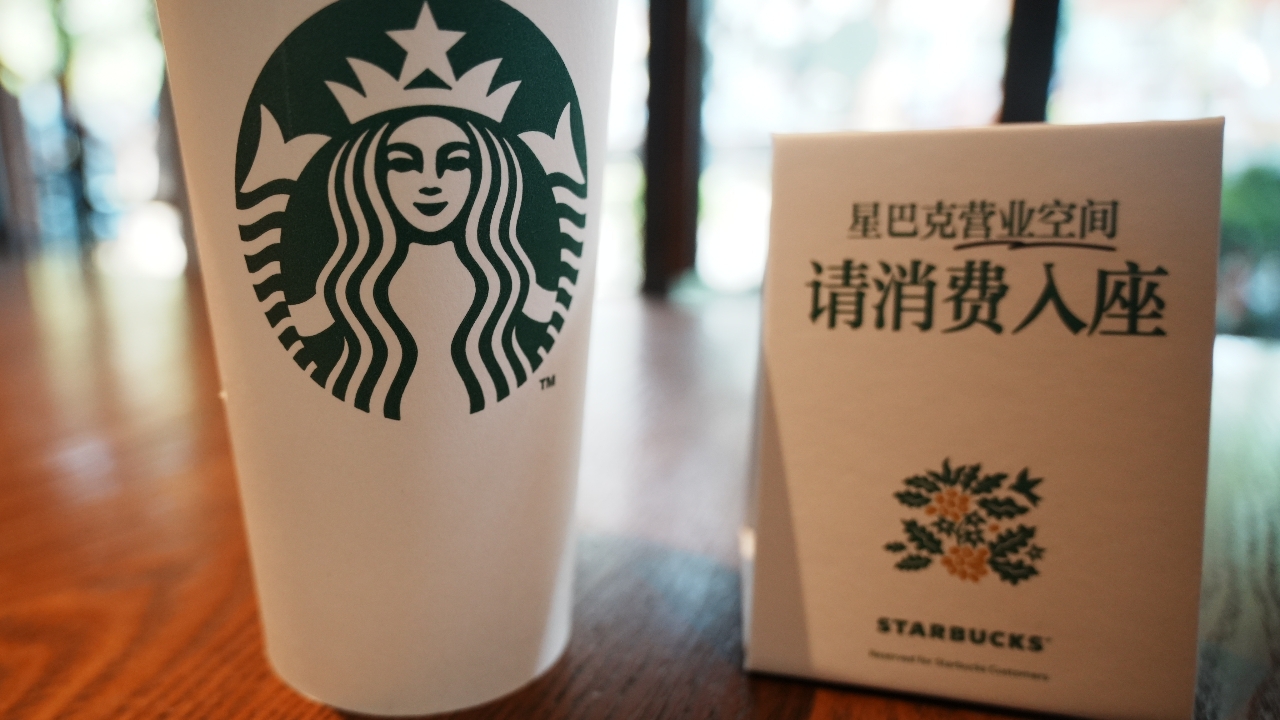
Starbucks China has begun enforcing a policy requiring customers to purchase items before using seating within stores nationwide starting 22 October. This follows debates on social media, with some viewing it as limiting the "third place" concept—a space for relaxation between home and work—while others support addressing the problem of customers occupying seats for long periods without purchasing. Meanwhile, the company plans to invest over 300 million yuan in fiscal year 2027 to increase staff, develop digital systems, and renovate stores amid fierce competition from local coffee brands.
Starbucks China announced it will require customers to buy products before using in-store seating nationwide from 22 October. This measure is part of the "Third Place Initiative," aimed at developing stores into "third places," meaning spaces between home and workplace where people can relax, meet friends, and build community connections.
This new policy has drawn widespread attention on Chinese social media, with both supporters and critics. Some worry the rule might affect Starbucks' image as a place to sit and relax even without purchasing drinks or food.
Before the official announcement, reports and images of signs saying "Please purchase items before sitting" circulated online. Some media reported that staff at certain Starbucks branches had already been informed about the new rule. However, at first, three Starbucks stores in Beijing contacted by Global Times said they had not yet received formal details about enforcing the policy.
Later, Starbucks China confirmed the policy's implementation, stating it would clearly define service standards while maintaining flexibility and care in daily operations. Staff will be trained to communicate politely with customers and consider reasonable special circumstances on a case-by-case basis.
The company also stated that customers requiring special assistance, such as pregnant women and those with mobility limitations, will continue to receive priority support.
Previously, some employees reported that stores would post notices about the policy and might remind customers already seated to be aware of the rule as appropriate, without strictly enforcing it on everyone in every situation. Reports also indicated that some staff would allow food delivery workers, people taking shelter from rain, security officers working nearby, and pregnant women needing short breaks to sit without purchasing. Free hot water might also be offered. However, these details come from media reports about some branches and are not confirmed as uniform practices across all stores.
Social media reactions have varied. Opponents worry the new rule could alter Starbucks' "third place" concept and may cause conflicts between customers and staff. Supporters view it as a reasonable measure to solve the issue of long-term seat occupancy without purchases and to ensure paying customers have more seating available.
One social media user said the lack of seats during busy times is a common problem, while another felt that non-purchasing customers should give way to paying customers who want to use the seating.
This is not the first time Starbucks China has faced issues with seat occupancy without purchases. In September, a store in Nanchong, Sichuan Province, southwest China, attracted attention online after chains were used to lock outdoor tables and chairs. Staff explained that the seating was originally for customers but had to be locked due to frequent use by people not buying items.
Earlier, in July, a video from a Starbucks in Tianjin showed signs requiring customers to purchase items before sitting and prohibiting outside food and drinks inside the store.
Beyond seating rules, Starbucks China plans to invest more than 300 million yuan (about 1.5 billion baht) in fiscal year 2027 to enhance the in-store customer experience amid stiff competition from local operators, especially Luckin Coffee, which offers competitively priced drinks and a convenient app-based ordering system favoring takeout.
Molly Liu, CEO of Starbucks China, said the "Thousand Stores, Thousand Looks" strategy—developing stores with distinct designs based on location—reflects not only diversity in store and product formats but also in interactions with customers at every service encounter.
The company will increase staff hours during peak times at nearly half of its stores nationwide, focusing on high-traffic locations such as transportation hubs, business districts, and tourist areas. This will add over 200,000 additional front-line staff hours per month.
Starbucks Reserve stores will receive an extra 70,000 staff hours monthly to allow "Coffee Masters" to spend more time educating customers about coffee origins, brewing methods, and flavor profiles.
Additionally, from January, the company will gradually introduce a new smart mobile point-of-sale system with over 70 new features designed to help staff better understand customer needs and provide more personalized service. Around 1,000 stores across China will also receive renovations and equipment upgrades during fiscal year 2027.
China is Starbucks' second-largest market after the U.S. since opening its first store there in 1999. However, in recent years, the company has faced intense competition from local brands selling coffee at lower prices. In 2023, Luckin Coffee surpassed Starbucks as the largest coffee chain in China by number of outlets.
Starbucks has also faced controversy over store space usage in other markets. In January 2025, the company implemented a new policy in its company-owned U.S. and Canadian stores ending open access to seating and facilities without purchase, prioritizing paying customers.
In South Korea, Starbucks previously requested customers avoid bringing large items into stores after reports of some customers occupying space for long periods with printers and desktop computers.
This policy adjustment in China comes as Starbucks seeks to maintain its advantage in providing in-store coffee experiences while improving service efficiency and price competitiveness amid rapid growth of local players.
SourceChina Daily/Global Times/BBC